Run-DMC didn’t just help bring hip-hop into the mainstream. They changed what rap sounded like, how rappers dressed, how records were produced, how artists toured, and how the music industry viewed a culture that had developed in New York’s boroughs. Before Joseph Simmons, Darryl McDaniels, and Jason Mizell became household names, rap was already growing into a vibrant musical movement. DJs, MCs, block parties, independent labels, and adventurous producers had established the foundations. Run-DMC arrived at a crucial moment and helped turn those foundations into a new kind of popular music.
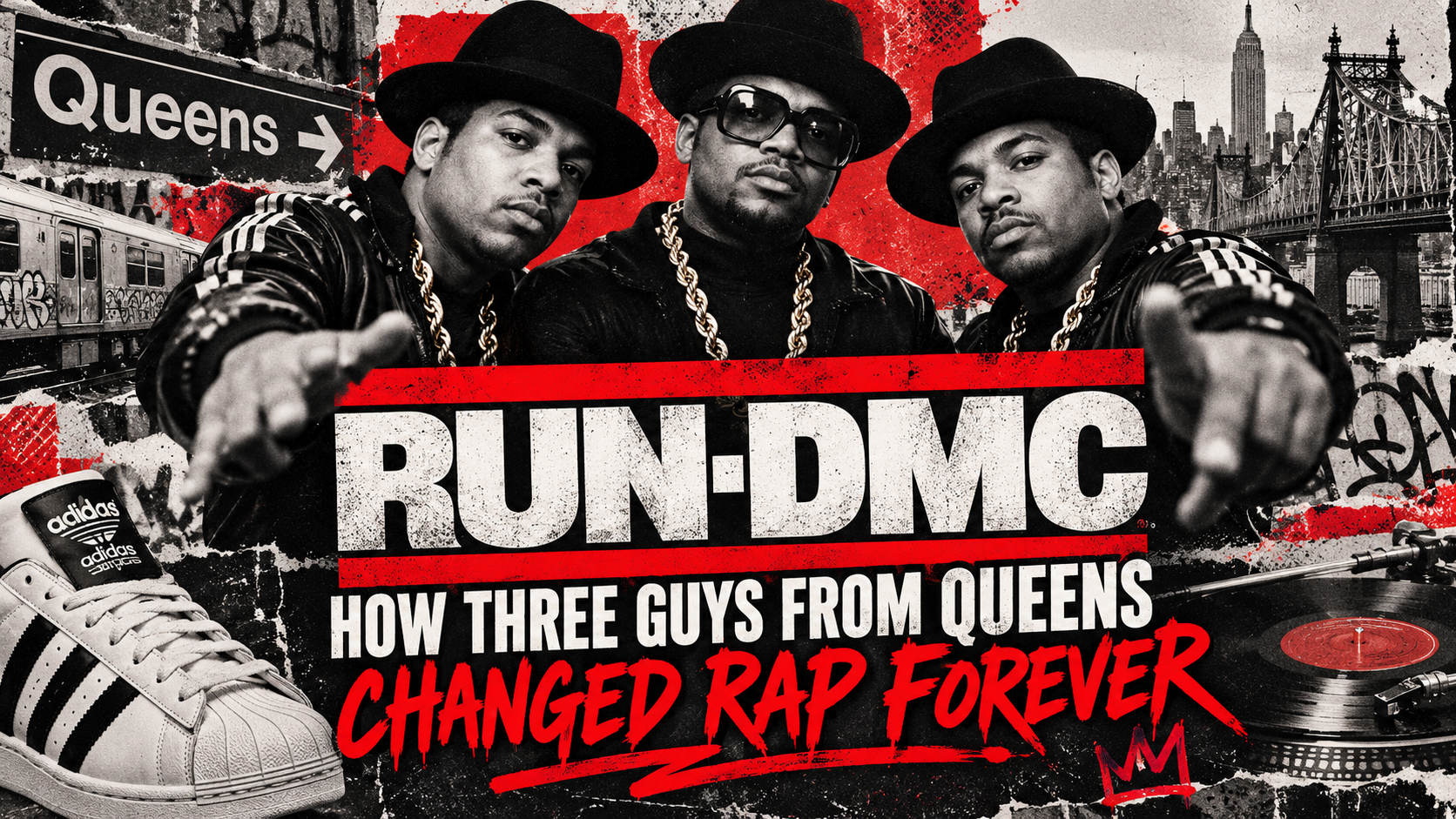
Their approach was direct. The beats were hard, the rhymes were forceful, and the production often stripped away the disco-influenced arrangements and elaborate musical backing that characterized much of early recorded rap. Their black hats, leather jackets, thick gold chains, and Adidas sneakers became part of a visual identity that audiences immediately recognized. They looked like young men from the neighborhoods where hip-hop had grown up, and they sounded like they had no interest in changing themselves to make the music more comfortable for outsiders.
That combination made Run-DMC revolutionary. They connected the street-level energy of New York hip-hop with rock audiences, commercial radio, MTV, major concert venues, and international record sales. They helped establish the rapper as a central artist rather than simply the voice accompanying a DJ’s performance. They also demonstrated that a rap group could build a lasting career through original records, distinctive personalities, and a sound that did not need to imitate pop or rock to succeed.
Their story begins in Hollis, Queens, but its impact reaches across nearly every corner of modern hip-hop.
Hollis, Queens: Where It All Began
Hollis, a neighborhood in southeastern Queens, provided the setting for Run-DMC’s rise. During the 1970s, hip-hop was taking shape across New York City, particularly in the Bronx, where DJs and MCs were developing the techniques that would eventually define the genre. Queens had its own musical networks, parties, neighborhood rivalries, and young people eager to participate in the emerging culture.
Joseph Simmons and Darryl McDaniels grew up in this environment. Simmons became known as Run, while McDaniels eventually adopted the name DMC. They were friends before they were recording artists, and their connection gave the group a natural chemistry that would become one of its defining characteristics.
Simmons had an important family connection to the music business through his older brother, Russell Simmons. Russell was becoming involved in hip-hop management and promotion, a field that required entrepreneurial instincts as much as musical knowledge. Rap was still establishing its commercial identity, and the people who understood how to organize performances, negotiate deals, and connect artists with record companies could play an enormous role in determining who reached a wider audience.
Joseph Simmons was also influenced by the music and performance style of early rap pioneers, including Kurtis Blow, whom Russell managed. Watching the emerging industry from close range helped him understand that rap could become more than a local entertainment phenomenon.
McDaniels brought a different personality to the partnership. His voice, delivery, and interest in performance complemented Simmons’ more rhythmic approach. Run’s style could sound commanding and economical; DMC’s voice supplied a distinctive rasp and intensity. They were not trying to sound identical. Their contrasting voices gave the music movement.
The final piece was Jason Mizell, better known as Jam Master Jay. A skilled DJ, Jay supplied the turntable work and musical foundation that transformed the two MCs into a complete group. He was more than a performer standing behind them. His scratching, timing, record selection, and understanding of how to build a groove were central to the trio’s sound.
Together, Run, DMC, and Jam Master Jay created a lineup in which each member had a clearly defined role. The two rappers supplied the voices and personalities, while Jay controlled the musical framework. That balance would remain crucial throughout their career.
“It’s Like That” and “Sucker M.C.’s”: The Blueprint Takes Shape
Run-DMC’s breakthrough began in 1983 with the release of “It’s Like That,” backed with “Sucker M.C.’s.” The two songs offered an immediate statement of purpose.
“It’s Like That” addressed unemployment, poverty, inequality, and the everyday pressures facing people in urban communities. It did not present those problems through a polished pop narrative or a sentimental arrangement. Instead, the group delivered its observations over a hard, repetitive beat that gave the words room to land.
The song’s directness was important. Early rap records had often drawn from party music, disco, funk, and live-band arrangements. Those influences remained important, but Run-DMC showed how much could be accomplished with a reduced musical palette. The rhythm was forceful, the production was spare, and the vocal delivery carried much of the drama.
“Sucker M.C.’s” made the approach even clearer. The track was built around a drum-machine pattern and minimal musical decoration. Its purpose was not to create a lush atmosphere. It was to place the MCs at the center of attention.
The song also helped establish a style of competitive rap built around confidence, skill, and the rejection of inferior performers. Run and DMC presented themselves as the real thing, dismissing imitators who lacked their ability. Braggadocio was hardly new to hip-hop, but the production gave the boasts a different weight. The beat sounded almost confrontational, leaving little room for distraction.
The contrast between the two songs demonstrated the range of the group’s emerging identity. “It’s Like That” connected rap to social reality, while “Sucker M.C.’s” celebrated the competitive spirit that had long been part of MC culture. Neither needed a conventional pop chorus to hold the listener’s attention.
Together, they helped establish a new template for recorded hip-hop: sharp drum patterns, forceful vocals, concise arrangements, and an emphasis on the MC’s personality. Later artists would develop this approach in countless directions, but Run-DMC made its possibilities difficult to ignore.
A New Sound for a New Era
Run-DMC’s early records arrived at a turning point. Hip-hop had already produced successful recordings, and artists such as Grandmaster Flash and the Furious Five, Kurtis Blow, and the Sugarhill Gang had helped introduce rap to audiences beyond New York. The genre was not waiting for Run-DMC to invent it.
What the group did was redirect the sound of commercial rap.
Their records often relied on stark drum-machine beats, sparse arrangements, and vocals that sounded close to the energy of a live battle or neighborhood performance. The group did not need a full band to create momentum. A rhythm, a scratch, and two sharply contrasting voices could be enough.
That approach had practical advantages as well as artistic ones. The records could sound powerful on modest speakers, in clubs, on car stereos, and through the sound systems used at parties. The rhythm was easy to recognize, and the vocal performances were easy to follow. The production created space for the rappers rather than burying them beneath elaborate instrumentation.
The group’s music also reflected a broader change in hip-hop’s relationship with technology. Drum machines and samplers were becoming increasingly important tools for producers. Rather than simply recreating the arrangements of funk and disco records, hip-hop artists could isolate rhythmic elements, build new patterns, and create compositions that sounded distinct from their sources.
Run-DMC’s approach did not mean that melody or musical experimentation disappeared from rap. Their later work would incorporate rock guitar, funk, and other sounds. But their early success showed that a stripped-down arrangement could be commercially powerful without imitating the conventions of mainstream pop.
That was a significant change in expectations. A rap record could be built around the voices and rhythm alone. The rapper did not have to sing, and the production did not need to smooth out every rough edge. Directness could be an asset.
The influence of this sound extended well beyond the group’s own recordings. It helped prepare the way for harder-edged East Coast hip-hop, including the work of artists who would place even greater emphasis on rhythmic precision, lyrical complexity, and sample-based production.
The Self-Titled Debut: Run-DMC Arrives
Released in 1984, Run-D.M.C. established the trio as one of the most important acts in recorded hip-hop. The album brought together the group’s singles, competitive rhymes, party records, and sharply defined musical identity in a format that could be heard as a complete artistic statement.
Its significance went beyond the songs themselves. Rap albums had existed before, but Run-DMC helped demonstrate that the genre could sustain a full-length release with a recognizable sound and personality. The record did not feel like a collection of unrelated singles assembled to capitalize on a temporary trend. Its production, vocal style, and attitude gave it a strong sense of identity.
Tracks such as “Rock Box,” “Hard Times,” and “Jam-Master Jay” showed different dimensions of the group. “Hard Times” continued the social awareness found in “It’s Like That,” while “Jam-Master Jay” celebrated the DJ whose contribution was essential to the group’s performances. “Rock Box” pushed toward a harder sound by incorporating electric guitar into a rap framework.
That last track was especially important because it hinted at the possibilities of a rap-rock relationship long before “Walk This Way” became a worldwide hit. The guitar did not replace the hip-hop rhythm. Instead, it added another texture to a record that still sounded unmistakably like Run-DMC.
The album’s commercial achievement was equally significant. It became the first rap album to earn gold certification, demonstrating that a group rooted in New York’s neighborhood hip-hop culture could sell at a level that record companies could no longer dismiss.
The success gave the genre a stronger position within the music business. Record executives had evidence that rap could generate album sales, build a recognizable artist brand, and sustain a career beyond a single novelty hit. That opened opportunities for other acts, although it did not eliminate the industry’s skepticism or its tendency to underestimate hip-hop.
Run-DMC’s debut also established an important relationship between sound and image. The group did not present itself as a conventional pop act dressed for television. Its members looked and sounded connected to the culture that had produced them. The result was a package that felt coherent: the records, the clothes, the performances, and the attitude reinforced one another.
“Rock Box” and the Challenge to MTV
Music television played a major role in the development of popular music during the 1980s, but its early programming did not provide equal space for every genre or audience. Rock dominated the channel’s visual identity, and Black artists often faced barriers to getting their videos played regularly.
Run-DMC helped challenge those boundaries.
The video for “Rock Box,” released in 1984, became an important early moment in rap’s relationship with MTV. Its blend of rap performance and rock guitar gave the network a visual and musical bridge into a genre that was still unfamiliar to many of its viewers.
The group did not soften its identity to fit the medium. Run, DMC, and Jam Master Jay appeared as themselves, with their characteristic clothing, movement, and performance style. The music retained its hip-hop foundation even as the guitar introduced a new texture.
The breakthrough mattered because television exposure could transform an artist’s audience. A successful video allowed viewers in cities and towns far removed from New York to encounter a group they might never hear on local radio. It also helped create a recognizable image that could be reproduced in magazines, posters, clothing, and live performances.
Run-DMC’s presence on MTV helped make rap more visible to mainstream audiences and gave the music industry a clearer sense of its commercial potential. Other artists benefited from the growing attention, although access remained uneven and the struggle over representation continued.
The group’s success also demonstrated that hip-hop could operate effectively as a visual art form. The clothing, gestures, stage presence, and interaction between the MCs were not incidental decorations. They were part of the performance.
For a generation of young fans, seeing Run-DMC on television helped make rap feel immediate and accessible. Their style could be copied, their records could be collected, and their performances could be discussed alongside rock and pop acts. Hip-hop was no longer confined to the places where it had first developed.
King of Rock: Claiming the Territory
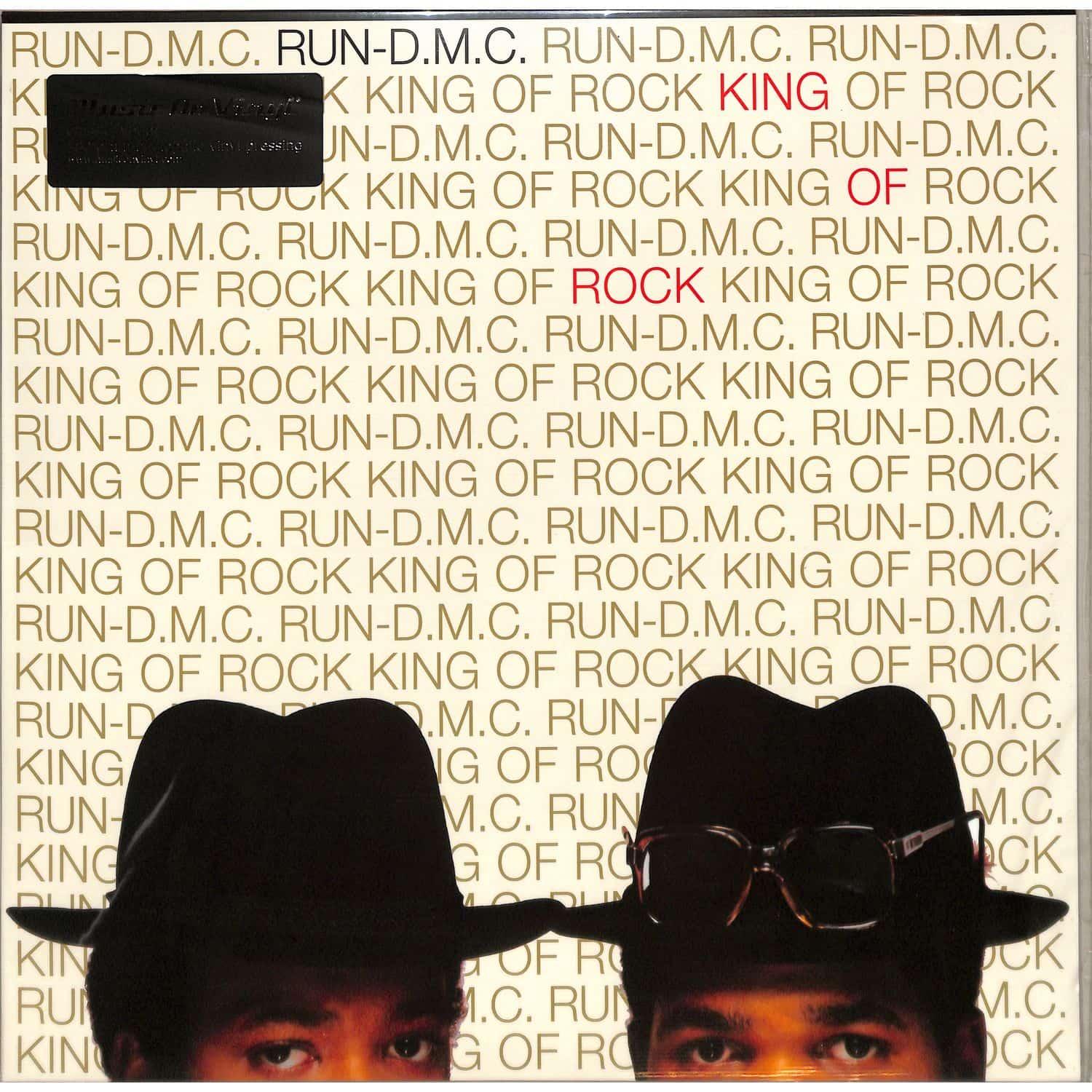 The 1985 album King of Rock made the group’s intentions unmistakable. Run-DMC were not asking rock audiences for permission to participate. They were claiming space for hip-hop on their own terms.
The title track played with the boundary between rock and rap, using guitar-driven production and the group’s forceful delivery to challenge assumptions about which artists could claim the label of rock. The message was not that rap had to become rock. It was that rap had enough power and identity to stand beside it.
The album expanded on the formula of the debut while showing that the trio could develop beyond the stark minimalism of its earliest records. “You Talk Too Much” and “Can You Rock It Like This” brought humor, performance, and rhythmic experimentation into the mix, while the title track sharpened the group’s relationship with rock instrumentation.
Run-DMC’s attitude was central to the effect. The members sounded confident without relying on elaborate musical ornamentation. They could fill a record with personality through the way they traded lines, emphasized syllables, and used the beat.
The album’s success helped establish a broader cultural argument. Rock had long been treated as a symbol of youthful rebellion, but hip-hop was developing its own language of resistance, style, and musical invention. Run-DMC demonstrated that a rap group could carry that rebellious energy into a different musical form without losing its roots.
Their image also contrasted with the flamboyant costumes and colorful stagewear associated with some earlier performers. Run-DMC favored black clothing, hats, gold chains, and sneakers. The look was simple enough for fans to adopt, but distinctive enough to become instantly recognizable.
This was not merely a fashion trend. It was a statement about authenticity and identity. The group presented its everyday streetwear as a legitimate uniform for performers, rejecting the idea that a successful recording artist needed to dress according to the expectations of the entertainment industry.
The influence of that decision would reach far beyond the 1980s. Hip-hop fashion became an important part of the music’s commercial and cultural power, and Run-DMC helped demonstrate how a group’s appearance could become inseparable from its sound.
Adidas, Street Style, and the New Image of a Rap Star
Run-DMC’s influence on fashion was as important as its influence on music. The group helped popularize an image that became one of hip-hop’s most recognizable visual signatures: black fedoras, thick gold chains, black leather jackets, and Adidas sneakers worn without laces.
The look grew naturally from the group’s identity. Run, DMC, and Jam Master Jay were not presenting themselves as distant pop idols in elaborate costumes. They looked like young men from their own community, and their clothes connected the stage to the streets. Their appearance was accessible, distinctive, and easy for fans to imitate.
The Adidas Superstar sneaker became especially important. Its shell toe, simple design, and three stripes suited the group’s straightforward aesthetic. The members wore the shoes as part of their everyday style, not as a calculated fashion campaign. When they began celebrating Adidas in their music, they transformed a familiar piece of sportswear into a symbol of hip-hop identity.
“My Adidas,” from Raising Hell, made that relationship explicit. The track was a celebration of the group’s style and success, but it also pushed back against the negative assumptions often directed at young people who dressed like them. The sneakers were part of how the group presented itself, and the song asserted that the style deserved recognition rather than suspicion.
The response from fans was enormous. Adidas executives eventually recognized that Run-DMC had created a connection between the brand and a growing youth culture that conventional advertising could not easily reproduce. A famous appearance at Madison Square Garden, where fans raised their sneakers in response to the group, helped make the commercial opportunity unmistakable.
The resulting endorsement deal was a landmark moment in music marketing. A hip-hop act had established enough cultural influence to secure a major brand partnership on the strength of its own identity. The group had not needed to become a traditional celebrity spokesperson. Its music and its audience had created the value.
This changed the possibilities for later artists. Hip-hop musicians would go on to develop relationships with sneaker companies, clothing labels, jewelry brands, and fashion houses. Those partnerships became a major part of the genre’s commercial ecosystem.
Yet the deeper legacy of Run-DMC’s fashion influence was cultural. The group helped establish the idea that a rapper’s clothes could communicate affiliation, confidence, and regional identity. Streetwear was not separate from hip-hop. It was one of the ways hip-hop expressed itself.
Raising Hell: The Album That Changed Everything
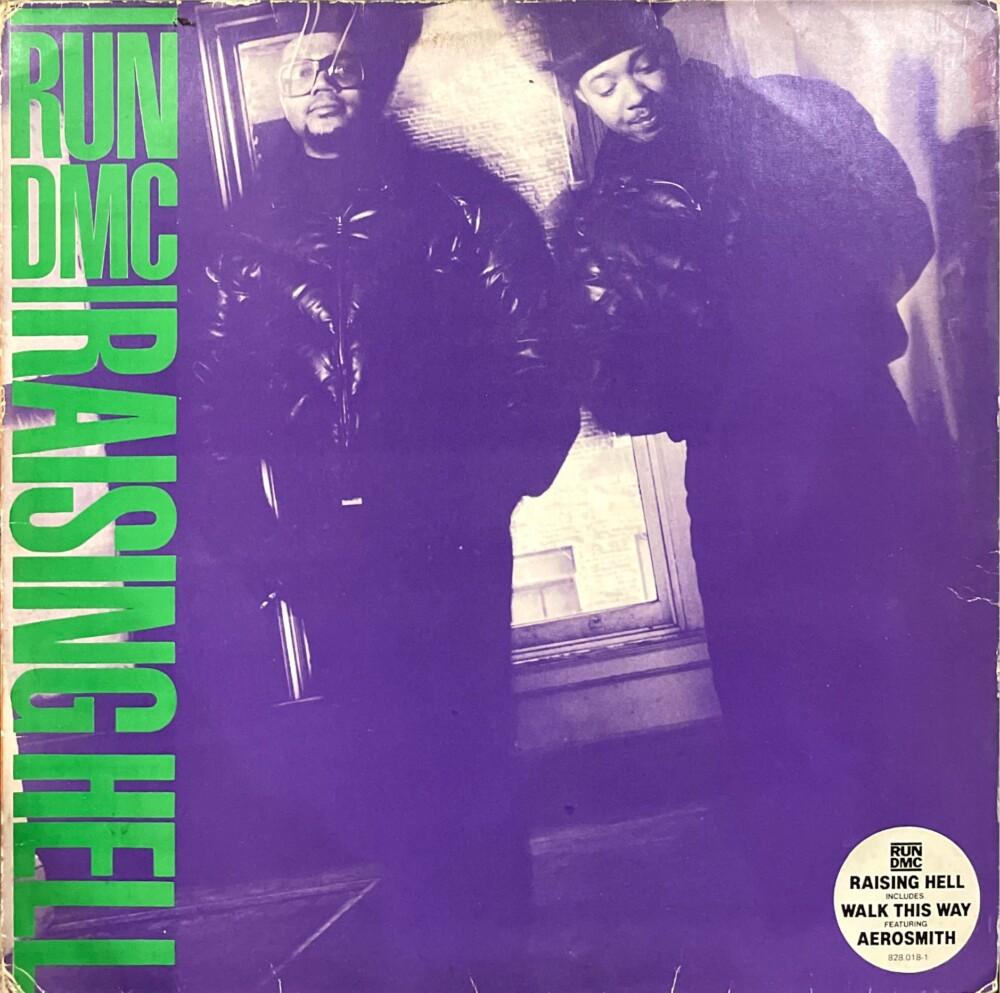 Released in 1986, Raising Hell became the defining commercial breakthrough of Run-DMC’s career. It brought together the group’s hard-edged sound, sharp performances, playful personality, and willingness to experiment with rock, producing a record that crossed audience boundaries without abandoning its hip-hop foundation.
The album’s impact was immediate. It became the first rap album to reach multiplatinum status, and it helped make hip-hop a major force in the broader music business. The group was no longer simply successful within rap. It was competing for the attention of mainstream rock and pop audiences.
Rick Rubin, co-founder of Def Jam Recordings, played a key role in the album’s production. Rubin understood the power of stripped-down arrangements and the possibilities of bringing different musical worlds together. His work with Run-DMC emphasized the group’s natural strengths: rhythmic precision, forceful vocals, and a sound that could withstand the addition of rock guitar without losing its center.
The album featured several of the group’s most enduring tracks, including “My Adidas,” “Peter Piper,” “It’s Tricky,” and “Walk This Way.” Each revealed a different side of the trio.
“Peter Piper” showcased the interplay between Run and DMC, with their lines moving back and forth in a way that made the performance feel almost athletic. “It’s Tricky” combined a memorable hook with a tightly controlled rhythm, creating a record that was playful without sacrificing the group’s sharp delivery. “My Adidas” turned fashion into a statement of identity.
The album’s greatest achievement was its balance. It did not rely entirely on one crossover hit or one production gimmick. The rock elements were part of a wider sound, and the group’s lyrical personality remained at the center.
Raising Hell also arrived at a moment when the music industry was becoming more receptive to rap’s commercial possibilities. The album gave record companies a clear demonstration that hip-hop could sustain major sales and reach audiences across racial and geographic boundaries. It helped open doors for artists who followed, even though the opportunities were not distributed evenly.
The album’s importance was later recognized by the Library of Congress, which selected it for preservation in the National Recording Registry. That recognition placed Raising Hell among recordings considered significant to American musical and cultural history.
For Run-DMC, the album marked the point at which the group moved from influential pioneers to international stars. It also created a new challenge: how to follow a record that had changed the scale of their career.
“Walk This Way”: The Wall Comes Down
The most famous moment on Raising Hell was the collaboration with Aerosmith on “Walk This Way.” The record became a landmark in the relationship between rap and rock, but its origins were more complicated than a simple meeting between two successful acts.
Aerosmith’s original song had already supplied a memorable guitar riff and a rhythmic vocal performance. Hip-hop DJs had recognized its potential years earlier, using its opening passage as a breakbeat. Run-DMC were familiar with the music, and the idea of building a rap record around the riff was not entirely foreign to them.
Rick Rubin proposed a more ambitious approach: instead of merely borrowing the instrumental passage, Run-DMC would remake the song and bring Aerosmith’s Steven Tyler and Joe Perry into the recording. The collaboration forced two musical worlds into direct contact.
The resulting track was built around the original riff, but Run-DMC gave it a different energy. The guitars were hard and immediate, the drums were forceful, and the rappers delivered the verses with the confidence that had defined their earlier records. Tyler’s vocals and Perry’s guitar connected the new version to Aerosmith’s rock identity, while the trio retained control of the song’s rhythmic drive.
The video made the concept impossible to miss. A wall separated the rock musicians from the rappers, and the performers eventually broke through it. The visual was simple, but it captured the cultural significance of the collaboration: two audiences that had often been kept apart were now sharing the same musical space.
The song reached the Top 10 of the Billboard Hot 100 and became Run-DMC’s biggest crossover hit. MTV played the video heavily, helping the group reach viewers who might never have purchased a rap record before.
The effect was not limited to sales. “Walk This Way” demonstrated that rap could coexist with rock without becoming a novelty or losing its identity. The record did not simply place a rapper over a rock instrumental. It created a collaboration in which both styles were essential.
The success also helped revive Aerosmith’s commercial fortunes, illustrating that the exchange could benefit established rock artists as well as hip-hop performers. The song became a model for future collaborations, although later attempts to combine rap and rock would vary widely in artistic success.
There is a tendency to describe “Walk This Way” as the moment hip-hop was invented for mainstream audiences. That overstates the case. Rap had been building audiences, releasing influential records, and breaking commercial barriers for years. Run-DMC themselves had already established a national profile.
What the song did was accelerate the process. It brought rap to a much larger audience, made the genre harder for major media outlets to ignore, and proved that a hip-hop act could command attention at the center of popular music.
It also helped change the way the public understood musical boundaries. Rap was not a passing novelty that had to remain in a separate category. It was a creative force capable of transforming the music that surrounded it.
The First Rap Superstars
The success of Raising Hell changed the scale of what a rap career could look like. Run-DMC became one of the first hip-hop acts to enjoy the kind of commercial visibility traditionally associated with major rock bands and pop stars.
They appeared in major magazines, performed on high-profile television programs, and toured to audiences that extended far beyond the neighborhoods where the music had originated. They became recognizable to people who did not necessarily follow hip-hop closely, and their clothes and music helped define the decade’s visual image of rap.
Their success also mattered for the album format. Run-DMC helped establish that rap artists could sell millions of albums rather than relying primarily on singles and local popularity. That distinction influenced how record companies evaluated new acts and how artists planned their careers.
The group was among the first rap acts to appear on the cover of Rolling Stone, a sign that the genre was beginning to receive recognition from publications that had historically focused on rock. They also helped bring rap onto major television stages and into the wider national conversation about popular music.
But mainstream recognition came with complications. The more successful hip-hop became, the more record companies sought to identify which styles were most commercially attractive. Some artists found themselves pressured to make music that matched the expectations of executives, radio programmers, or television networks.
Run-DMC’s own success demonstrated that an act could reach a large audience without abandoning its original character. The group had not become successful by dressing like a rock band or replacing its rhythmic approach with conventional pop songwriting. It had brought its own sound into the mainstream.
That example was particularly important for artists who followed. A new generation of rappers could see that distinctive voices, regional identities, and uncompromising production choices could become commercial strengths rather than obstacles.
Touring With the Beastie Boys: Hip-Hop on a Bigger Stage
Run-DMC’s tours helped expand the audience for rap and establish a model for live hip-hop performance. Their shows demonstrated that a group built around two MCs and a DJ could command the stage without a traditional rock-band lineup.
The Beastie Boys became important partners in this process. As a young rap group with punk roots and an irreverent performance style, they complemented Run-DMC’s hard-edged sound while appealing to some of the same rock audiences.
Touring together helped bring hip-hop into venues and communities where it had previously received limited exposure. It also created a shared performance environment in which different approaches to rap could coexist. Run-DMC’s disciplined, direct style contrasted with the Beastie Boys’ chaotic humor, showing audiences that hip-hop was not a single uniform sound.
These tours also helped develop the economics of rap performance. Major tours required professional management, reliable production, marketing, and the ability to draw crowds across multiple cities. As hip-hop acts demonstrated that they could do those things, the industry’s assumptions about rap changed.
The live show remained central to Run-DMC’s identity. Their records were powerful, but their performances gave fans a direct experience of the chemistry between Run and DMC and the skill of Jam Master Jay. The DJ was not a background accessory; he was an active performer whose timing and turntable work helped drive the music.
Run-DMC helped show that hip-hop could fill large venues while retaining the call-and-response traditions and rhythmic energy of smaller parties. That lesson would become essential as rap tours grew into major commercial events.
The Difficult Follow-Up: Tougher Than Leather
After the extraordinary success of Raising Hell, Run-DMC faced the problem every major act encounters after a career-defining release: how to move forward without repeating the same record.
The group’s fourth album, Tougher Than Leather, arrived in 1988. It included tracks such as “Run’s House” and “Beats to the Rhyme,” which maintained the trio’s hard-edged production and competitive delivery. The album demonstrated that Run-DMC could still produce strong music, but its commercial impact did not match the phenomenon of Raising Hell.
The release also accompanied a film of the same name, an attempt to extend the group’s identity into cinema. The movie’s disappointing reception became a distraction from the music, and the larger entertainment industry continued to look for ways to turn successful recording artists into multimedia properties.
The period also brought wider changes in hip-hop. New artists were emerging with different production techniques, increasingly intricate lyricism, and more varied regional identities. Public Enemy were expanding the possibilities of political rap, while groups such as De La Soul and A Tribe Called Quest were developing alternative sounds. Gangsta rap was gaining visibility, and a younger generation of MCs was pushing the music in new directions.
Run-DMC remained influential, but it was no longer the only group defining what rap could become. The genre they had helped reshape was now too large and diverse for any single act to control.
That was both a sign of their success and a challenge to their position. Run-DMC had helped create the conditions for hip-hop’s expansion, and the expanding scene was producing artists who would not necessarily follow the same template.
The group’s later work therefore belongs to a different stage of its story. Its role was no longer simply to introduce rap to new audiences. It had to find a place in a culture that was growing more complex, competitive, and musically diverse.
Back from Hell: Searching for a New Direction
Released in 1990, Back from Hell reflected a group navigating a changing musical landscape. Hip-hop was moving rapidly, and the production styles that had once made Run-DMC sound startlingly new were becoming part of the genre’s vocabulary. New York rap was expanding in several directions, while West Coast artists were developing increasingly prominent regional sounds.
The album contained tracks such as “Pause” and “What’s It All About,” but it did not restore the trio to the commercial position it had enjoyed in 1986. The music industry was also changing. Labels wanted new stars, audiences were developing different tastes, and hip-hop’s growth meant that even pioneering artists had to compete for attention.
Run and DMC also experienced personal changes during this period. Run’s religious beliefs became increasingly important to him, and he eventually became an ordained minister. The members began exploring paths beyond the group’s original identity, although they continued to perform and record together.
It would be misleading to treat the period as evidence that Run-DMC had become irrelevant. Their influence was already embedded in the music. The harder, sample-based approach that they had helped popularize was now a foundation for a much wider movement. Their position had changed partly because the genre had grown beyond the boundaries of the scene they helped bring into the mainstream.
Down with the King: A Return to Form
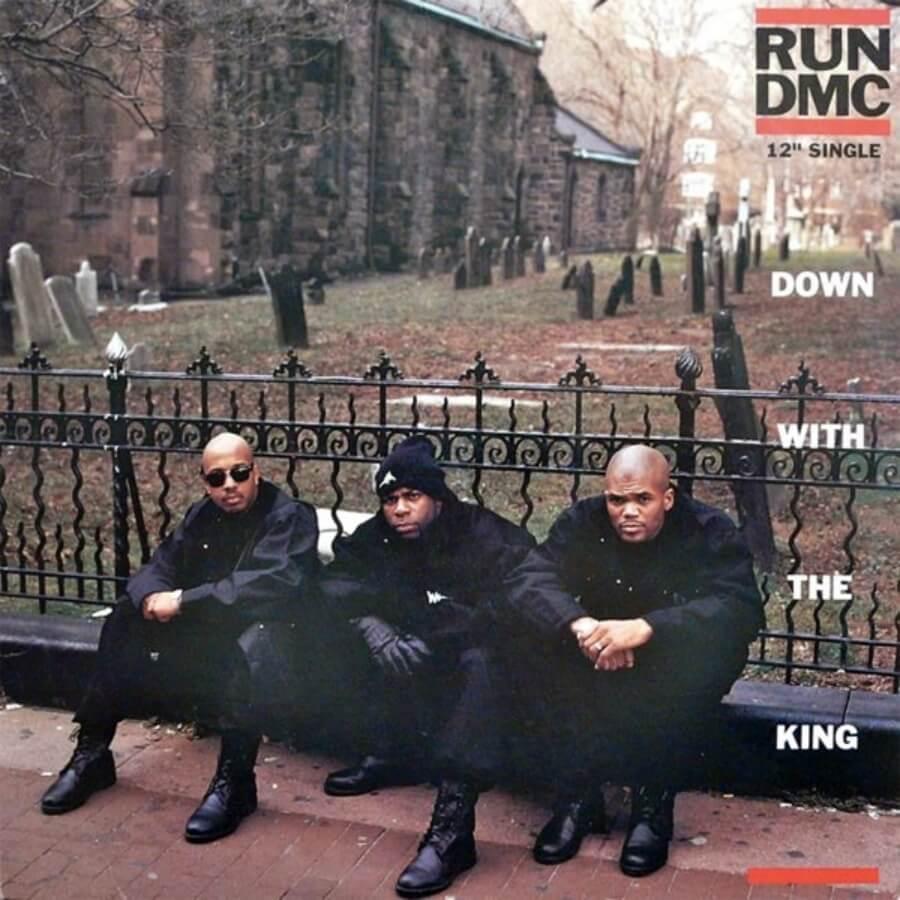 In 1993, Run-DMC returned with Down with the King, an album that connected the group to the hip-hop of the new decade while reaffirming its established identity.
The title track became a successful single and introduced the trio to listeners who had grown up with a newer generation of rap artists. The album featured production contributions from people associated with the evolving East Coast scene, including Pete Rock and Q-Tip, placing Run-DMC in conversation with artists who had developed under the influence of the group’s earlier work.
That connection was meaningful. The group was no longer simply the act that had broken rap into the mainstream. It was now a respected elder presence whose sound and history had helped shape the artists leading the next phase of hip-hop.
Down with the King also demonstrated that Run-DMC could adapt without completely abandoning its musical principles. The group still relied on forceful delivery, rhythmic interplay, and direct production, but the album reflected the more layered, sample-rich sound that had become prominent in early-’90s rap.
The record was a commercial and critical improvement over the group’s previous releases, although it did not recreate the extraordinary crossover success of Raising Hell. By then, hip-hop had expanded into multiple regional scenes and stylistic movements. Run-DMC remained important, but the center of attention had shifted.
The album’s legacy lies partly in the way it connected generations. It offered evidence that the group’s importance was not confined to the 1980s. Its members could still participate in a changing culture, work with younger producers, and make music that belonged to the present rather than existing only as a tribute to the past.
Jam Master Jay: The Essential Third Member
Run-DMC’s history cannot be told accurately as a story about two rappers with a DJ standing behind them. Jason Mizell, known as Jam Master Jay, was a vital part of the group’s identity and success.
Jay’s turntable work helped create the sound that connected the two MCs. His timing, scratches, record choices, and musical instincts gave the group a rhythmic foundation. Onstage, he helped maintain the energy of the performance and reinforced the relationship between hip-hop’s DJ tradition and its emerging album-oriented culture.
His importance extended beyond technical skill. Jay was an integral member of the group, and his presence helped balance the personalities of Run and DMC. The trio’s chemistry was built around three distinct roles, and removing any one of them would have changed the sound and character of Run-DMC.
Jay also remained connected to Queens as the group’s career evolved. He worked with younger artists and helped develop new talent through his own recording and production activities. His studio became a place where emerging musicians could work, and his influence extended into a new generation of New York rap.
That work made his death especially devastating to the hip-hop community.
On October 30, 2002, Jay was shot and killed at a recording studio in Queens. His murder shocked fans, fellow musicians, friends, and family members. The killing remained unresolved for many years, and the legal proceedings that followed brought renewed attention to the case. The loss was not only the death of a celebrated performer; it was the loss of a musician and community figure whose contributions to hip-hop had been fundamental.
Jay’s death also changed the way many people understood Run-DMC’s history. The group’s public image had always emphasized unity, and its three-member identity was central to its legacy. His absence made clear that the story of Run-DMC could not be reduced to its hits or its place in music-industry history. It was also the story of three people whose friendship, work, and shared experiences had created something lasting.
Run-DMC’s Influence on the Next Generation
The strongest evidence of Run-DMC’s importance is the number of later artists who built careers using ideas the group helped popularize.
Their stripped-down production helped establish the viability of hard, drum-driven rap. Their vocal interplay demonstrated how two MCs could create excitement by trading lines, finishing each other’s phrases, and delivering sections in unison. Their fashion choices showed that a group could build a powerful visual identity from everyday streetwear. Their success on television and in major venues helped establish a commercial path for hip-hop artists who followed.
The Beastie Boys, LL Cool J, Public Enemy, and countless other performers emerged in a landscape that Run-DMC had helped change. Later artists such as Jay-Z and Eminem also recognized the group’s importance to the genre’s development. Their influence can be heard in different ways across East Coast rap, alternative hip-hop, and the broader history of MC-driven music.
Not every later artist copied Run-DMC’s sound, and that is precisely the point. Their greatest contribution was not creating a formula that everyone had to follow. It was proving that rap could be commercially successful while maintaining its own identity.
Artists could experiment with jazz samples, funk loops, electronic sounds, complex rhyme patterns, political themes, or regional musical traditions because hip-hop had become a recognized force in popular music. Run-DMC helped expand the space in which those experiments could happen.
Their influence also extended to the relationship between performers and audiences. The group’s clothes, gestures, and direct delivery created a connection that fans could reproduce in their own lives. Hip-hop became not only a form of music to listen to but also a culture to participate in.
The Business Legacy: From Rap Records to Cultural Brands
Run-DMC helped change the commercial model for hip-hop artists.
Before the group’s breakthrough, record companies often treated rap as a niche market or a trend whose lifespan was uncertain. Run-DMC’s success demonstrated that a group could sell albums in large numbers, tour nationally, build a distinctive image, and generate commercial opportunities outside the record itself.
The Adidas partnership was an early landmark in that process. It showed that a hip-hop group could influence consumer behavior through its own cultural authority. The group was not simply paid to wear a brand; it had already helped make the sneakers meaningful to its audience.
That model became increasingly important in later decades. Rappers would build businesses in clothing, footwear, beverages, media, and entertainment. Some would become major entrepreneurs, using their musical visibility to develop companies with global reach.
Run-DMC did not create every element of this business model, but it helped demonstrate the commercial value of hip-hop’s cultural identity. It showed that an artist’s sound, clothing, language, and audience could work together as a coherent brand.
There was a risk in this development, too. As hip-hop became more profitable, corporations increasingly sought to market the culture, sometimes emphasizing its most easily packaged elements. The relationship between artistic independence and commercial success would become a recurring issue throughout the genre’s history.
Run-DMC’s own career illustrated both sides. Their distinctive identity helped them reach a huge audience, while the pressures of success, changing tastes, and the expectations of the entertainment industry made it difficult to sustain their position at the top indefinitely.
Even so, the commercial opportunities they helped establish became part of the infrastructure of modern hip-hop.
Recognition and the Rock & Roll Hall of Fame
In 2009, Run-DMC was inducted into the Rock & Roll Hall of Fame. The recognition placed the group among the performers whose work had significantly shaped the development of popular music.
The honor reflected several distinct achievements: the group’s influence on the sound of recorded rap, its commercial breakthroughs, its role in bringing hip-hop to MTV and major concert stages, and its ability to connect rap with rock without sacrificing its identity.
The group’s later recognition also reflected a broader shift in how music history was being understood. Hip-hop had once been dismissed by some commentators as a passing fad or a commercial novelty. By the 2000s, its importance to American music was undeniable, and Run-DMC stood near the center of that transformation.
The group also received a Grammy Lifetime Achievement Award in 2016, further recognizing its long-term influence. These honors did not create its legacy; they acknowledged one that had already been established through decades of music, performances, and influence on other artists.
Awards are only one way to measure cultural importance, but in Run-DMC’s case, they reflect a larger change in the music industry. Rap had become central to popular culture, and the pioneers who helped establish its commercial footing were increasingly recognized as major figures in music history.
Why Run-DMC Still Matters
Run-DMC’s story is sometimes reduced to a handful of familiar images: Adidas sneakers, black hats, the Raising Hell cover, and the video for “Walk This Way.” Those images are memorable, but they only hint at the scale of the group’s contribution.
The trio helped change the sound of rap by demonstrating the power of minimal, rhythm-centered production. It changed the presentation of rap by establishing a recognizable visual identity rooted in streetwear. It changed the business of rap by proving that hip-hop acts could sell albums at a major scale and attract corporate partnerships. And it changed the genre’s public standing by bringing rap into media and venues that had rarely given it prominent attention.
The group also helped make hip-hop’s diversity possible. Rap did not remain frozen in the style of Run-D.M.C. or Raising Hell. The genre developed through political expression, jazz-based production, gangsta rap, alternative styles, regional movements, and increasingly complex approaches to lyricism. Run-DMC’s importance lies partly in helping create the conditions for that evolution.
Their story also shows that influence and commercial dominance are not the same thing. The group eventually faced new competition, changing tastes, and personal challenges. It did not remain at the center of popular music throughout every stage of its career. But its influence continued even as other artists became more prominent.
The three members each brought something essential. Run provided a commanding rhythmic style and a strong sense of performance. DMC brought a distinctive voice and lyrical presence. Jam Master Jay supplied the turntable skill and musical foundation that completed the group. Together, they built a sound and identity that could not be mistaken for anyone else’s.
Their career was rooted in Queens, but its effects reached around the world. Young rappers learned from their records, fans copied their clothes, producers studied their arrangements, and the music industry adjusted its understanding of what rap could accomplish.
Final Thoughts: Three Guys from Queens Who Changed the Rules
Run-DMC did not invent hip-hop, and they were not the first artists to record rap, perform on television, or experiment with rock influences. Their achievement was different: they brought together musical innovation, a powerful visual identity, commercial ambition, and a direct connection to hip-hop culture at exactly the moment when the genre was ready to expand.
“It’s Like That” and “Sucker M.C.’s” helped establish a new sound for recorded rap. Run-D.M.C. proved that a rap album could become a major commercial success. King of Rock challenged the boundaries between musical genres. Raising Hell brought hip-hop into the center of popular culture, and “Walk This Way” became a lasting example of what could happen when rap and rock met on equal terms.
Their influence can still be seen in how rappers dress, how producers build beats, how MCs perform together, and how hip-hop artists approach the business opportunities surrounding their music.
Most importantly, Run-DMC helped make it possible for rap to be taken seriously without having to sound like anything other than rap. They did not need to abandon their neighborhood identity, soften their delivery, or disguise their influences to reach a mass audience. They brought their own culture to the world and helped change what the world listened to.
Three young men from Hollis, Queens, entered the music industry at a time when rap’s future was far from guaranteed. They left behind a legacy that reaches across generations and musical styles. Their records remain recognizable, their image remains iconic, and their contribution to hip-hop’s rise is woven into the history of modern music.
Run-DMC changed the rules, and the artists who came afterward inherited a much larger playing field because of it.
This post has already been read 2 times!