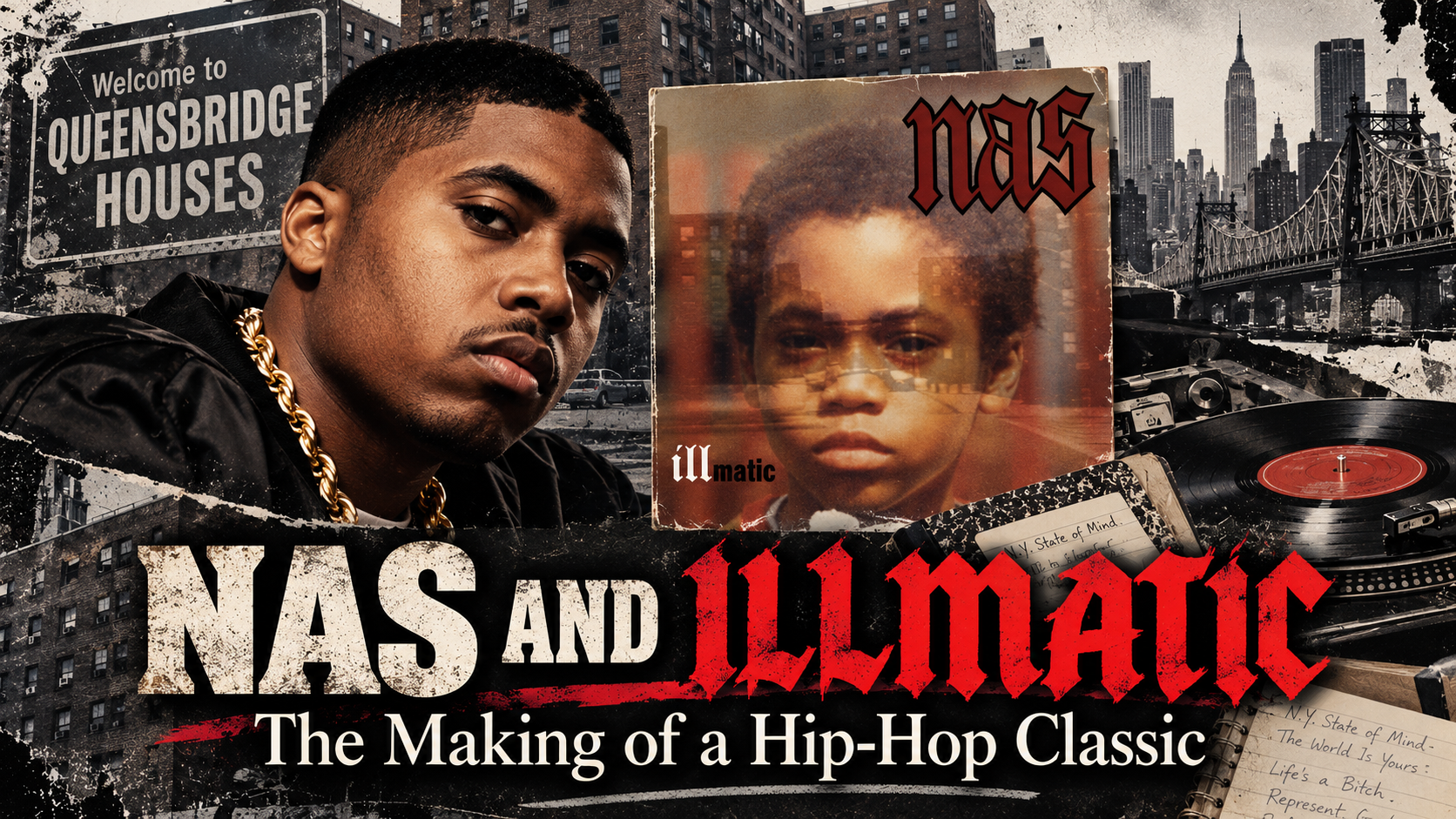
Few debut albums have arrived with the confidence, precision, and lasting influence of Illmatic. Released on April 19, 1994, Nas’s first album captured the world of a young rapper growing up in Queensbridge, New York, with a level of detail that made the neighborhood feel like a character in its own right. Its ten tracks combined vivid storytelling, intricate rhyme patterns, soulful samples, and production from some of the most respected names in East Coast hip-hop.
At just 20 years old, Nas delivered an album that sounded both youthful and remarkably mature. He wrote about street violence, poverty, ambition, friendship, family, temptation, and the struggle to imagine a future beyond the circumstances surrounding him. He could describe the texture of a New York street with cinematic precision, then shift into reflections on mortality, artistic ambition, or the complicated choices facing young people in disadvantaged communities.
The album was not an overnight commercial blockbuster on the scale that some later rap releases would become. Its reputation grew through critical acclaim, word of mouth, and the respect it earned among rappers, producers, and devoted hip-hop listeners. Over time, Illmatic became one of the most celebrated albums in rap history, frequently cited as a defining example of lyricism, sample-based production, and the art of making a cohesive hip-hop record.
Its importance rests on more than technical skill. Illmatic made a specific place feel universal. Nas did not need to escape Queensbridge to tell a story that resonated around the world. He took listeners inside his own experience and trusted them to recognize the humanity, danger, humor, and ambition within it.
The making of Illmatic was a meeting of several forces: Nas’s extraordinary writing, the musical imagination of a remarkable production team, the traditions of New York rap, and a changing hip-hop industry searching for its next defining voice. Understanding how those elements came together helps explain why this short album continues to inspire debate, admiration, and imitation more than three decades after its release.
Queensbridge: The Neighborhood Behind the Music
To understand Illmatic, it helps to understand Queensbridge. The Queensbridge Houses, located in Long Island City, are among the largest public housing developments in the United States. The neighborhood has a deep connection to New York hip-hop, producing artists, DJs, and producers whose work helped shape the city’s musical identity.
Nas grew up surrounded by the realities that would later appear in his writing. His songs describe crowded streets, strained family relationships, economic pressures, neighborhood rivalries, and the constant awareness that danger could be close. But Queensbridge was more than a backdrop of hardship. It was also a place of imagination, humor, competition, musical discovery, and strong local identity.
Nas’s father, Olu Dara, was a jazz musician and trumpeter. His musical background gave Nas an early connection to a tradition that valued improvisation, phrasing, atmosphere, and individual expression. Nas would eventually develop a writing style that shared some of those qualities. His verses could move through complicated patterns without sounding mechanical, and his descriptions often unfolded with the spontaneity of a storyteller recalling an experience.
The neighborhood also had its own hip-hop history. Queensbridge was associated with influential figures such as Marley Marl and MC Shan, and the area had been part of the competitive New York rap scene long before Nas released his debut. The local environment gave him a sense of the music’s traditions and the expectations placed on a young MC trying to make a name for himself.
Nas’s writing did not romanticize his surroundings. His stories could be frightening, funny, reflective, or brutally matter-of-fact. He understood that life in a neighborhood affected by poverty and violence could not be explained through one simple narrative. People could be ambitious and reckless, loyal and selfish, frightened and confident, sometimes within the same day.
That complexity is one of Illmatic’s greatest strengths. Nas describes a world in which survival demands attention, but imagination provides another form of escape. His characters are shaped by their circumstances without being reduced to them.
The album’s opening track, “The Genesis,” establishes this environment through sampled dialogue and the atmosphere of early hip-hop culture. It functions like the opening scene of a film, introducing a world that listeners are about to enter. When “N.Y. State of Mind” follows, the transition is immediate and powerful: the audience moves from the culture surrounding Nas to the streets as he experiences them.
Queensbridge is not simply the place where the album was made. It is the album’s emotional center.
The Young MC Who Emerged on “Live at the Barbeque”
Nas first attracted widespread attention in 1991, when he appeared on “Live at the Barbeque,” a track from Main Source’s album Breaking Atoms. He was still a teenager, but his verse immediately established him as a rapper worth watching.
Main Source was a respected group in the emerging New York scene, and its producer, Large Professor, recognized Nas’s talent. The appearance gave the young MC an opportunity to reach listeners who followed underground hip-hop and were always searching for the next remarkable voice.
What stood out was not simply Nas’s confidence. His verse was packed with unusual imagery, unexpected connections, and a willingness to approach familiar rap subjects from a fresh angle. His delivery suggested that he had already developed a distinctive way of organizing language.
At a time when technical skill was an essential part of New York rap’s competitive culture, Nas demonstrated that he could hold his own among established performers. He was not merely promising for his age. He sounded like someone who had already thought deeply about the craft.
The appearance generated attention, but turning that attention into a recording career was another challenge. A guest verse could establish a reputation, yet a solo artist needed management, a record deal, studio time, and the ability to assemble a full album.
MC Serch, formerly of 3rd Bass, became an important figure in helping Nas secure a path into the industry. Serch recognized the young rapper’s potential and helped bring his music to Columbia Records. Faith Newman, an A&R executive at the label, was among those who believed that Nas deserved an opportunity.
Not everyone was convinced. The commercial prospects of a young, uncompromising Queens rapper were not immediately obvious to every industry executive. Nas was not being introduced as a polished pop personality, and his material did not seem designed to fit neatly into radio formulas.
That uncertainty would become part of the album’s story. Illmatic was built around the belief that Nas’s writing was powerful enough to attract an audience without being diluted into something more conventional.
Building a Dream Team of Producers
One of the most remarkable decisions behind Illmatic was the choice to bring together several leading hip-hop producers rather than rely on one person for the entire album.
The production team included Large Professor, DJ Premier, Pete Rock, Q-Tip, and L.E.S. Each had a recognizable approach to rhythm, sampling, and arrangement. Their work had helped define different parts of the New York sound, and they were already respected in their own right.
For a young artist making his first album, assembling that kind of team was an extraordinary opportunity. Nas had the chance to work with producers whose records he admired, and each could help bring a different dimension of his writing to life.
The challenge was coherence. An album produced by several prominent beatmakers can easily sound like a collection of unrelated tracks. Each producer brings personal habits, preferred tempos, favorite records, and a distinct understanding of what makes a beat work. The artist has to create a common identity across those differences.
Nas succeeded because his voice was the unifying element. No matter which producer was behind the boards, the writing remained recognizable. His detailed imagery, internal rhymes, narrative approach, and distinctive delivery held the album together.
Large Professor contributed to the development of Nas’s early sound and helped connect the young rapper to the New York production community. DJ Premier supplied the tense, hard-edged atmosphere that became essential to “N.Y. State of Mind” and “Represent.” Pete Rock created the warm, memorable groove of “The World Is Yours.” Q-Tip’s production on “One Love” gave Nas a reflective setting for his letter to a friend in prison. L.E.S. helped shape the sound of “Life’s a Bitch.”
The producers were not simply providing beats for a talented rapper. They were creating environments that encouraged different kinds of writing. Some tracks demanded urgency, others introspection. Some were built around a memorable hook, while others allowed the verses to unfold almost like uninterrupted monologues.
The result was a record that sounded carefully designed without losing its spontaneity. Its beats were distinct, but they belonged to the same world.
DJ Premier and the Darkness of “N.Y. State of Mind”
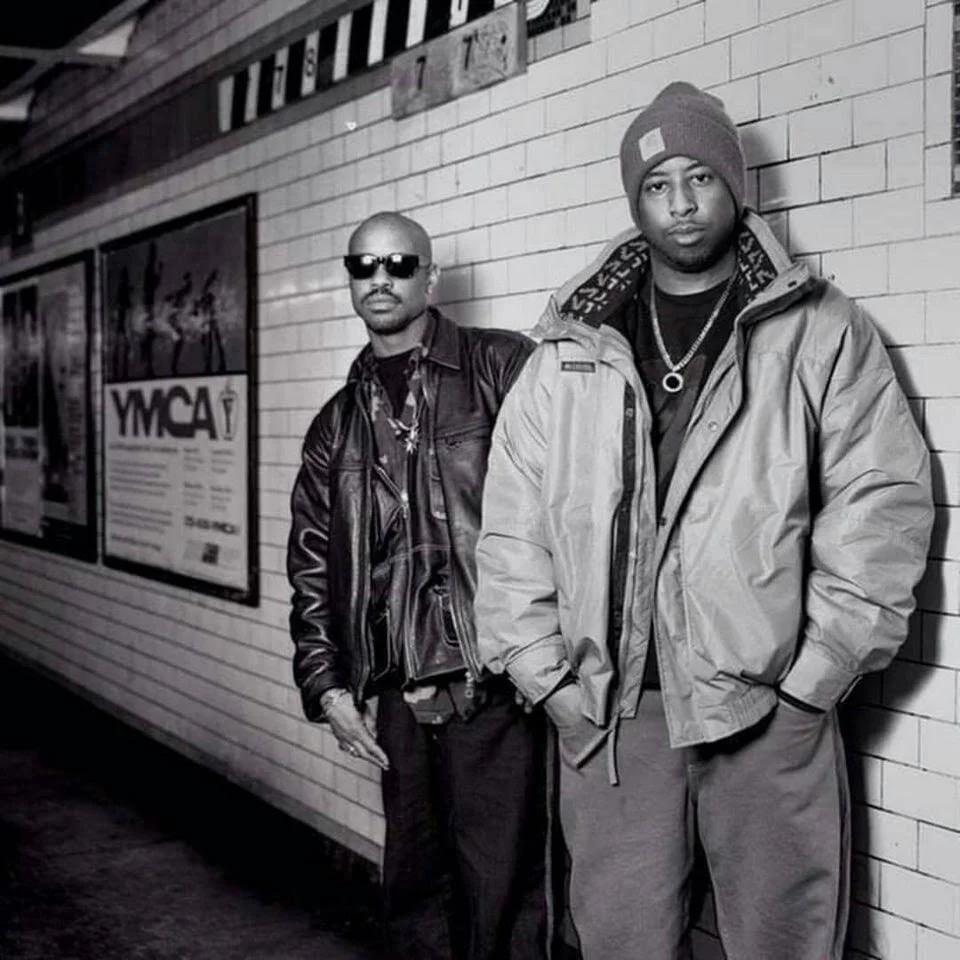 “N.Y. State of Mind” is one of the album’s defining tracks. DJ Premier’s production creates a tense, unsettled atmosphere, while Nas delivers a performance that feels like a detailed account of life under constant pressure.
The track is built around a piano sample that sounds ominous rather than comforting. Its looping figure creates a sense of unease, and the beat leaves room for Nas’s voice to dominate. The production does not need to become louder or more complicated to intensify the mood. Its repetition is part of the effect.
Nas’s writing moves through scenes of danger, street activity, and mental calculation. He describes the environment with the precision of someone who knows that small details matter. The listener is not given a broad social summary or a distant narrator’s explanation. Instead, the world is experienced from inside the rapper’s perspective.
That point of view is crucial. Nas does not portray himself as an all-knowing observer standing outside the circumstances he describes. He is part of the environment, aware of its rules and risks, and conscious of the choices that might determine whether someone survives.
The performance also showcases his technical ability. His rhymes fit together through internal connections and rhythmic shifts, but he does not sound as though he is reciting an exercise in rhyme construction. The words move naturally, with emphasis placed on the details that make the story vivid.
DJ Premier’s beat and Nas’s writing reinforce one another. The piano provides the atmosphere; the drums create forward motion; the vocal performance supplies the narrative. Remove any one of those elements and the track would lose part of its identity.
“N.Y. State of Mind” also captures something distinctive about New York hip-hop in the early 1990s. The music often favored hard drums, jazz and soul samples, and a sense of tension that reflected the competitive environment in which MCs developed their skills. But Nas took those ingredients and made them intensely personal.
The song became a reference point for rappers who wanted to write about their surroundings with similar specificity. It demonstrated that a street narrative could be more than a sequence of tough images. It could be a carefully constructed piece of writing with atmosphere, pacing, character, and a clear sense of place.
Pete Rock and the Optimism of “The World Is Yours”
If “N.Y. State of Mind” captures the album’s danger and anxiety, “The World Is Yours” reveals its ambition.
Produced by Pete Rock, the track is built around a warm, soulful groove that creates a different emotional atmosphere. The instrumental feels open and reflective, allowing Nas to consider his circumstances without being completely overwhelmed by them.
The song’s title expresses an idea that runs throughout Illmatic: the world may be difficult to navigate, but the future is not entirely predetermined. Nas recognizes the limitations surrounding him, yet he also imagines possibilities beyond the immediate neighborhood.
This is not simple optimism. The track does not pretend that ambition alone can erase poverty, violence, or structural inequality. Its appeal comes from the tension between what Nas sees around him and what he hopes to achieve.
Pete Rock’s production is central to that tension. The sample has a smooth, almost meditative quality, but the drums maintain the rhythmic firmness associated with East Coast rap. The music feels hopeful without becoming sentimental.
Nas’s delivery complements the instrumental. He sounds thoughtful rather than triumphant, considering what success might mean and how he might reach it. The performance gives the song an emotional openness that balances some of the album’s darker material.
“The World Is Yours” became one of Nas’s signature songs because it communicates ambition without losing its connection to reality. Its message can be heard as a declaration of possibility, but it also carries the weight of a young person trying to define a future in a place where the available options may feel limited.
The song illustrates why Illmatic works so well as a complete album. The listener is not trapped in a single emotional register. Fear gives way to reflection; street narratives sit beside personal aspiration; detailed observation coexists with the desire to imagine something different.
“Life’s a Bitch”: Time, Mortality, and Growing Up
“Life’s a Bitch” is among the album’s most reflective moments. Produced by L.E.S., the track features AZ, whose guest verse became an early demonstration of his own lyrical ability. Nas and AZ approach the song with different voices, but both convey an awareness that time is limited and that growing older brings new pressures.
The song’s subject is not simply hardship. It is the realization that youth can disappear quickly, that people make choices before they fully understand their consequences, and that ambition exists alongside uncertainty.
Nas’s writing often feels mature because he recognizes contradictions. He can be confident in his abilities while aware of the dangers around him. He can want material success while understanding that money cannot resolve every problem. He can reflect on the future while remaining deeply attached to the place where he grew up.
The song’s musical arrangement reinforces that sense of reflection. Its groove is relaxed and soulful, giving the verses space to breathe. Rather than creating a dramatic climax, the track allows its ideas to settle.
One of the album’s most memorable musical details comes from Nas’s father, Olu Dara, whose trumpet appears at the end of the song. The contribution creates a connection between Nas’s personal history and the album’s musical world. Jazz was not merely a source of samples for hip-hop producers; it was also part of the young rapper’s family background.
That ending gives the track a feeling of continuity. A record about youth, mortality, and uncertainty closes with the sound of an older musician whose own career represents a different musical tradition. The connection feels natural rather than forced.
“Life’s a Bitch” also demonstrates how guest appearances can strengthen an album without distracting from its central voice. AZ arrives with his own personality and technical skill, adding another perspective to the track. Nas remains the central artist, but the collaboration makes the world of Illmatic feel larger than one person’s experience.
“Memory Lane”: Nostalgia Without Sentimentality
“Memory Lane (Sittin’ in da Park)” explores the relationship between memory and survival. Nas looks back on experiences that shaped him, but he does not turn the past into a sentimental refuge. His memories contain friendship, danger, loss, and lessons learned through experience.
The track’s production, handled by DJ Premier, draws on a soulful sample and a steady rhythm that gives the song a reflective quality. The beat is warm, but it does not erase the seriousness of the subject matter. Instead, it creates room for Nas to consider how the past continues to shape the present.
Memory is an important theme throughout Illmatic. The album’s stories often seem to be happening in the moment, but they are also shaped by the knowledge of someone who has thought about what those moments mean. Nas can describe an event with immediate intensity while suggesting that he has already begun to understand its consequences.
“Memory Lane” also shows how a rapper can create a sense of history without leaving the neighborhood. Nas’s memories are personal, but they carry details that make the setting recognizable to listeners familiar with urban New York life. The track builds a world through accumulated observations rather than broad statements.
That approach has helped the song remain relevant. Its themes are not confined to a particular decade or neighborhood. The desire to revisit formative experiences, to remember friends, and to understand how the past influences present decisions is widely recognizable.
Yet the song never loses its local identity. Nas’s memories belong to him, and the specificity is what gives them power.
“One Love”: A Letter From Queensbridge
“One Love” is one of the most unusual tracks on Illmatic because Nas builds it around the idea of writing to a friend who is incarcerated. Rather than presenting a conventional narrative with a beginning, middle, and end, he addresses someone who is absent from the neighborhood and fills him in on the people, events, and changes taking place outside.
Produced by Q-Tip, the song has a warm, jazz-influenced atmosphere that contrasts with the harsher sound of “N.Y. State of Mind.” The instrumental creates a conversational setting, allowing Nas to move from one observation to another as if he were speaking directly to his friend.
The letter format gives the writing a natural structure. Nas can discuss mutual acquaintances, neighborhood developments, and personal concerns without needing to force every detail into a conventional song narrative. The track feels like a conversation that has been shaped into music.
It also reveals a different side of his storytelling. Nas is not simply describing his own experiences. He is acting as a witness for someone who cannot be there, preserving the details of a shared world for a person who has been separated from it.
The song’s emotional power comes from that separation. The person receiving the letter remains connected to the neighborhood through memory and friendship, but incarceration has changed his relationship to the place. Life continues outside, and the letter becomes a way to bridge the distance.
“One Love” is also an example of Nas’s ability to create characters without elaborate exposition. The people he mentions appear briefly, often through a few details, but they give the neighborhood a sense of life beyond the album’s main narrator.
Q-Tip’s production complements the concept. The groove is relaxed enough to suggest reflection, yet it retains the rhythmic structure of hip-hop. The track sounds intimate without losing its musical momentum.
The song also avoids turning incarceration into a simplistic moral lesson. Nas describes the social world surrounding it, including friendship, loyalty, danger, and the consequences of choices. The result is a portrait of a community affected by the criminal justice system without reducing the people in it to symbols.
“Represent”: A Declaration of Identity
“Represent,” produced by DJ Premier, returns to the harder side of the album. It is a declaration of identity, a track built around pride in one’s neighborhood, confidence in one’s abilities, and the competitive energy that has always been central to rap.
The production is forceful and economical. Premier creates a firm rhythmic foundation, allowing Nas to place emphasis on individual phrases and move between tightly constructed rhyme patterns. The beat does not overwhelm the vocal performance; it gives it room to command attention.
The song’s central idea is representation. Nas speaks from a particular place and perspective, making clear that his identity is inseparable from Queensbridge. His pride is not abstract. It comes from knowing the people, streets, and experiences that have shaped him.
That sense of place was a defining characteristic of New York hip-hop during the early 1990s. Rappers frequently established their credibility through neighborhood affiliations, local knowledge, and their ability to describe environments that listeners could recognize. Nas used those conventions, but his writing gave them a literary depth that made the setting feel more than a marker of authenticity.
“Represent” also demonstrates how the album balances observation with performance. On tracks such as “One Love,” Nas is reflective and conversational. Here, he is assertive, projecting confidence and demanding recognition. Both approaches belong to the same artist.
The track’s intensity helps prevent Illmatic from becoming too introspective. The album contains moments of doubt, memory, and mortality, but it also celebrates the competitive spirit that helped Nas develop his skills. He is not merely documenting his environment. He is announcing himself as an artist capable of commanding attention.
“It Ain’t Hard to Tell”: Ending on a High Note
The original album closes with “It Ain’t Hard to Tell,” a track that brings Nas’s technical skill and musical imagination together in a final display of confidence.
Produced by Large Professor, the song features a bright, fluid instrumental built around a sample of Michael Jackson’s “Human Nature.” The source material gives the beat a smooth melodic quality, but the production reshapes it into a distinctly hip-hop composition.
The contrast between the sample’s softness and Nas’s intricate delivery is part of the track’s appeal. He moves through the beat with rapid shifts in rhythm, dense rhyming, and a steady stream of images. The performance feels exuberant, as though he is enjoying the freedom to demonstrate just how much he can do with language.
The song also reflects the influence of hip-hop’s sampling culture. Producers took existing recordings and transformed them into new musical environments, drawing connections between different eras and genres. Large Professor’s use of “Human Nature” does not simply borrow a recognizable melody; it places that melody in a different rhythmic and cultural context.
Nas’s performance matches the instrumental’s sense of movement. He can sound relaxed one moment and sharply emphatic the next, using changes in cadence to keep the listener engaged. His technical complexity is evident, but the track remains accessible because the delivery has a natural musicality.
As an album closer, “It Ain’t Hard to Tell” works because it leaves the listener with a sense of possibility. Nas has explored danger, memory, friendship, ambition, and mortality, but he ends by asserting his command of the craft. The young rapper who first appeared on “Live at the Barbeque” has now demonstrated that he can carry an entire album.
The closing track also reinforces one of Illmatic’s central achievements: the union of writing and production. Nas’s lyrics are remarkable, but they do not exist in isolation. Large Professor’s beat gives them shape, and the sample adds a melodic dimension that makes the song memorable beyond its technical display.
The Other Tracks: A Carefully Balanced Album
The most celebrated songs on Illmatic often dominate discussions of its legacy, but the album’s coherence depends on the way its tracks work together.
“The Genesis” introduces the listener to Nas’s world through dialogue and the sounds of early hip-hop culture. It is not a conventional song, yet it establishes the album’s setting and sense of continuity. By drawing on the film Wild Style and material connected to Nas’s earlier work, the introduction places the album within a longer cultural history.
“Halftime,” which had appeared before the album’s release, demonstrates the confidence and technical skill that first attracted attention to Nas. Its hard rhythm and direct delivery make it a natural fit for the album’s more forceful moments.
The transitions between the tracks are important. Illmatic moves between darkness and warmth, confidence and reflection, street narratives and personal aspirations. The album does not require every song to make the same argument or maintain the same mood. Instead, each track contributes another part of the portrait.
That variety is one reason the album feels complete despite its relatively short running time. There is little unnecessary material, and the sequencing creates a sense of movement. The listener travels through different aspects of Nas’s experience without losing the connection between them.
The original release contains ten tracks and runs for roughly 40 minutes. In an era when albums could be stretched to accommodate a long list of songs, Illmatic benefited from its concentration. Its brevity encouraged repeated listening, and each return revealed details that might have been missed on the first pass.
The album’s reputation for perfection partly comes from that sense of economy. It does not need to explain every aspect of Nas’s life. It offers a carefully selected group of scenes, reflections, and performances that suggest a much larger world beyond the music.
The Cover: A Childhood Face Over Queensbridge
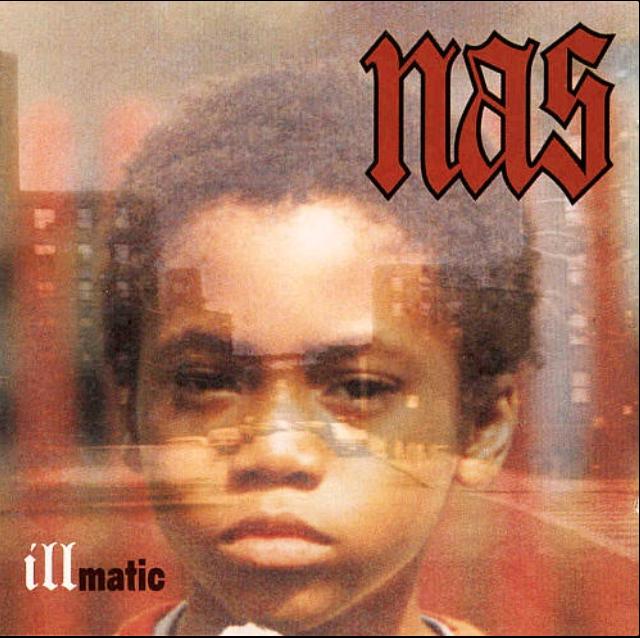 The cover of Illmatic is among the most recognizable images in hip-hop. It combines a childhood photograph of Nas with an image of the Queens neighborhood where he grew up, placing the artist’s personal history directly over the environment that shaped him.
The image is simple, but it communicates several ideas at once. The young face suggests innocence, while the urban setting evokes the pressures and experiences that would influence Nas’s writing. The cover invites the listener to consider the relationship between childhood and adulthood, personal identity and environment, and the memories a person carries into later life.
It also makes the album’s focus clear before the music begins. This is not a generic collection of rap songs built around fashionable production. It is a personal statement rooted in a particular place and a particular life.
The cover’s power comes partly from the way it avoids excessive explanation. It does not spell out the album’s themes or present a series of visual symbols. Instead, it places Nas and Queensbridge together, leaving the listener to consider what that relationship means.
Over time, the image became one of the most recognizable covers in rap history. It has been discussed, referenced, and reinterpreted by artists and fans, and it remains closely associated with the album’s identity.
The artwork also reflects the album’s broader approach to storytelling. Nas does not present Queensbridge as an abstract symbol of urban hardship. He presents it as the place where he grew up, the environment that helped form his perspective, and the setting from which his stories emerge.
The Release: Critical Acclaim Before Massive Sales
When Illmatic arrived on April 19, 1994, the reaction among dedicated hip-hop listeners was extraordinary. The album received glowing reviews, and The Source awarded it its highest rating of five mics. Critics praised Nas’s writing, the production, and the album’s cohesive sound.
Yet the record’s commercial performance did not immediately match the scale of its critical reputation. It sold respectably, but it was not an instant mainstream phenomenon on the level of some of the biggest rap releases of the decade.
That gap between critical acclaim and commercial success is an important part of the album’s story. Illmatic was respected as a major artistic achievement, but it did not arrive with a huge crossover single that dominated pop radio. Its appeal depended heavily on the quality of the album as a whole, the reputation Nas had developed among hip-hop fans, and the word of mouth surrounding the record.
The album’s short running time and concentrated style also made it different from releases designed around a long sequence of potential singles. Illmatic rewarded listeners who paid attention to the writing and production, and its reputation grew as people returned to it.
Nas’s age added to the excitement. At 20, he had delivered an album that many listeners felt surpassed the work of much more experienced artists. He sounded fully formed, with a distinctive voice and a sophisticated understanding of the relationship between rhythm, imagery, and narrative.
But critical acclaim created its own pressure. Once an artist is described as a generational talent, every subsequent release is judged against the expectations established by the debut. The same praise that helped build Nas’s reputation would make it difficult for his later albums to escape comparisons with Illmatic.
The album’s commercial trajectory also illustrates how hip-hop classics can develop over time. An album does not need to dominate the charts immediately to become culturally significant. Sometimes its influence grows through musicians who study it, listeners who recommend it, and successive generations who discover it after its original release.
Illmatic became that kind of record: an album whose reputation expanded with repeated listening and the evolution of hip-hop itself.
Why Illmatic Sounded Different From Other Rap Albums
Part of Illmatic’s appeal lies in the way it brought together elements that were already present in hip-hop and made them feel unusually focused.
The album did not invent multisyllabic rhyming, jazz sampling, street narratives, or the use of multiple producers. Those techniques had histories of their own. What made Nas’s debut remarkable was how naturally he combined them.
His lyrics were technically intricate without feeling like a vocabulary exercise. His stories were gritty without reducing every character to a stereotype. His confidence was unmistakable, but the album also made room for uncertainty, reflection, and vulnerability.
The production was equally important. Large Professor, DJ Premier, Pete Rock, Q-Tip, and L.E.S. brought different musical sensibilities to the project, but the beats shared an earthy, sample-based character. The drums were prominent, the samples were carefully chosen, and the arrangements left space for the rapper’s voice.
The result captured a particular moment in East Coast hip-hop. The early 1990s had seen a renewed emphasis on lyricism, sample-based production, and regional identity. Artists were developing increasingly sophisticated ways to combine musical references with stories about their surroundings.
Illmatic represented that movement at a particularly high level. It was an album that rewarded listeners who paid attention to the writing, but it also worked as music. The beats had their own appeal, the rhythms were memorable, and the performances carried enough personality to make the songs compelling even without close analysis.
Its influence is especially clear in the way later rappers approached albums as complete artistic statements. Rather than treating an LP as a collection of singles, artists increasingly emphasized cohesion, atmosphere, sequencing, and the relationship between personal experience and musical style.
Not every classic album follows that approach, and Illmatic was not the only record to demonstrate it. But the album became one of the clearest examples of how a tightly constructed rap record could function as both a personal document and a major artistic achievement.
The Influence on Nas’s Career
The success of Illmatic established Nas as one of hip-hop’s most respected lyricists, but it also created a difficult standard for everything that followed.
His second album, It Was Written, arrived in 1996 with a broader commercial approach. It incorporated more cinematic storytelling, polished production, and a sound designed to reach a larger audience. The album became a major commercial success and introduced Nas to listeners who might not have discovered him through the more underground appeal of his debut.
The difference between the two albums has been a recurring subject of discussion. Some fans prefer the concentrated realism and raw production of Illmatic, while others appreciate the wider musical scope and storytelling ambitions of It Was Written. The comparison reflects a larger tension in hip-hop between underground credibility and mainstream success.
Nas continued to explore different styles throughout his career. His later work addressed personal growth, social conditions, commercial pressures, family, aging, and the evolution of hip-hop itself. Some albums received more enthusiastic responses than others, but Illmatic remained a central reference point.
That position can be both an advantage and a burden. The album gave Nas an enduring place in hip-hop history, but it also meant that every new release would be measured against an unusually celebrated debut.
Rather than attempting to recreate Illmatic repeatedly, Nas developed his career in different directions. He explored more polished production, ambitious concept albums, collaborations, and reflective material that drew on decades of experience.
The debut remained important because it captured a moment that could never be reproduced exactly: a young artist at the beginning of his career, writing from the world he knew best, with a group of producers who helped turn his ideas into music.
Illmatic and the Golden Age of Hip-Hop
The album’s release in 1994 placed it within one of the most celebrated periods in hip-hop history. The early and middle 1990s produced influential work from artists including The Notorious B.I.G., Wu-Tang Clan, A Tribe Called Quest, Gang Starr, Mobb Deep, and many others.
These artists approached rap from different perspectives. Some emphasized intricate lyricism, others group chemistry, musical experimentation, regional identity, or vivid narratives about street life. The result was a period of extraordinary stylistic diversity.
Illmatic became one of the records most closely associated with this era because it combined several of its defining qualities. Its production drew from jazz and soul, its writing placed a premium on detail and technique, and its identity was firmly rooted in New York.
The album also reflected the importance of producers within hip-hop. Rather than treating the beat as a disposable background for the rapper, Illmatic presented production as an essential part of the artistic statement. Each producer shaped the emotional and rhythmic environment in which Nas’s writing operated.
Its reputation helped reinforce the idea that a rap album could be judged by the same kinds of criteria applied to other major musical works: composition, performance, arrangement, atmosphere, sequencing, and thematic unity.
That did not mean every listener had to agree that Illmatic was the greatest rap album ever made. Hip-hop’s history is too varied for one record to represent every regional scene, generation, or style. But the album became a useful benchmark for discussing what the genre could accomplish when writing and production worked together at a high level.
Its continued presence in conversations about the golden age reflects both the quality of the music and the way it captured the possibilities of its time.
The Legacy of Illmatic: A Classic That Keeps Growing
In 2020, Illmatic was selected for preservation in the National Recording Registry at the Library of Congress, recognizing its cultural, historical, and artistic significance. The honor reflected the album’s importance beyond the immediate world of hip-hop.
The record has also been celebrated through anniversary editions, documentaries, live performances, and retrospectives. In 2014, the documentary Time Is Illmatic explored Nas’s upbringing, musical influences, and the creation of the album, offering a deeper look at the circumstances that shaped it.
These projects helped introduce Illmatic to listeners who were not alive when it was released. For younger audiences, the album can serve as both a musical experience and an entry point into the history of New York hip-hop.
Its influence is visible in the work of rappers who value detailed storytelling, complex rhyme patterns, and albums with a strong sense of identity. Producers continue to study the balance between the samples and drums, while writers examine how Nas created vivid scenes without sacrificing rhythmic precision.
The album’s reputation has also generated debate. Some listeners argue that its short length and concentrated approach make it unusually consistent; others believe its status can overshadow other remarkable albums from the same era. Those discussions are part of its legacy. A record that continues to provoke serious arguments about craft and influence has clearly remained relevant.
The most important point is that Illmatic does not depend entirely on nostalgia. Its stories remain understandable, its production remains compelling, and its central concerns—ambition, friendship, danger, memory, and the search for a better future—continue to resonate.
Nas captured the experience of growing up in a particular place at a particular time, but he did so with enough imagination and precision to reach listeners far beyond that environment.
Final Thoughts: The Making of a Hip-Hop Classic
Illmatic was the product of an extraordinary combination of talent, place, timing, and musical collaboration. Nas brought a distinctive voice and a remarkable ability to turn personal experience into vivid storytelling. Large Professor, DJ Premier, Pete Rock, Q-Tip, and L.E.S. supplied a varied but cohesive set of productions that gave his writing room to develop.
The album’s ten tracks create a detailed portrait of Queensbridge without reducing the neighborhood to a single story. There is danger, but also friendship. There is ambition, but also uncertainty. There are moments of bravado, alongside reflections on mortality and the consequences of everyday choices.
Its success was not immediate domination of the charts. Instead, Illmatic earned its reputation through the quality of its writing, its production, and the respect it received from listeners and musicians. That reputation expanded over time until the album became one of the most influential and frequently discussed works in hip-hop history.
The cover captures a childhood face against the neighborhood that shaped it. The opening establishes the world. The songs explore its dangers and possibilities. And the closing track leaves the listener with a young artist demonstrating that his voice belongs among the most distinctive in rap.
Nas was only 20 when Illmatic arrived, but the album did not sound like a tentative first attempt. It sounded like an artist who had already developed a clear vision of what he wanted to say and how he wanted to say it.
That is the central reason the record endures. Illmatic did not simply collect great beats and impressive rhymes. It made those elements serve a larger purpose: telling a story about a young man, his neighborhood, and the world he was trying to understand.
More than three decades later, the album remains a defining achievement of East Coast hip-hop. Its influence can be heard in generations of rappers who followed, but its greatest strength is still the music itself. Every return to Illmatic offers another chance to hear the detail, atmosphere, and ambition that made Nas’s debut a classic.
This post has already been read 5 times!