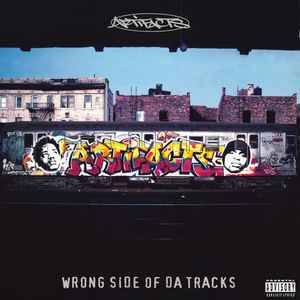
 In the mid-1990s, hip-hop was a culture still deeply connected to its original elements—MCing, DJing, breakdancing, and graffiti. While the genre was beginning to expand commercially, there remained a core group of artists dedicated to preserving its raw, foundational spirit. Among them was Artifacts, whose breakout single “Wrong Side of da Tracks” became both a mission statement and a time capsule of that ethos.
Released in 1994 as part of their debut album Between a Rock and a Hard Place, the track is more than just a song—it’s a declaration of identity. It speaks for the overlooked, the underground, and the artists who built hip-hop not for charts, but for expression. With its gritty production, vivid lyricism, and unapologetic authenticity, “Wrong Side of da Tracks” stands as one of the purest representations of boom-bap culture.
Newark Roots and a Culture First Mentality
Artifacts—comprised of El Da Sensei and Tame One—hailed from Newark, New Jersey, a city with a rich but often underrepresented hip-hop history. Unlike many artists chasing mainstream recognition, Artifacts were deeply embedded in the culture itself, particularly the graffiti scene.
That background is essential to understanding “Wrong Side of da Tracks.” This isn’t just a rap song—it’s a graffiti anthem. It reflects a time when tagging trains and painting walls were as central to hip-hop as rhymes and beats. The “wrong side” referenced in the title isn’t just geographic—it’s cultural, representing those who existed outside the spotlight.
Their perspective is rooted in authenticity. They’re not outsiders looking in—they’re insiders documenting their own world.
Production That Hits Like Concrete
The beat for “Wrong Side of da Tracks,” produced by T-Ray, is classic boom-bap: hard drums, dusty samples, and a loop that feels like it’s been pulled straight from a forgotten crate of vinyl.
There’s nothing polished about it—and that’s exactly the point. The track’s rough edges give it character, making it feel grounded and real. The drums hit with a steady, unrelenting rhythm, while the sample creates a gritty atmosphere that perfectly complements the lyrics.
This kind of production defined an era. It wasn’t about perfection—it was about feel. And “Wrong Side of da Tracks” captures that feel in its purest form.
Bars That Paint Pictures
Lyrically, El Da Sensei and Tame One deliver verses that are vivid, detailed, and deeply rooted in their environment. Their flows are sharp and precise, cutting through the beat with clarity.
What sets them apart is their ability to paint pictures. Their lines are filled with imagery—train yards, graffiti tags, city streets—that bring their world to life. You don’t just hear the song—you see it.
There’s also a strong sense of pride in their delivery. They’re not apologizing for where they come from or what they represent. Instead, they embrace it fully, turning what might be seen as limitations into strengths.
Graffiti as Identity
One of the defining aspects of “Wrong Side of da Tracks” is its focus on graffiti culture. At a time when many hip-hop tracks were moving away from this element, Artifacts doubled down on it.
References to tagging, bombing trains, and the risks involved are woven throughout the song. It’s a reminder that hip-hop didn’t start in recording studios—it started on the streets, on walls, on trains.
This emphasis on graffiti gives the track a unique perspective. It’s not just about music—it’s about art in its rawest form, about leaving a mark in a world that often ignores you.
Standing Apart in a Changing Landscape
In 1994, hip-hop was evolving rapidly. Albums like Illmatic by Nas and Ready to Die by The Notorious B.I.G. were redefining the genre with deeply personal storytelling and polished production.
“Wrong Side of da Tracks” exists alongside these classics but takes a different approach. It’s less about introspection and more about representation. It doesn’t dive into personal struggles or narratives—it presents a collective identity.
That distinction is important. It shows the diversity within hip-hop at the time, the different directions artists were taking while still being part of the same culture.
The Hook: Simple and Effective
The hook of the song is straightforward but powerful, reinforcing the central theme. It doesn’t rely on melody or complexity—just repetition and attitude.
This simplicity works in its favor. It makes the message clear and memorable, allowing the verses to carry the weight of the storytelling.
In many ways, the hook acts as a rallying cry, a unifying statement for those who identify with the “wrong side.”
Underground Respect and Lasting Influence
While “Wrong Side of da Tracks” didn’t achieve massive commercial success, it earned something arguably more valuable: respect. It became a staple of underground hip-hop, a track that resonated with those who valued authenticity over popularity.
Its influence can be seen in later artists who embraced the same ethos—prioritizing culture, craft, and identity over mainstream appeal. Groups like Mobb Deep and Smif-N-Wessun carried forward that gritty, street-level perspective, even as the industry shifted around them.
Artifacts themselves may not have reached superstar status, but their impact is undeniable. They helped preserve a crucial part of hip-hop’s identity during a time of change.
A Time Capsule of Boom-Bap
Listening to “Wrong Side of da Tracks” today feels like stepping back into a specific moment in hip-hop history. The sound, the style, the attitude—it all reflects an era when the culture was still closely tied to its roots.
There’s a rawness to it that’s hard to replicate. It’s not just about the music—it’s about the context, the environment, the mindset.
That’s what makes it timeless. It’s not chasing trends or trying to fit into a particular mold. It’s documenting a reality.
Why It Still Matters
In today’s hip-hop landscape, where production is often polished and global influences are more prominent than ever, “Wrong Side of da Tracks” serves as a reminder of where it all began.
It highlights the importance of authenticity, of staying true to your voice and your environment. It shows that hip-hop is more than just a genre—it’s a culture, a way of life.
For new listeners, it offers a window into the past. For longtime fans, it’s a reminder of the foundation.
Final Thoughts
“Wrong Side of da Tracks” by Artifacts is more than just a classic boom-bap track—it’s a statement of purpose. It captures a moment when hip-hop was still deeply connected to its roots, when artists were driven by passion rather than profit.
With its gritty production, vivid lyricism, and unwavering authenticity, the song stands as a testament to the power of staying true to the culture.
It doesn’t try to be polished or perfect. It doesn’t need to be.
Because sometimes, the most powerful art comes from the wrong side of the tracks.
This post has already been read 1417 times!