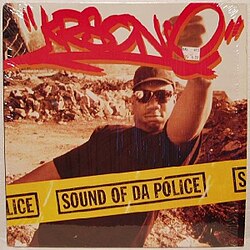
 In the long history of hip-hop as a voice for social commentary, few songs have struck with the force, clarity, and urgency of “Sound of da Police” by KRS-One. Released in 1993 on his album Return of the Boom Bap, the song is widely regarded as one of the most powerful protest tracks in rap history. Built around a raw beat and a blistering vocal performance, the track doesn’t just criticize police misconduct—it connects modern policing to a much deeper history of oppression.
More than three decades later, “Sound of da Police” continues to resonate with listeners around the world. The song’s themes of systemic power, racial injustice, and institutional control remain painfully relevant, making it one of the most enduring political statements in hip-hop.
But to fully understand the impact of “Sound of da Police,” it’s important to understand the artist behind it—KRS-One, one of hip-hop’s most outspoken intellectuals and cultural leaders.
The Teacher of Hip-Hop
KRS-One, born Lawrence Parker, first rose to prominence in the mid-1980s as part of the legendary rap group Boogie Down Productions. Alongside producer DJ Scott La Rock, KRS-One helped define early East Coast hip-hop with raw street narratives and sharp lyrical delivery.
After Scott La Rock was tragically killed in 1987, KRS-One transformed Boogie Down Productions into something more than just a rap group. He began using music as a platform for education, social awareness, and political commentary. This shift gave birth to his nickname: “The Teacher.”
Throughout the late 1980s and early 1990s, KRS-One became known for songs that tackled issues like violence, education, media manipulation, and racism. Tracks such as “My Philosophy” and “You Must Learn” blended powerful messages with classic boom-bap production.
By the time he released Return of the Boom Bap in 1993, KRS-One had already established himself as one of hip-hop’s most respected voices.
“Sound of da Police” would become one of his most explosive statements.
The Power of Boom-Bap
The musical foundation of “Sound of da Police” is pure boom-bap hip-hop—the gritty East Coast sound that dominated the early 1990s.
The track was produced by Showbiz, a member of the Diggin’ in the Crates (D.I.T.C.) collective. The beat features pounding drums, a minimal bassline, and an eerie horn sample that creates a sense of tension throughout the song.
Unlike many polished hip-hop productions of the era, the beat feels raw and confrontational. The drums hit hard and leave plenty of space for KRS-One’s voice to dominate the track.
But the most recognizable element of the song isn’t the beat—it’s the siren-like chant that KRS-One shouts between verses:
“Woop woop! That’s the sound of da police!”
The call mimics the sound of police sirens, instantly grabbing the listener’s attention. It’s simple, catchy, and unforgettable.
More importantly, it sets the tone for the message that follows.
A Direct Confrontation
From the moment KRS-One begins rapping, it’s clear that “Sound of da Police” is not a subtle song.
He opens with sharp questions about authority and accountability, immediately challenging the idea that police officers exist purely to serve and protect.
But the real heart of the song comes from one of its most controversial and powerful arguments: KRS-One compares modern policing to historical systems of oppression, particularly slavery.
In one of the song’s most famous lines, he declares:
“The officer has the right to arrest
And if you fight back they put a hole in your chest.”
KRS-One argues that the power imbalance between law enforcement and citizens mirrors the dynamic between slave masters and enslaved people. While the comparison is intentionally provocative, it forces listeners to think critically about authority and systemic power.
Rather than presenting a simple anti-police message, KRS-One challenges the very structure of institutions that hold power over communities.
It’s a bold and uncompromising argument.
A Lesson in History
One of the most unique aspects of “Sound of da Police” is the way KRS-One blends historical analysis with hip-hop lyricism.
Throughout the song, he draws connections between different forms of authority throughout history—from colonial overseers to modern police officers. By placing contemporary policing within a broader historical context, KRS-One encourages listeners to examine how power systems evolve over time.
This intellectual approach is part of what makes the song so powerful.
Instead of relying solely on anger or emotional appeals, KRS-One builds a structured argument. He uses history, logic, and personal observation to support his claims.
In doing so, he transforms the track into something more than a protest song.
It becomes a lesson.
And that educational tone is exactly what helped cement KRS-One’s reputation as “The Teacher.”
The Voice of Authority
Another reason the song works so effectively is KRS-One’s commanding vocal delivery.
His voice is loud, sharp, and unmistakably confident. Each line is delivered with conviction, as if he’s addressing a crowd rather than recording in a studio.
Unlike many rappers who rely on rapid-fire flows, KRS-One takes his time. His words are clear and deliberate, ensuring that listeners understand every line.
The pauses between verses allow the hook—“Woop woop! That’s the sound of da police!”—to echo in the listener’s mind.
It’s not just a catchy phrase.
It’s a warning.
The Political Climate of the Early 1990s
To fully appreciate the impact of “Sound of da Police,” it’s important to understand the political climate in which it was released.
The early 1990s were a turbulent time in American society. Tensions between police departments and minority communities were reaching a boiling point, especially after the 1991 beating of Rodney King by Los Angeles police officers.
When the officers involved were acquitted in 1992, widespread protests and riots erupted across Los Angeles. The event sparked a national conversation about police brutality and systemic racism.
“Sound of da Police” arrived in the middle of that conversation.
For many listeners, the song articulated frustrations that had been building for years. It gave voice to anger and skepticism toward authority that many people felt but rarely heard expressed so openly in mainstream music.
Global Influence
Although the song was rooted in American issues, its message quickly resonated internationally.
In countries around the world, listeners related the song’s themes to their own experiences with authority and institutional power. Over time, “Sound of da Police” became a global protest anthem.
The track has been sampled, referenced, and remixed by countless artists. It has appeared in documentaries, films, and protest movements across multiple decades.
Whenever debates about policing and civil rights re-emerge, the song often finds its way back into public conversation.
Few hip-hop tracks have maintained that level of relevance for so long.
KRS-One’s Lasting Legacy
While “Sound of da Police” remains one of KRS-One’s most famous songs, it represents just one chapter in a career defined by activism and education.
Throughout the 1990s and beyond, KRS-One continued releasing music that encouraged critical thinking and cultural awareness. He also became a major advocate for hip-hop as a legitimate cultural movement, helping establish the Temple of Hip Hop, an organization dedicated to preserving hip-hop’s philosophy and values.
For KRS-One, rap was never just entertainment.
It was a platform for truth.
Why the Song Still Matters
More than thirty years after its release, “Sound of da Police” continues to resonate with new generations of listeners.
Part of that endurance comes from the song’s raw honesty. KRS-One doesn’t soften his message or hide behind metaphor. He confronts difficult issues head-on, forcing listeners to grapple with uncomfortable questions.
But the track’s lasting power also comes from its structure.
The beat is timeless.
The hook is unforgettable.
And the message remains deeply relevant.
Whenever conversations about policing, justice, and systemic power arise, “Sound of da Police” still feels like a soundtrack for the debate.
A Hip-Hop Protest Classic
In the long tradition of protest music—from folk songs of the 1960s to modern political rap—“Sound of da Police” stands as one of hip-hop’s most important statements.
It combines powerful production, fearless lyricism, and historical insight into a song that refuses to be ignored.
KRS-One didn’t just write a rap track.
He created a challenge.
A challenge to authority, a challenge to history, and a challenge to listeners to question the systems that shape their lives.
And decades later, the siren still echoes:
“Woop woop! That’s the sound of da police!”
This post has already been read 166 times!