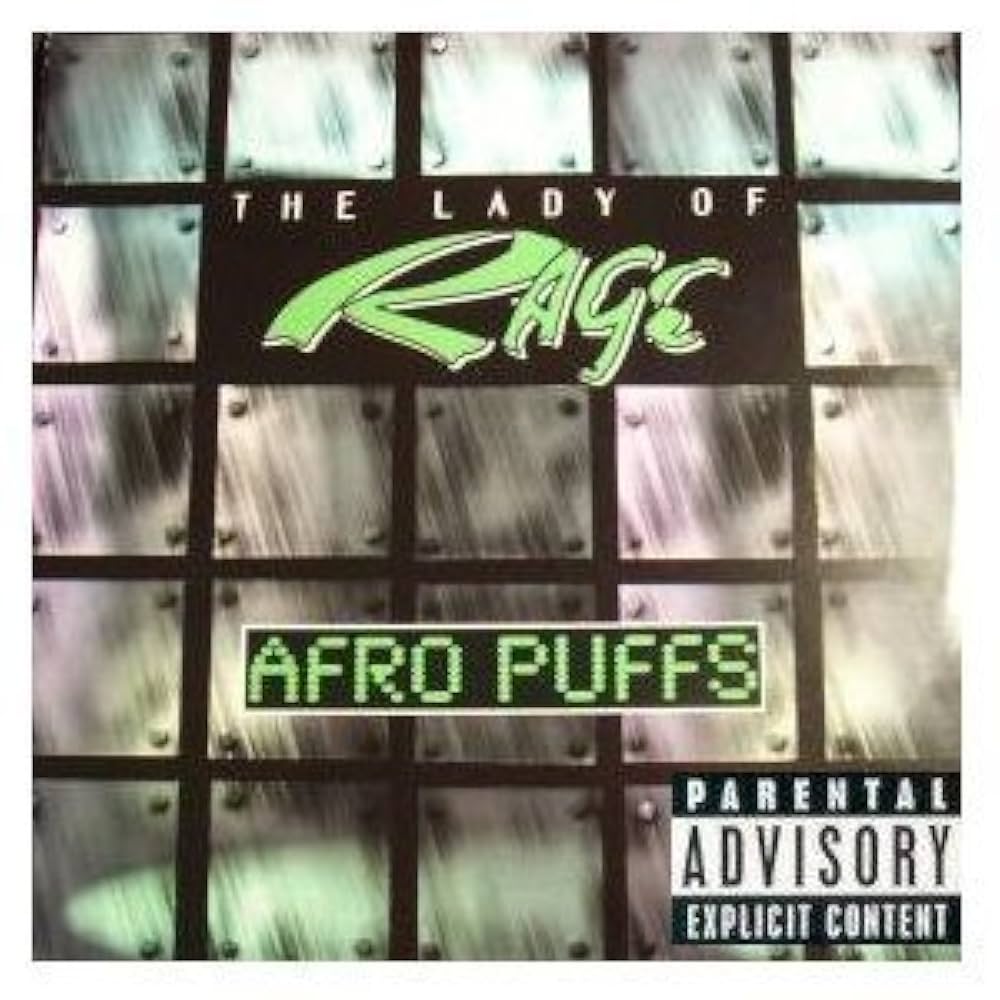
 In the early 1990s, West Coast hip-hop was a powerhouse. The sound of G-funk—deep basslines, melodic synths, and laid-back grooves—dominated the charts, driven by figures like Dr. Dre and Snoop Dogg. But within that landscape, one voice cut through with a different kind of authority—raw, commanding, and impossible to overlook. That voice belonged to The Lady of Rage.
Her breakout single, “Afro Puffs,” released in 1994 on the soundtrack for Above the Rim, wasn’t just an introduction—it was a declaration. It announced her as a force within a male-dominated scene, delivering a performance so confident and electrifying that it remains one of the most iconic debut moments in hip-hop history.
A Beat That Demands Attention
From its opening seconds, “Afro Puffs” makes its intentions clear. The production—handled by Daz Dillinger—leans into the G-funk blueprint but adds a sharper edge. The bassline is thick and rolling, the synths are eerie and melodic, and the drums hit with a deliberate, head-nodding force.
Unlike some of the smoother, more relaxed G-funk tracks of the era, “Afro Puffs” feels urgent. There’s a tension in the beat, a sense that something powerful is about to unfold. It’s not just background music—it’s a stage, and Lady of Rage steps onto it with complete control.
The production strikes a balance between groove and aggression, creating a sonic space that allows her voice to dominate without being overshadowed.
The Voice That Took Over
What immediately sets “Afro Puffs” apart is Lady of Rage’s delivery. Her voice is deep, commanding, and full of conviction. She doesn’t ease into the track—she takes it over.
Her flow is precise and relentless, each line delivered with clarity and impact. There’s no hesitation, no uncertainty. She sounds like she knows exactly who she is and what she brings to the table—and she’s daring anyone to question it.
In an era where many female MCs had to fight for recognition, Lady of Rage doesn’t ask for space—she claims it. Her presence on the mic is undeniable, and “Afro Puffs” is the perfect showcase for her talent.
Lyrical Bravado and Identity
Lyrically, “Afro Puffs” is a masterclass in confidence. Lady of Rage blends sharp wordplay with unapologetic self-assurance, delivering lines that assert her dominance in a scene that often overlooked women.
But the song is about more than just competition. It’s also about identity. The title itself—“Afro Puffs”—is a celebration of natural beauty, a statement of pride that carries cultural weight.
In a genre where image and style are central, Lady of Rage uses her platform to redefine what that image can look like. She’s not conforming to expectations—she’s setting her own.
This combination of bravado and self-expression gives the track depth. It’s not just about being the best—it’s about being yourself, unapologetically.
A Scene-Stealing Moment
“Afro Puffs” gained additional attention through its appearance in Above the Rim, a film that also featured music from some of the biggest names in hip-hop. But even among that lineup, Lady of Rage stood out.
Her performance felt different—rawer, more immediate. While other tracks leaned into melody or narrative, “Afro Puffs” was pure energy, a burst of charisma that demanded attention.
It’s the kind of song that doesn’t just play—it arrives.
Death Row’s Expanding Roster
At the time, Death Row Records was at the height of its influence, home to artists like Dr. Dre, Snoop Dogg, and 2Pac. It was a label known for its dominance, its larger-than-life presence, and its ability to shape the sound of an era.
Lady of Rage was a key part of that roster, and “Afro Puffs” was her moment to shine. It proved that she could stand alongside the label’s biggest stars, not as a supporting act, but as a force in her own right.
Her presence added another dimension to Death Row’s identity, showing that the label’s influence extended beyond its core lineup.
Standing Out in a Male-Dominated Era
One of the most significant aspects of “Afro Puffs” is its place within the broader context of hip-hop. In the early ’90s, female MCs were often underrepresented, especially in the West Coast scene.
Artists like Queen Latifah and MC Lyte had already established themselves on the East Coast, but the West had fewer prominent female voices.
Lady of Rage changed that narrative. With “Afro Puffs,” she didn’t just participate—she dominated. Her performance challenged assumptions and expanded the possibilities for women in hip-hop.
The Hook That Hits Like a Statement
The hook of “Afro Puffs” is simple but powerful, built around repetition and rhythm. It reinforces the song’s central themes, turning them into a mantra.
It’s not designed to be soft or melodic—it’s designed to hit. And it does, every time.
This approach aligns perfectly with the track’s overall energy. Everything about “Afro Puffs” is direct, confident, and unapologetic.
Legacy and Influence
Over the years, “Afro Puffs” has become a defining track of ’90s hip-hop, often cited as one of the most iconic debut singles of the era. Its influence can be seen in later artists who combine lyrical skill with strong identity and presence.
Rappers like Missy Elliott and Nicki Minaj have carried forward that tradition, using their voices to challenge norms and redefine expectations.
While styles and sounds have evolved, the foundation remains the same: confidence, authenticity, and the ability to command attention.
Why It Still Hits
Decades after its release, “Afro Puffs” still feels powerful. The production remains effective, the lyrics still resonate, and Lady of Rage’s performance is as commanding as ever.
Part of that is due to its authenticity. The track doesn’t feel manufactured or overly polished—it feels real, rooted in a specific moment but not limited by it.
It’s the kind of song that doesn’t age—it endures.
Final Thoughts
“Afro Puffs” by The Lady of Rage is more than just a breakout single—it’s a statement of power, identity, and presence. It captures a moment when hip-hop was expanding, when new voices were emerging and redefining what the genre could be.
With its hard-hitting production, confident lyricism, and unforgettable delivery, the track stands as a testament to Lady of Rage’s talent and influence.
It doesn’t ask for recognition—it demands it.
And decades later, that demand still echoes just as loudly.
This post has already been read 848 times!