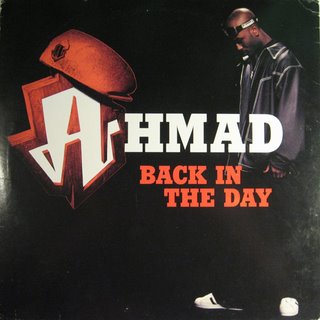
 In 1994, hip-hop was splitting into multiple identities at once. On one side, the genre was becoming darker, more confrontational, and more commercially ambitious. On the other, there were artists who chose reflection over aggression—songs that didn’t shout, but remembered. Among the most timeless of these is “Back in the Day” by Ahmad, a track that feels less like a single and more like a warm breeze carrying memories across time.
From the moment it begins, “Back in the Day” establishes its purpose. This isn’t about dominance, competition, or spectacle. It’s about childhood, about simpler moments, about the quiet realization that time has moved on whether you were ready or not. And in just a few minutes, Ahmad captures something universal: the bittersweet glow of looking back.
A Groove That Feels Like Summer
The backbone of “Back in the Day” is its instantly recognizable sample from The Moments’s “Love on a Two-Way Street.” The loop is warm, melodic, and deeply nostalgic even before Ahmad adds a single word. It feels like sunshine filtered through memory—soft, slightly faded, and comforting.
The production, handled by Rascal, doesn’t try to reinvent the sample. Instead, it lets it breathe. The drums are crisp but unobtrusive, giving the track a steady rhythm without overpowering its emotional core.
This restraint is key. The beat doesn’t demand attention—it invites reflection. It creates space for the listener to drift, to remember, to fill in their own details alongside Ahmad’s.
A Voice of Youth and Clarity
What makes “Back in the Day” so striking is Ahmad’s delivery. At just 19 years old, he raps with a clarity and sincerity that feels far beyond his years. There’s no pretense, no forced toughness—just honesty.
His voice carries a natural warmth, perfectly suited to the song’s theme. He doesn’t rush his lines or try to impress with complex wordplay. Instead, he focuses on storytelling, letting each memory unfold at its own pace.
That simplicity is what makes the track so powerful. It feels real, unfiltered, like a conversation rather than a performance.
Painting a Childhood in Fragments
Lyrically, “Back in the Day” is built on snapshots. Ahmad doesn’t tell a single, linear story. Instead, he strings together moments—riding bikes, hanging out with friends, the rhythms of everyday life.
These details are specific enough to feel authentic but universal enough to resonate with anyone who’s ever looked back on their own youth. It doesn’t matter where you grew up—there’s something in these lines that feels familiar.
That’s the genius of the song. It’s deeply personal, yet widely relatable. Ahmad isn’t just telling his story—he’s creating a framework for listeners to insert their own memories.
Nostalgia Without Illusion
What sets “Back in the Day” apart from many nostalgic songs is its honesty. It doesn’t pretend that the past was perfect. Instead, it acknowledges the passage of time and the changes that come with it.
There’s a subtle melancholy running through the track, a recognition that those moments are gone. But it’s not overwhelming. It’s balanced by gratitude—a sense that those experiences, however fleeting, were meaningful.
This balance is what gives the song its emotional depth. It’s not just about longing for the past—it’s about understanding it.
West Coast Warmth in a Changing Era
In 1994, the West Coast sound was largely defined by the dominance of G-funk, with artists like Dr. Dre and Snoop Dogg shaping the mainstream. Their music was smooth but often centered on themes of power, street life, and celebration.
“Back in the Day” exists in that same sonic universe but takes a different approach. It retains the warmth and groove of West Coast production while shifting the focus inward. Instead of looking outward at status or success, Ahmad looks backward at memory.
This distinction makes the song stand out. It’s not trying to compete with the dominant sound—it’s offering an alternative perspective.
A One-Hit Wonder That Endured
Despite the success of “Back in the Day,” Ahmad never reached the same level of mainstream recognition again. In many ways, he became the definition of a one-hit wonder.
But that label doesn’t diminish the impact of the song. If anything, it adds to its mystique. “Back in the Day” feels like a moment captured perfectly—a snapshot that didn’t need to be repeated.
Over the years, the track has remained a staple of ’90s hip-hop playlists, often cited as one of the most nostalgic songs of the era. Its influence can be heard in later tracks that explore similar themes, from reflective storytelling to memory-driven lyricism.
The Universality of Looking Back
Part of what makes “Back in the Day” so enduring is its universality. Everyone has a version of the past they look back on—a time that feels simpler, more innocent, more defined.
Ahmad taps into that feeling without overcomplicating it. He doesn’t try to analyze it or explain it. He simply presents it, allowing the listener to connect in their own way.
In doing so, he creates a song that transcends its specific context. It’s not just about the early ’90s or a particular neighborhood—it’s about the experience of growing up and moving on.
A Song That Ages With You
One of the most remarkable things about “Back in the Day” is how it changes as you age. When you first hear it, it might feel like a reflection on childhood from a distance. But as time passes, it becomes something else—a mirror.
The older you get, the more the song resonates. Lines that once felt simple take on new meaning. Moments that seemed distant start to feel closer.
This ability to evolve with the listener is rare. It’s what turns a good song into a timeless one.
Why It Still Matters
In today’s music landscape, where trends shift rapidly and nostalgia is often packaged for quick consumption, “Back in the Day” stands apart. It doesn’t rely on gimmicks or references—it relies on feeling.
Its production remains warm and inviting, its lyrics honest and relatable. It’s a reminder that sometimes the most powerful songs are the simplest ones—the ones that speak directly to shared human experiences.
For Ahmad, the track represents a singular achievement: capturing a universal emotion with clarity and grace. It’s not flashy or groundbreaking in a technical sense, but it doesn’t need to be.
Its power lies in its authenticity.
Final Thoughts
“Back in the Day” by Ahmad is more than just a nostalgic hip-hop track—it’s a reflection on time itself. It captures the fleeting nature of youth, the warmth of memory, and the quiet realization that nothing stays the same.
There’s no grand conclusion, no dramatic twist. Just a series of moments, preserved in sound, waiting to be revisited.
And that’s what makes it so special. It doesn’t try to hold onto the past—it simply remembers it.
In a genre often defined by forward momentum, “Back in the Day” reminds us of the value of looking back. Not to escape the present, but to understand how we got here.
Because sometimes, the most meaningful journeys aren’t the ones that take us somewhere new—they’re the ones that bring us home again, even if only for a few minutes.
This post has already been read 428 times!