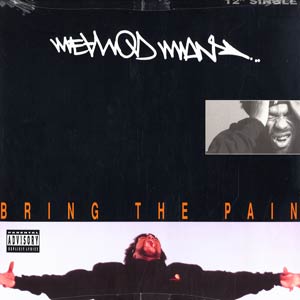
 In 1994, the Wu-Tang Clan had already detonated a seismic shift in hip-hop. Their debut album, Enter the Wu-Tang (36 Chambers), wasn’t just a record—it was a movement. Gritty, chaotic, and unapologetically raw, it redefined what East Coast rap could sound like. But within that nine-man collective, certain voices began to rise above the noise. One of the most magnetic was Method Man.
With the release of “Bring da Pain,” the lead single from his debut album Tical, Method Man didn’t just step out from the group—he carved out his own identity. The track is aggressive, hypnotic, and packed with charisma, a perfect introduction to an artist who could balance street grit with undeniable star power.
A Beat That Hits Like a Warning Shot
From the first seconds, “Bring da Pain” announces itself with authority. The production—handled by RZA—is stripped down but devastatingly effective. Built on eerie piano stabs, rugged drums, and a looping sample that feels like it’s echoing through a concrete hallway, the beat doesn’t just support the track—it defines it.
RZA’s production style during this era was revolutionary in its minimalism. Where other producers layered sounds for polish, RZA embraced imperfection. His beats felt raw, almost unfinished, but that was the point. They sounded like the streets they came from—unpredictable, unrefined, and alive.
“Bring da Pain” is a masterclass in that approach. Every element hits hard, but nothing is overcomplicated. The space in the beat allows Method Man’s voice to cut through with clarity, turning every line into a statement.
Method Man’s Voice: Charisma Meets Control
What immediately sets Method Man apart on “Bring da Pain” is his delivery. His voice is deep, commanding, and full of personality. He doesn’t just rap—he performs, shifting his tone and cadence to keep the listener locked in.
There’s a playful edge to his aggression, a sense that he’s enjoying himself even as he’s dismantling the competition. Lines land with precision, each one delivered with a confidence that feels effortless.
Unlike some of his Wu-Tang counterparts, who leaned heavily into abstract lyricism or dense wordplay, Method Man strikes a balance. His bars are sharp and memorable, but they’re also accessible. You don’t have to decode them to feel their impact.
That accessibility is part of what made him a breakout star. He had the grit of the underground but the charisma of a mainstream artist—a rare combination that “Bring da Pain” showcases perfectly.
Lyrical Bravado Without Apology
At its core, “Bring da Pain” is a declaration of dominance. Method Man isn’t telling a story or exploring introspection—he’s staking his claim. The lyrics are filled with battle-ready energy, a reminder that hip-hop, at its roots, is competitive.
But what elevates the track is how he delivers that bravado. There’s creativity in his insults, rhythm in his threats, and a sense of style that makes even the simplest lines hit harder.
He’s not just saying he’s the best—he’s making you believe it.
This kind of lyrical confidence was a hallmark of ’90s hip-hop, but Method Man brings his own flavor to it. There’s a looseness to his flow, a willingness to experiment with cadence and timing that keeps the track dynamic.
The Hook: Simple, Effective, Unforgettable
The hook of “Bring da Pain” is as direct as it gets. Repeating the phrase over and over, Method Man turns it into a mantra—a warning, a promise, and a mission statement all at once.
It’s not melodic in the traditional sense, but it doesn’t need to be. The rhythm of the words, combined with the beat, creates something that sticks in your head long after the song ends.
This simplicity is part of the track’s brilliance. It doesn’t overreach. It knows exactly what it is and executes it perfectly.
A Defining Moment for Tical
When Tical dropped, it marked the beginning of Wu-Tang’s solo domination. Each member would go on to release their own projects, but Method Man was among the first to break through in a major way.
“Bring da Pain” set the tone for the album. It established Method Man as more than just a member of a group—he was a force in his own right.
The album itself would go on to become a classic, but it’s this track that remains its most immediate and impactful moment. It’s the song that announced, without hesitation, that Method Man had arrived.
Wu-Tang’s Expanding Universe
Part of what makes “Bring da Pain” so significant is its place within the larger Wu-Tang narrative. The group’s strategy of launching individual careers while maintaining a collective identity was unprecedented at the time.
Artists like Ol’ Dirty Bastard, Raekwon, and Ghostface Killah would all go on to release iconic solo albums, each with their own distinct style.
Method Man’s approach was perhaps the most immediately accessible. While still rooted in Wu-Tang’s gritty aesthetic, his music had a broader appeal, making him one of the group’s most recognizable faces.
“Bring da Pain” is the foundation of that appeal—a track that captures the essence of Wu-Tang while showcasing Method Man’s individuality.
Cultural Impact and Influence
Over the years, “Bring da Pain” has become a staple of hip-hop’s golden era. It’s the kind of track that still gets reactions—whether it’s played in a club, referenced in a freestyle, or revisited by fans of classic rap.
Its influence can be heard in the work of artists who value presence and delivery as much as lyricism. Rappers like Redman—a frequent collaborator with Method Man—and later generations of MCs have drawn from that same balance of charisma and grit.
The track also helped cement Method Man’s status as a crossover star. Beyond music, he would go on to find success in film and television, but it all started here—with a song that made it impossible to ignore him.
Why It Still Hits Today
Nearly three decades later, “Bring da Pain” hasn’t lost its edge. Part of that is due to its production, which feels timeless in its rawness. There’s nothing trendy about it—no gimmicks, no dated sounds. Just drums, samples, and attitude.
But more than that, it’s the energy. The track captures a moment when hip-hop was both competitive and creative, when artists were pushing boundaries while staying true to their roots.
In today’s landscape, where production can sometimes overshadow performance, “Bring da Pain” serves as a reminder of the power of voice. Method Man doesn’t rely on effects or embellishments—he commands attention through sheer presence.
Final Thoughts
“Bring da Pain” by Method Man is more than just a standout track from the ’90s—it’s a defining moment in hip-hop history. It marks the emergence of a solo star, the expansion of a legendary group, and the enduring power of raw, unfiltered music.
It’s aggressive without being overwhelming, simple without being basic, and confident without feeling forced. It’s a song that knows exactly what it is and delivers it with precision.
In a genre built on evolution, tracks like “Bring da Pain” remind us of the foundation—of what made hip-hop resonate in the first place. And as long as that foundation matters, this song will continue to hit just as hard as it did in 1994.
This post has already been read 437 times!