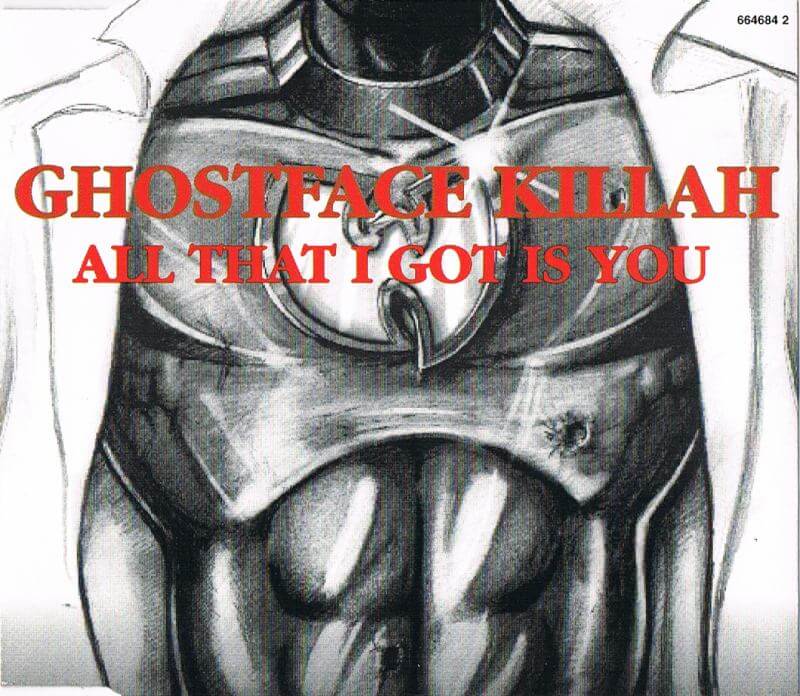
 In a genre often built on bravado, wealth, and larger-than-life personas, Ghostface Killah delivered something radically different with “All That I Got Is You.” Released in 1996 on his debut album Ironman, the track stands as one of the most honest and emotionally powerful songs in hip-hop history—a deeply personal reflection on poverty, family, and resilience.
At its heart, the song is a tribute to Ghostface’s mother, a woman who held together a household of nine children under crushing financial strain. Rather than glamorizing struggle, Ghostface lays it bare in vivid, uncomfortable detail. This isn’t nostalgia softened by time—it’s memory as it was lived: cold apartments, shared beds, hand-me-down clothes, and constant uncertainty.
The production, handled by fellow RZA, is deceptively gentle. Built around a sample of The Jackson 5’s “Maybe Tomorrow,” the beat feels warm and almost sentimental, creating a stark contrast with the harsh realities described in the lyrics. That contrast is what makes the song hit so hard. The music invites you in; the words refuse to let you stay comfortable.
Ghostface’s delivery is what truly elevates the track. Known for his animated, sometimes chaotic style, here he is focused and deliberate. His voice carries a sense of urgency, but also vulnerability. He doesn’t just tell you what happened—he makes you feel it. Lines about roaches in cereal boxes, wearing the same clothes for days, and watching his mother struggle to make ends meet paint a picture that is impossible to ignore.
Adding another emotional layer is the presence of Mary J. Blige, whose chorus brings a soulful, almost gospel-like quality to the song. Her voice acts as both a counterbalance and a reinforcement of Ghostface’s story. Where his verses are grounded in gritty detail, her hook lifts the song into something universal—a message about love, gratitude, and endurance.
What makes “All That I Got Is You” so remarkable is its refusal to exaggerate or sensationalize. In many ways, it runs counter to the dominant narratives of 1990s hip-hop, where success was often measured in material terms. Ghostface doesn’t deny the desire to escape poverty, but he centers something else: appreciation for the people who made survival possible in the first place.
The song also functions as a time capsule of a specific kind of urban struggle. The Staten Island upbringing Ghostface describes isn’t unique, and that’s part of why the track resonates so widely. It speaks for countless families who endured similar hardships, turning individual memory into collective experience.
The music video reinforces this perspective, showing scenes of cramped living conditions and family life that mirror the lyrics. It avoids flashy imagery entirely, focusing instead on realism and emotional authenticity. That decision only strengthens the song’s impact—it feels less like a performance and more like a confession.
Over time, “All That I Got Is You” has become one of the defining songs not just of Ghostface Killah’s career, but of hip-hop as a whole. It’s often cited as one of the genre’s most heartfelt tracks, a reminder that rap can be just as powerful in its quiet moments as it is in its loudest.
In a catalog filled with vivid storytelling and larger-than-life characters, this song stands apart because it strips everything down to the essentials. No metaphors, no masks—just truth. And in that truth lies its enduring strength.
“All That I Got Is You” isn’t just a song about hardship. It’s a song about love in its most fundamental form—the kind that persists even when there’s nothing else. And decades later, that message still resonates, as powerful and necessary as ever.
This post has already been read 351 times!