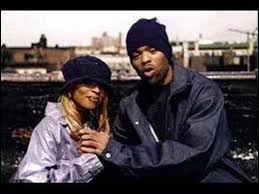
 In 1995, hip-hop and R&B were already deeply intertwined, but few songs captured their chemistry as perfectly—or as authentically—as “I’ll Be There for You / You’re All I Need to Get By.” When Method Man of the Wu-Tang Clan teamed up with Mary J. Blige, the result wasn’t just a crossover hit. It was a raw, emotional, street-level love song that felt unlike anything dominating the charts at the time.
This wasn’t polished romance. It wasn’t glossy fantasy. It was something far more real: a declaration of loyalty, struggle, and devotion from two artists who embodied the grit and soul of 90s urban music.
And in doing so, they created one of the most enduring duets in hip-hop history.
A Classic Reimagined for the Streets
At its core, the song is a reinterpretation of Marvin Gaye and Tammi Terrell’s timeless 1968 classic “You’re All I Need to Get By.” That original version was smooth, uplifting, and rooted in Motown elegance—a celebration of love as a source of strength and unity.
Method Man and Mary J. Blige take that same foundation and bring it into a completely different world.
Instead of orchestral arrangements and polished vocals, the 1995 version is built on a rugged hip-hop beat, laced with grit and tension. The sentiment remains, but the context shifts. This is love in the face of hardship. Love in the middle of chaos. Love that survives not because life is easy, but because it isn’t.
That transformation is what makes the song so powerful. It bridges generations while redefining what a love song can sound like in hip-hop.
Method Man’s Raw Vulnerability
Method Man, known for his charismatic presence and sharp lyricism within the Wu-Tang Clan, delivers one of the most personal performances of his career on this track.
From the opening lines, there’s a sense of sincerity that cuts through his usual bravado. He still carries his signature swagger, but it’s tempered by something deeper—an openness that feels almost disarming.
He raps about loyalty, about standing by his partner through struggles, about building something real in a world that often feels unstable. There’s no attempt to sugarcoat reality. Instead, he embraces it, framing love as something forged through adversity.
Lines about sharing burdens, supporting each other, and staying grounded give the song a sense of authenticity that resonates far beyond its era.
This isn’t a fairy tale. It’s a partnership.
And Method Man sells it completely.
Mary J. Blige: The Emotional Anchor
If Method Man provides the perspective, Mary J. Blige provides the soul.
By the mid-90s, Blige had already established herself as the “Queen of Hip-Hop Soul,” and this track is a perfect example of why. Her voice carries a weight of emotion that elevates the entire song.
When she sings the hook—“You’re all I need to get by”—it doesn’t feel like a simple refrain. It feels like a promise, a plea, and a declaration all at once.
There’s a vulnerability in her delivery that complements Method Man’s grounded verses. Where he speaks, she feels. Where he asserts, she reassures.
Together, they create a balance that is rare in collaborations. Neither overshadows the other. Instead, they build something together, each element enhancing the other.
Blige’s presence is what transforms the track from a strong hip-hop song into something transcendent.
The Remix That Became Definitive
Interestingly, the version most people know is the remix produced by Puff Daddy (later known as Diddy). While the original album version on Method Man’s Tical was darker and more stripped-down, the remix introduced a slightly more polished, radio-friendly sound.
But even with that added sheen, the song never loses its edge.
The remix keeps the emotional core intact while making the track more accessible to a wider audience. It’s a delicate balance—one that could have easily tipped into overproduction—but it works.
This version went on to dominate radio, earn critical acclaim, and win the Grammy Award for Best Rap Performance by a Duo or Group in 1996.
It’s a rare case where a remix doesn’t just complement the original—it defines it.
A Love Song Without Illusions
What sets “I’ll Be There for You / You’re All I Need to Get By” apart from other love songs is its refusal to idealize relationships.
There are no grand gestures, no extravagant promises, no fantasy scenarios. Instead, the song focuses on the everyday realities of love—support, trust, and resilience.
It acknowledges that life is difficult, that relationships require effort, and that loyalty is not always easy. But it also suggests that those challenges are what make love meaningful.
This grounded approach is what gives the song its staying power.
Listeners don’t just hear the song—they see themselves in it.
The Chemistry That Made It Timeless
Great duets are built on chemistry, and this track has it in abundance.
Method Man and Mary J. Blige come from different musical worlds, but their styles complement each other perfectly. His gritty, streetwise delivery contrasts with her soulful, emotive vocals, creating a dynamic that feels both natural and compelling.
There’s a sense of conversation between them, even when they’re not directly interacting. Each verse and hook feels like part of a larger dialogue—a shared understanding of what they’re expressing.
That chemistry is what elevates the song beyond its individual components.
It’s not just a collaboration. It’s a connection.
A Defining Moment for Hip-Hop Soul
“I’ll Be There for You / You’re All I Need to Get By” stands as a landmark in the evolution of hip-hop soul—a subgenre that blends the rhythmic intensity of hip-hop with the emotional depth of R&B.
While artists had been experimenting with this fusion before, this track helped solidify its mainstream appeal. It showed that hip-hop could be vulnerable without losing its edge, and that R&B could be gritty without losing its soul.
The success of the song opened doors for countless collaborations that followed, influencing artists across genres.
It proved that authenticity resonates more than perfection.
Cultural Impact and Legacy
Over the years, the song has maintained its place as one of the most beloved duets of the 90s. It continues to receive airplay, appear on playlists, and be referenced in discussions about the greatest hip-hop love songs ever made.
Its influence can be heard in the work of artists who strive to balance emotion with realism, who understand that vulnerability can be just as powerful as bravado.
The track also remains a defining moment in the careers of both Method Man and Mary J. Blige, showcasing their versatility and depth as artists.
It’s a reminder of what happens when two voices come together with a shared purpose and a genuine message.
Conclusion: Love, Loyalty, and Lasting Power
“I’ll Be There for You / You’re All I Need to Get By” is more than a song—it’s a statement about what love looks like when it’s real.
It’s messy, it’s imperfect, and it’s built on trust rather than illusion.
Through Method Man’s grounded lyricism and Mary J. Blige’s soul-stirring vocals, the track captures a truth that transcends time: that love isn’t about escaping reality—it’s about facing it together.
Nearly three decades later, the song still resonates because its message hasn’t changed.
In a world that often feels uncertain, the idea of having someone who stands by you—no matter what—remains as powerful as ever.
And when that hook comes in, carried by Mary J. Blige’s voice, it still feels like a promise worth believing in.
“You’re all I need to get by.”
This post has already been read 723 times!