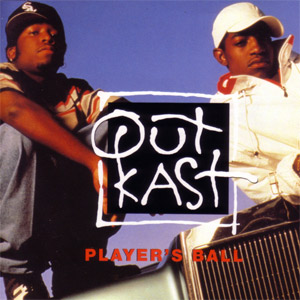
 In the early 1990s, the hip-hop landscape was largely dominated by two coasts. New York represented the birthplace of the genre, while Los Angeles had exploded onto the scene with the powerful rise of West Coast gangsta rap. But deep in the American South, a new movement was quietly forming—one that would eventually reshape the entire genre. At the forefront of that movement stood a young duo from Atlanta called OutKast.
Their breakout single, “Player’s Ball,” released in 1993, marked the beginning of something special. The song introduced the world to André 3000 and Big Boi, two teenagers with an unmistakable sound, sharp lyrical skills, and a completely different perspective on hip-hop culture. Blending Southern funk, smooth storytelling, and confident lyricism, “Player’s Ball” helped prove that great hip-hop didn’t have to come from New York or Los Angeles.
More than thirty years later, the track remains one of the most important songs in Southern rap history. It wasn’t just a hit—it was the moment the South officially entered the hip-hop conversation.
Atlanta Before OutKast
When “Player’s Ball” arrived in 1993, Atlanta was still a relatively new player in the hip-hop world. The city had a growing music scene, but it lacked the national recognition that New York and Los Angeles enjoyed.
Artists like Arrested Development had begun attracting attention with socially conscious hip-hop rooted in Southern culture, but the sound that would later define Atlanta hadn’t fully developed yet.
Enter OutKast.
André Benjamin and Antwan Patton met while attending Tri-Cities High School in East Point, Georgia, just outside Atlanta. The two teenagers quickly bonded over their love of music and began developing their own style of rap.
Their chemistry was undeniable. André brought a thoughtful, experimental energy to their music, while Big Boi delivered confident, rhythmic flows rooted in Southern storytelling.
Together, they created something entirely new.
When they signed with LaFace Records, the label run by L.A. Reid and Babyface, few people could have predicted how influential they would become.
But “Player’s Ball” made it clear that something different was happening in Atlanta.
The Sound of Southern Cool
The production on “Player’s Ball,” handled by Organized Noize, helped establish the musical blueprint for early OutKast records.
Organized Noize—comprised of producers Rico Wade, Ray Murray, and Sleepy Brown—crafted a sound that blended funk, soul, and hip-hop in a way that felt distinctly Southern.
Instead of hard, aggressive beats, “Player’s Ball” rides on a smooth groove filled with warm basslines, gentle guitar licks, and melodic keyboard accents. The beat feels relaxed yet confident, creating the perfect backdrop for André and Big Boi’s flows.
The production draws heavily from classic funk traditions that were deeply rooted in Southern Black culture. Artists like Parliament-Funkadelic, Curtis Mayfield, and The Isley Brothers all influenced the sound.
The result is a track that feels both modern and timeless.
It’s hip-hop with a deep musical soul.
A Holiday Hit with Street Flavor
Interestingly, “Player’s Ball” was originally released as a Christmas-themed song. Its first version appeared on a holiday compilation album titled A LaFace Family Christmas in 1993.
But this wasn’t your typical Christmas tune.
Instead of snowmen and sleigh bells, the song focuses on a Southern tradition known as the “Player’s Ball.” In many urban communities, especially in the South, Christmas wasn’t just about family gatherings—it was also a time for celebration, style, and social events.
The “Player’s Ball” represented a gathering where people dressed sharply, showed off their confidence, and celebrated success and community.
OutKast used that concept as the foundation for the song’s story. Rather than focusing on material excess, the track highlights camaraderie, culture, and Southern pride.
When the holiday references were removed for the single release, the song became an even bigger hit.
Big Boi Sets the Tone
The track opens with Big Boi, whose deep, commanding voice immediately establishes the vibe.
Big Boi’s verse is filled with confident rhymes and vivid descriptions of Southern life. He paints a picture of the Atlanta scene with authenticity and swagger, showing listeners that hip-hop culture in the South had its own identity and style.
His flow is smooth yet rhythmic, gliding across the beat with ease. Even at a young age, Big Boi demonstrated remarkable control over his delivery, mixing humor, street wisdom, and charisma into every line.
His opening verse helps ground the song in Southern reality.
This is Atlanta hip-hop—unapologetically.
André 3000’s Unique Voice
After Big Boi’s confident introduction, André 3000 steps in with a verse that reveals the artistic spark that would later make him one of hip-hop’s most celebrated lyricists.
Even on this early track, André shows signs of the creativity and introspection that would define his career. His rhymes feel slightly more philosophical and experimental than Big Boi’s, offering a different perspective within the same story.
André’s voice is lighter and more animated, creating a perfect contrast to Big Boi’s grounded delivery.
The two rappers complement each other perfectly.
This dynamic—two distinct voices working together—became one of OutKast’s greatest strengths.
The Hook That Became a Southern Anthem
The chorus of “Player’s Ball,” performed by Sleepy Brown, adds a soulful touch that elevates the entire song.
His smooth singing gives the track a warm, celebratory feel, tying together the hip-hop verses with classic Southern soul influences.
The hook is simple and memorable, reinforcing the song’s theme of celebration and community.
It also helped make the track accessible to a wider audience. By blending rap verses with melodic vocals, OutKast created a sound that appealed to both hip-hop fans and listeners who might not typically follow the genre.
That crossover appeal would become a hallmark of OutKast’s career.
A Breakthrough for Southern Hip-Hop
“Player’s Ball” quickly became a major success. The song topped the Billboard Hot Rap Songs chart and helped generate massive anticipation for OutKast’s debut album, Southernplayalisticadillacmuzik.
Released in 1994, the album became a critical and commercial success, establishing OutKast as leaders of the emerging Southern rap movement.
But the duo’s biggest cultural moment came later that year at the Source Awards.
When OutKast won Best New Rap Group, the crowd—largely composed of East Coast and West Coast artists—reacted with skepticism and even boos.
Standing on stage, André 3000 delivered a now-legendary line:
“The South got something to say.”
That moment marked a turning point in hip-hop history.
And “Player’s Ball” was the song that started it all.
The Birth of a New Hip-Hop Movement
After the success of OutKast, Atlanta quickly became one of the most important cities in hip-hop.
Artists like Goodie Mob, T.I., Ludacris, and later Future, Migos, and Young Thug would all build on the foundation that OutKast helped establish.
The Southern sound eventually grew into the dominant force in modern hip-hop.
But it all traces back to those early records produced by Organized Noize—and to the moment when “Player’s Ball” first introduced the world to Atlanta’s unique musical identity.
Why the Song Still Matters
More than three decades later, “Player’s Ball” remains a classic not just because of its historical importance, but because it still sounds great.
The groove is smooth.
The lyrics are confident and clever.
And the chemistry between André 3000 and Big Boi is undeniable.
Listening to the track today feels like hearing the birth of something special.
You can hear the seeds of greatness in every verse.
A Southern Hip-Hop Landmark
In the grand story of hip-hop, certain songs represent turning points—moments when the genre expands and evolves in unexpected ways.
“Player’s Ball” is one of those songs.
It introduced the world to OutKast, helped launch Atlanta as a hip-hop powerhouse, and proved that the South had a unique voice worth hearing.
What began as a Christmas-themed party track became something much bigger.
It became a declaration.
A declaration that hip-hop belonged to everyone—not just the coasts.
And more than thirty years later, the message still rings true:
The South had something to say.
This post has already been read 744 times!