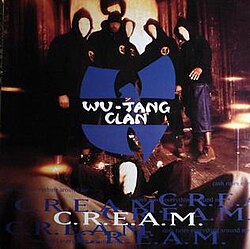
 In the early 1990s, hip-hop was changing rapidly. The genre had moved beyond party rhymes and braggadocious boasts into something deeper—something that reflected the realities of life in American cities. Few songs captured that shift better than “C.R.E.A.M.” by Wu-Tang Clan. Released in 1994 as part of their groundbreaking debut album Enter the Wu-Tang (36 Chambers), the track quickly became one of the most influential hip-hop songs ever recorded.
“C.R.E.A.M.”—which famously stands for “Cash Rules Everything Around Me”—is more than just a song about money. It’s a brutally honest reflection on poverty, survival, and the constant struggle to escape a life shaped by hardship. Built around a haunting soul sample and unforgettable storytelling, the track transformed Wu-Tang Clan from underground legends into cultural icons.
Decades later, the phrase “Cash Rules Everything Around Me” remains one of the most recognizable slogans in hip-hop history. But the real power of “C.R.E.A.M.” lies in the vivid stories told by two of the group’s most distinctive voices: Raekwon and Inspectah Deck.
The Rise of Wu-Tang Clan
When Wu-Tang Clan burst onto the scene in the early 1990s, they didn’t look or sound like any rap group that came before them. Instead of a traditional lineup of two or three members, Wu-Tang consisted of a sprawling collective of rappers from Staten Island, New York. The core group included RZA, GZA, Ol’ Dirty Bastard, Method Man, Raekwon, Ghostface Killah, Inspectah Deck, U-God, and Masta Killa.
Their music felt raw and unpredictable. Producer RZA built gritty beats using obscure soul samples, martial arts film dialogue, and lo-fi drum patterns that sounded almost homemade. Compared to the polished production dominating radio at the time, Wu-Tang’s sound felt dangerous and underground.
Their debut album, Enter the Wu-Tang (36 Chambers), was unlike anything hip-hop had heard before. Songs like “Protect Ya Neck” and “Method Man” introduced listeners to the group’s aggressive lyrical style and chaotic energy. But “C.R.E.A.M.” revealed a different side of Wu-Tang.
Instead of raw battle rhymes, it delivered something more reflective and personal.
The Haunting Beat
The foundation of “C.R.E.A.M.” is its unforgettable instrumental. RZA built the beat around a slowed-down sample from The Charmels’ 1967 soul song “As Long As I’ve Got You.” The melancholy piano loop and ghostly vocal snippet create a mood that feels both nostalgic and heavy.
It’s not a triumphant sound.
It’s a reflective one.
The beat feels like a memory—like someone looking back on a difficult life while trying to make sense of it. The piano notes echo with a sense of longing, while the drums land with deliberate simplicity. RZA intentionally left space in the production, allowing the lyrics to take center stage.
That minimalist approach proved incredibly effective. The instrumental doesn’t overpower the rappers—it frames their stories.
The result is one of the most iconic beats in hip-hop history.
Inspectah Deck’s Legendary Opening
“C.R.E.A.M.” begins with a verse from Inspectah Deck, and it’s widely considered one of the greatest opening verses ever recorded in hip-hop.
He starts with the line:
“I grew up on the crime side, the New York Times side…”
In just a few words, Deck establishes the environment he came from. His verse reads like a short autobiography—one that traces his journey from childhood poverty to adulthood struggles.
He describes growing up surrounded by crime, dealing with broken family structures, and watching friends get pulled into dangerous lifestyles. Instead of glorifying that environment, he reflects on how limited the options felt.
Deck’s storytelling is vivid and precise. Each line paints a picture of life in the projects: hustling to survive, trying to avoid prison, and constantly chasing a better future.
The brilliance of his verse is that it doesn’t feel exaggerated or theatrical. It feels real.
Listeners hear the frustration, the ambition, and the desperation behind every line.
Raekwon’s Gritty Perspective
After Deck’s reflective opening, Raekwon steps in with a verse that shifts the story toward the present.
If Deck’s verse feels like looking back, Raekwon’s feels like being trapped in the moment.
His delivery is intense and detailed, describing life in the drug trade with brutal honesty. Raekwon doesn’t romanticize the hustle—he portrays it as a risky, chaotic lifestyle fueled by necessity.
He raps about friends going to prison, families struggling financially, and the constant pressure to make money in any way possible. The famous chorus reinforces that theme:
“Cash rules everything around me, C.R.E.A.M., get the money…”
The line became a cultural slogan almost immediately. But in the context of the song, it’s less of a celebration and more of a harsh observation about reality.
In neighborhoods where opportunity is scarce, money becomes the central force driving every decision.
Raekwon’s verse captures that reality with stark clarity.
The Power of the Hook
One of the reasons “C.R.E.A.M.” became so iconic is its simple but unforgettable chorus.
The hook—performed by Method Man—is hypnotic and direct:
“Cash rules everything around me
C.R.E.A.M., get the money
Dollar dollar bill, y’all.”
The phrase “dollar dollar bill, y’all” itself came from the 1970s funk group The Bar-Kays, but Wu-Tang transformed it into something entirely their own.
The hook works because it summarizes the entire message of the song in just a few words. It’s catchy enough to chant, yet powerful enough to carry meaning far beyond the music.
For many listeners, it perfectly captured the harsh economic realities of urban life in the 1990s.
A Different Kind of Hip-Hop Anthem
At the time “C.R.E.A.M.” was released, many rap songs focused on success, wealth, or street dominance. Wu-Tang flipped that formula.
Instead of celebrating money, they examined the circumstances that made chasing it feel unavoidable.
The song is filled with tension between survival and morality. The rappers understand the dangers of the streets, yet they also acknowledge how difficult it can be to escape them.
That honesty resonated deeply with listeners.
People heard their own struggles reflected in the lyrics.
And even listeners who had never experienced that life could feel the emotional weight of the storytelling.
Cultural Impact
“C.R.E.A.M.” quickly became one of Wu-Tang Clan’s most beloved songs. It was released as a single in 1994 and became the group’s first major commercial hit.
More importantly, it helped expand hip-hop’s storytelling tradition.
Artists before Wu-Tang had certainly written autobiographical songs, but “C.R.E.A.M.” demonstrated how powerful detailed street narratives could be. The track influenced countless rappers who followed, including artists like Nas, Jay-Z, and The Notorious B.I.G.
The phrase “Cash Rules Everything Around Me” also took on a life of its own. It became a slogan appearing on T-shirts, posters, and even in everyday conversation.
In many ways, the song helped define the economic mindset of 1990s hip-hop.
Wu-Tang’s Growing Legacy
After the success of Enter the Wu-Tang (36 Chambers), the members of Wu-Tang Clan began releasing solo albums that further expanded their influence.
Raekwon’s Only Built 4 Cuban Linx…, GZA’s Liquid Swords, and Method Man’s Tical all became classics in their own right. But “C.R.E.A.M.” remained one of the defining songs of the group’s early years.
It represented the moment when Wu-Tang proved they were more than just aggressive battle rappers.
They were storytellers.
And they could translate the experiences of their community into powerful music.
Why the Song Still Matters
More than thirty years after its release, “C.R.E.A.M.” still resonates with new generations of listeners.
Part of that longevity comes from the production. RZA’s beat remains haunting and timeless, proving that minimalism can sometimes create the most powerful atmosphere.
But the real reason the song endures is its honesty.
The struggles described in “C.R.E.A.M.”—economic inequality, limited opportunity, and the constant pressure to survive—are still realities for many communities today.
That authenticity keeps the song relevant.
It’s not just a snapshot of the 1990s. It’s a reflection of larger social forces that continue to shape lives.
The Legacy of C.R.E.A.M.
In the grand history of hip-hop, certain songs stand as defining statements of their era. “C.R.E.A.M.” is one of them.
The track combines haunting production, unforgettable storytelling, and a message that cuts straight to the core of urban life. It helped transform Wu-Tang Clan into one of the most influential groups in music history and solidified their reputation as masters of lyrical realism.
More than anything, “C.R.E.A.M.” proved that hip-hop could be both raw and reflective. It showed that rap could tell powerful stories about struggle without sacrificing musical impact.
The beat still echoes.
The chorus still rings out.
And decades later, the message remains just as powerful as the day Wu-Tang Clan first delivered it:
Cash rules everything around us.
This post has already been read 1072 times!