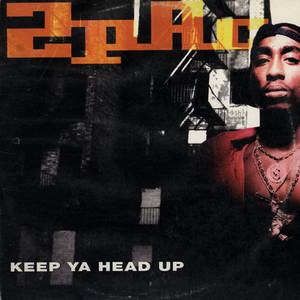
 In the long history of hip-hop, few artists have used music as a platform for social reflection and emotional honesty as effectively as Tupac Shakur, better known as 2Pac. While many of his songs are remembered for their intensity and raw depictions of street life, some of his most powerful work focused on empathy, respect, and social awareness. One of the greatest examples of that side of his artistry is the 1993 song “Keep Ya Head Up.”
Released as a single from his second album Strictly 4 My N.I.G.G.A.Z., “Keep Ya Head Up” became one of the defining songs of Tupac’s early career. The track stands out as a heartfelt tribute to women—particularly Black women—and a commentary on the struggles faced by families living in poverty.
At a time when much of mainstream rap leaned heavily into aggression and bravado, 2Pac delivered a song that emphasized compassion and responsibility. Decades later, “Keep Ya Head Up” remains one of the most inspiring and socially conscious songs in hip-hop history.
Tupac’s Early Years as an Activist Artist
Before he became a global icon, Tupac Shakur was already deeply connected to activism and political awareness. Born in 1971 in Harlem, New York, Tupac grew up surrounded by revolutionary influences. His mother, Afeni Shakur, was a member of the Black Panther Party, and many members of his extended family were involved in social justice movements.
These influences shaped Tupac’s worldview from a young age. While he would later gain attention for controversial lyrics and public feuds, Tupac always saw himself as more than just an entertainer. He believed hip-hop should reflect real life and address the struggles facing marginalized communities.
His early music often focused on issues such as police brutality, poverty, racism, and inequality. Songs like “Brenda’s Got a Baby” and “Trapped” demonstrated that Tupac was willing to tackle uncomfortable realities head-on.
“Keep Ya Head Up” would continue that tradition while offering something rare in rap music at the time: a message of encouragement directed toward women.
The Sound Behind the Message
Musically, “Keep Ya Head Up” features a warm, soulful production style that perfectly complements Tupac’s emotional delivery. The beat samples “O-o-h Child” by the Five Stairsteps, a classic soul song known for its hopeful message about overcoming hardship.
The sample adds a sense of optimism to the track, reinforcing the theme that better days are ahead.
The production also includes smooth drum patterns, soft piano accents, and melodic background vocals. These elements give the song a reflective tone, allowing Tupac’s lyrics to take center stage.
Unlike many aggressive hip-hop beats of the early 1990s, the instrumental for “Keep Ya Head Up” feels uplifting and compassionate. It creates a musical environment where Tupac’s message of support and empowerment can shine.
The production doesn’t overwhelm the listener.
Instead, it allows the lyrics to breathe.
A Song About Respect
One of the most striking aspects of “Keep Ya Head Up” is Tupac’s direct focus on the treatment of women.
At the time the song was released, hip-hop was often criticized for lyrics that objectified women or portrayed them negatively. Tupac confronted that issue head-on by challenging the behavior of men within his own community.
One of the song’s most famous lines makes this message crystal clear:
“And since we all came from a woman
Got our name from a woman and our game from a woman
I wonder why we take from our women
Why we rape our women, do we hate our women?”
These lyrics stand as one of the most powerful moments in Tupac’s catalog. Rather than ignoring the issue, he directly questions the culture of disrespect toward women.
His words serve as both a critique and a call for accountability.
Tupac wasn’t just speaking to society at large—he was speaking to the men around him.
Stories of Struggle
Beyond its message of respect, “Keep Ya Head Up” also addresses the difficult realities many women face in impoverished communities.
Tupac references single mothers, economic hardship, and the emotional weight of raising children without support. He acknowledges the strength required to survive under those conditions while emphasizing the importance of resilience.
The song speaks to women who feel overlooked or undervalued by society.
Tupac encourages them not to lose hope.
The phrase “keep ya head up” becomes both a reassurance and a reminder that dignity and self-worth remain important even during difficult times.
For many listeners, the song felt deeply personal.
It was a message of solidarity from someone who understood their struggles.
Tupac’s Emotional Delivery
Part of what makes “Keep Ya Head Up” so powerful is Tupac’s delivery.
Unlike many rappers who rely on complex rhyme schemes or rapid-fire flows, Tupac’s style focuses heavily on emotion and clarity. His voice carries urgency, sincerity, and vulnerability.
When Tupac raps, listeners feel like he means every word.
His tone shifts throughout the song, moving between anger, frustration, empathy, and encouragement. This emotional range helps bring the lyrics to life.
You don’t just hear the message.
You feel it.
That emotional authenticity became one of Tupac’s defining traits as an artist.
The Music Video
The music video for “Keep Ya Head Up” reinforced the song’s message of unity and community support.
Set in an urban neighborhood, the video features scenes of everyday life: families spending time together, children playing outside, and neighbors interacting with one another. Tupac appears surrounded by women and community members, emphasizing the collective spirit behind the song’s message.
The video avoids flashy imagery or extravagant displays of wealth. Instead, it focuses on real people and real environments.
This grounded approach mirrors the sincerity of the song itself.
It’s not about glamour—it’s about humanity.
Cultural Impact
When “Keep Ya Head Up” was released in 1993, it quickly became one of Tupac’s most beloved songs.
The track reached the Billboard Hot 100 and gained significant airplay on radio and television. More importantly, it resonated deeply with audiences who rarely heard messages like this in mainstream rap.
For many women, the song felt like a rare moment of recognition within a genre that often overlooked their experiences.
The track also expanded Tupac’s reputation as a socially conscious artist. While he would later become associated with more aggressive themes during his Death Row Records years, songs like “Keep Ya Head Up” demonstrated the depth of his perspective.
It showed that Tupac could be both a fierce critic of injustice and a compassionate voice for hope.
A Message That Still Resonates
More than thirty years after its release, “Keep Ya Head Up” continues to resonate with listeners around the world.
Many of the issues addressed in the song—economic inequality, single-parent struggles, and gender respect—remain deeply relevant today. The track’s message of empathy and resilience still feels powerful in modern conversations about social justice and equality.
The song is frequently referenced in discussions about positive hip-hop and conscious rap. It stands as one of the clearest examples of how rap music can address serious social issues while still connecting emotionally with audiences.
For many fans, it remains one of Tupac’s most meaningful songs.
The Legacy of Keep Ya Head Up
In the grand story of hip-hop, certain songs stand as reminders that the genre can be more than entertainment.
“Keep Ya Head Up” is one of those songs.
It blends soulful production with honest storytelling and a message rooted in respect and compassion. Tupac didn’t just create a hit record—he created a song that uplifted people who often felt invisible.
That impact has lasted for generations.
Long after Tupac’s tragic death in 1996, his music continues to inspire listeners across the world. And among the many powerful tracks he left behind, “Keep Ya Head Up” remains one of the brightest examples of his ability to combine artistry with empathy.
It’s a song that reminds listeners that strength can exist even in the face of hardship.
And sometimes, the most powerful message is the simplest one of all:
Keep your head up.
This post has already been read 485 times!