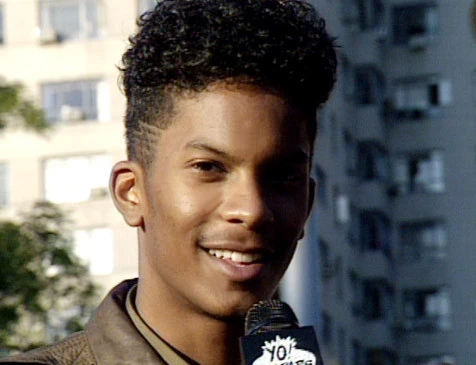
 Special Ed, born Edward K. Archer on June 22, 1972, in Brooklyn, New York, is one of hip-hop’s most enduring and distinctive voices from the golden era of the late 1980s and early 1990s. Known for his smooth flow, playful wordplay, and confident delivery, Special Ed became a symbol of youthful swagger in a genre often dominated by older, more battle-hardened voices. Though diminutive in stature, both literally and figuratively in the broader landscape of hip-hop at the time, Special Ed possessed an outsized talent that would leave an indelible mark on the genre, influencing countless MCs who followed in his footsteps.
Growing up in the culturally rich neighborhoods of Brooklyn, Special Ed was exposed to the burgeoning hip-hop scene from a young age. The sounds of DJs spinning on street corners, breakdancers performing in the parks, and MCs battling for recognition in local competitions shaped his early artistic vision. Unlike many of his peers, Special Ed developed his lyrical and performance skills remarkably early, penning rhymes and experimenting with cadence while still in his teens. By the age of 14, he was already crafting the foundation for what would become his signature style: a combination of playful, witty lyricism delivered with the confidence of someone far older and more experienced.
Special Ed’s big break came when he was discovered by hip-hop producer Howie Tee, a figure well-known in the New York scene for cultivating young talent and producing innovative tracks. Howie Tee recognized Special Ed’s natural charisma and lyrical ability, and the collaboration that followed would soon define both of their careers. The young rapper’s skill set was immediately apparent — he had a voice that was both approachable and commanding, a knack for storytelling that could entertain and engage, and a cadence that made even the simplest rhymes feel complex and dynamic.
In 1989, at just 16 years old, Special Ed released his debut album, Youngest in Charge, a title that perfectly captured both his literal youth and the confident persona he projected on the microphone. The album was a critical and commercial success, showcasing Special Ed’s unique ability to blend humor, bravado, and intricate rhyme schemes. Tracks like I Got It Made exemplified his smooth, charismatic delivery, with playful lyrics that celebrated youth, confidence, and street savvy. The song became a defining hit, securing Special Ed’s position in the golden-era pantheon and demonstrating that age was no barrier to lyrical prowess or commercial success.
What set Special Ed apart from his contemporaries was his ability to mix lighthearted fun with sharp lyrical skill. While much of the hip-hop scene of the late 1980s focused on battle rap, social commentary, or hardcore narratives, Special Ed carved out a niche that emphasized clever wordplay, smooth storytelling, and a relatable youthful perspective. His rhymes were often infused with humor and irony, creating a persona that was both charming and self-assured. This balance of approachability and skill allowed him to appeal to a wide audience, from teenagers discovering hip-hop for the first time to seasoned fans appreciating his technical ability.
Following the success of his debut, Special Ed released his sophomore album, Legal, in 1990. The record reinforced his reputation as one of hip-hop’s most talented young MCs while also demonstrating growth in both lyrical complexity and production sophistication. Working again with Howie Tee and other collaborators, Special Ed explored themes of maturity, social observation, and personal experience, without losing the playful energy that had endeared him to fans. Tracks like Come On, Let’s Move It highlighted his ability to craft infectious hooks, while still delivering intricate internal rhymes and multi-syllabic wordplay that showcased his technical proficiency.
Special Ed’s influence on hip-hop extends beyond his recorded output. His style — combining youthful charm, confidence, and precise delivery — inspired a generation of MCs who sought to blend accessibility with skill. He proved that age was not a limitation in the rap game, encouraging younger artists to step forward and assert their voices in a crowded and competitive industry. His ability to command attention on a track without relying on aggressive posturing or overly complex production made him a blueprint for future artists who prioritized clarity, flow, and charisma over raw intimidation.
Beyond his early albums, Special Ed continued to release music throughout the 1990s and into the 2000s, navigating the changing landscape of hip-hop while maintaining his distinctive voice. Though the commercial spotlight shifted to other acts, his contributions remained influential, particularly in the realm of East Coast hip-hop, where his smooth, confident style helped define the sound of New York rap during the late 1980s and early 1990s. Tracks like Think About It and I’m The Magnificent reaffirmed his lyrical skill and continued to resonate with dedicated fans and collectors of golden-era hip-hop.
Special Ed’s persona and lyrical style also highlight the importance of individuality in hip-hop. At a time when image, toughness, and street credibility were often emphasized, Special Ed stood out for his wit, playfulness, and ability to craft a persona that was both approachable and aspirational. He demonstrated that authenticity in hip-hop could take many forms, and that technical skill, charm, and storytelling were just as vital as the ability to assert dominance or narrate hardship. This approach has had lasting significance, influencing not just the sound of East Coast rap but also the ways in which younger artists approach identity and presentation in the genre.
Culturally, Special Ed represents the intersection of youth and artistic maturity in hip-hop. He entered the scene as a teenager but carried himself with the confidence of a seasoned performer. This combination of talent and poise made him a role model for aspiring MCs, demonstrating that skill and presence are not solely functions of age. Furthermore, his contributions to golden-era hip-hop help underscore the diversity of voices and approaches that characterized the genre during this formative period. From hardcore narratives to socially conscious lyrics, from battle rap to playful storytelling, Special Ed occupied a space that celebrated technical skill, personality, and authenticity.
Despite changes in the hip-hop landscape and the rise of new styles and regional scenes, Special Ed’s work continues to be celebrated by fans of classic rap. His debut, Youngest in Charge, in particular, remains a touchstone for anyone seeking to understand the creative energy of late-1980s hip-hop. Songs like I Got It Made have endured as staples of old-school rap playlists, appreciated for their smooth production, catchy hooks, and lyrical dexterity. The song’s influence is evident in the work of later artists who prioritize flow, rhythm, and charisma as much as content or thematic weight.
Special Ed also remains an important figure in discussions of hip-hop history because of his youth and the way he navigated the challenges of early fame. Entering the industry as a teenager, he faced pressures and expectations that few artists experience, yet he consistently demonstrated professionalism, skill, and artistic vision. His ability to maintain relevance while growing as a person and as an artist offers insights into the development of hip-hop careers, particularly for younger artists seeking to balance creativity with longevity.
In conclusion, Special Ed’s impact on hip-hop is multifaceted. He represents a unique moment in the genre’s history, when youth, talent, and charisma could converge to create enduring artistry. With his smooth flow, clever wordplay, and playful confidence, he redefined what it meant to be a young MC in a competitive and rapidly evolving musical landscape. His albums, especially Youngest in Charge and Legal, remain essential listening for anyone seeking to understand the golden era of East Coast hip-hop. Beyond the music, his approach to style, persona, and lyrical delivery has influenced generations of artists, proving that authenticity, skill, and confidence are timeless ingredients in the art of rap.
Special Ed’s legacy is not just in his recordings, but in the way he expanded the possibilities for young artists, blending technical prowess with charm and personality. His contributions continue to resonate with fans, collectors, and musicians, serving as a reminder of the creativity, ingenuity, and energy that defined golden-era hip-hop. Even decades after his debut, Special Ed’s voice remains distinct, vibrant, and essential — a testament to a young MC who truly was “youngest in charge” in every sense of the word.
This post has already been read 320 times!