 “It was all a dream…”
Few opening lines in music history hit with the same instant recognition. Before the beat fully settles in, before the hook lifts the room, that first sentence alone pulls you somewhere specific—back to a Brooklyn apartment, back to posters on a bedroom wall, back to a young kid imagining a future that felt impossibly far away.
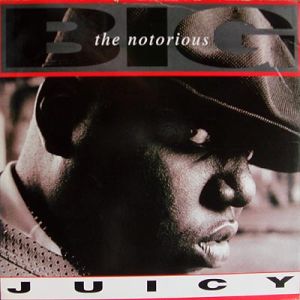
The rapper delivering that line was The Notorious B.I.G..
The song was “Juicy.”
The album was Ready to Die.
“Juicy” wasn’t just a breakout single. It became an anthem of transformation—a rags-to-riches memoir set to a glossy, celebratory beat. It marked the arrival of a storyteller who could balance grit and glamour, memory and momentum, vulnerability and swagger. More than three decades later, it still feels like the definitive hip-hop origin story.
The Beat: Sunshine After the Storm
Produced by Poke and Tone of Trackmasters, “Juicy” samples Mtume’s smooth R&B hit “Juicy Fruit.” The choice was bold. The instrumental is warm, bright, almost luxurious. It shimmers.
That polish stood in contrast to many of the darker, street-heavy tracks on Ready to Die. But that contrast is precisely the point. “Juicy” sounds like daylight breaking through the clouds. It feels triumphant.
Some critics at the time questioned whether the glossy production softened Biggie’s edge. But the shine doesn’t erase his past—it reframes it. The smoothness of the beat becomes a sonic metaphor for success itself. It’s the sound of doors opening.
“It Was All a Dream”: The Power of the Opening
The genius of “Juicy” lies in how quickly it establishes intimacy.
“It was all a dream, I used to read Word Up! magazine…”
Before Biggie is a mogul, before he’s a rap titan, he’s a fan. He’s a kid flipping through hip-hop magazines, idolizing artists, imagining himself on those same pages.
That humility grounds the entire song. The narrative doesn’t begin at the mountaintop. It begins in aspiration. It begins in doubt.
This approach makes the success that follows feel earned. You believe him because he starts at the bottom emotionally, not just financially.
Brooklyn as Foundation
Christopher Wallace’s upbringing in Bedford-Stuyvesant shaped every bar of “Juicy.” The song references cramped apartments, financial strain, and the tension of survival. It acknowledges the hustle without glamorizing it.
Biggie doesn’t romanticize poverty. He remembers it vividly. He recalls eviction notices and cold nights. He references skepticism from those who didn’t believe he would make it.
That specificity gives the track weight. When he later raps about limousines and champagne, it doesn’t feel hollow. It feels like relief.
“Juicy” isn’t about flashy wealth for its own sake. It’s about the emotional shift from scarcity to abundance.
From Doubt to Dominance
Midway through the track, the energy lifts. The lists of success symbols roll in:
-
Designer clothes
-
Expensive cars
-
Magazine covers
-
Packed venues
But even in celebration, Biggie keeps perspective.
“Now my mom pimps a Ac with minks on her back…”
That line lands with particular force. It’s not just a flex—it’s generational uplift. His success changes his mother’s life. It changes the family narrative.
Unlike many braggadocious tracks that isolate the artist’s triumph, “Juicy” expands the circle. Friends are mentioned. The neighborhood is remembered. Success becomes communal.
The Flow: Relaxed Precision
Technically, Biggie’s flow on “Juicy” is effortless. His cadence glides over the beat with conversational ease. He stretches syllables naturally, allowing punchlines to land without strain.
There’s no shouting. No forced aggression. His voice carries authority without theatrics.
This relaxed dominance became a blueprint. Artists like Jay-Z would later build entire careers on that cool, unhurried confidence. The idea that you could sound smooth and still be lethal on the mic owes much to Biggie’s delivery here.
Every line feels deliberate, but never labored.
Bad Boy’s Big Statement
Behind the scenes, “Juicy” was also a pivotal moment for Sean Combs and his rising Bad Boy Records empire. The label positioned Biggie as both street authentic and radio ready.
“Juicy” proved the strategy could work.
It bridged worlds. Hardcore hip-hop fans respected Biggie’s lyricism. Mainstream audiences embraced the melodic production. The song helped shift the East Coast back into the national spotlight at a time when West Coast G-funk dominated.
It wasn’t confrontational. It wasn’t political. It was personal. And that personal approach resonated widely.
A Celebration That Remembers the Struggle
One of the reasons “Juicy” endures is that it never erases the past. Even as Biggie catalogs his success, he keeps glancing backward.
The memory of doubt lingers. The memory of hunger lingers.
That duality gives the song emotional depth. It’s triumphant, yes—but it’s also reflective. The joy feels hard-won.
Many artists have made success anthems. Few have embedded them with this much autobiography.
The American Dream, Brooklyn Edition
At its core, “Juicy” is a hip-hop retelling of the American Dream. But it’s not sanitized. It acknowledges systemic barriers, economic hardship, and the improbability of escape.
Biggie doesn’t frame his rise as destiny. He frames it as perseverance.
For listeners—especially young people from under-resourced communities—the message was powerful. It said: your circumstances don’t define your ceiling.
The song became a motivational anthem not because it preached, but because it testified.
Cultural Longevity
“Juicy” has transcended its era. It plays at graduations, sporting events, weddings, and award shows. It appears in documentaries and films. The opening line alone can ignite an entire room.
Its cultural endurance speaks to its emotional universality. Everyone understands the feeling of being underestimated. Everyone understands the desire to prove doubters wrong.
The production still sparkles. The narrative still resonates.
And the hook—simple, direct—cements the message:
“You know very well who you are…”
It’s celebratory, but it’s also affirming. It invites listeners into the victory.
Comparison and Contrast
Biggie’s storytelling is often discussed alongside Tupac Shakur, another master of autobiographical rap. Both artists chronicled struggle and ambition.
But where Tupac’s energy often burned with urgency and confrontation, Biggie’s on “Juicy” feels smooth and reflective. It’s less fiery protest, more calm realization.
Two different emotional textures. Two different pathways to legacy.
“Juicy” shows Biggie at his most hopeful—a side sometimes overshadowed by the darker tracks in his catalog.
Listening Now
Hearing “Juicy” today feels both nostalgic and immediate. The references may be rooted in the ’90s—magazines, pagers, luxury symbols of the time—but the core emotion remains fresh.
The track captures the exact moment when imagination turns into reality. When the dream that once felt distant suddenly feels tangible.
In an era dominated by viral hits and streaming algorithms, “Juicy” reminds us of the enduring power of storytelling. It’s not just about the hook. It’s about the arc.
Final Reflection
“Juicy” stands as one of hip-hop’s purest autobiographical triumphs. It’s a song about transformation—but also about memory. About gratitude. About refusing to forget where you came from.
From a Brooklyn stoop to global recognition, Biggie narrates his ascent without losing the texture of his beginnings.
That’s why the track remains iconic.
Not because it boasts.
Not because it sparkles.
But because it remembers the dream—and invites us to remember ours.
And every time that opening line drops, it still feels like possibility.
This post has already been read 244 times!