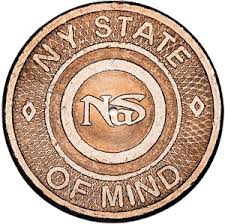
 In 1994, hip-hop was at a crossroads. The West Coast was dominating radio. Glossy videos were replacing dusty basement aesthetics. The genre was getting bigger, shinier, more commercial. And then, out of Queensbridge, a 20-year-old kid named Nas opened his debut album with a track so raw, so vivid, so unapologetically street that it felt less like a song and more like a crime scene report delivered in verse.
That song was “N.Y. State of Mind.”
Released as the opening track on his 1994 debut album Illmatic, the song wasn’t a single built for radio dominance. It didn’t have a flashy hook. It didn’t have a club-ready beat. What it had instead was something far more powerful: unfiltered realism, intricate lyricism, and a cinematic portrait of New York City that changed the trajectory of rap forever.
More than three decades later, “N.Y. State of Mind” remains one of the greatest hip-hop tracks ever recorded. It is not just a song—it’s a document of survival.
The Setting: Queensbridge, Early ’90s
To understand “N.Y. State of Mind,” you have to understand where it came from.
Queensbridge Houses in Queens, New York, was the largest public housing project in North America. In the late ’80s and early ’90s, it was also a crucible of violence, poverty, and street politics. Crack cocaine ravaged neighborhoods. Police presence was heavy but rarely protective. Opportunity felt scarce.
Nasir Jones grew up in that environment. His father, Olu Dara, was a jazz musician. His mother worked for the postal service. He dropped out of school in the eighth grade and educated himself through books and observation. By the time he began recording Illmatic, he had already seen more than most adults.
“N.Y. State of Mind” captures that perspective in razor-sharp detail.
The Beat: DJ Premier’s Gritty Blueprint
The production, handled by DJ Premier, is deceptively simple. A looping piano sample from Joe Chambers’ “Mind Rain.” Dusty drums. No overproduction. No glossy polish.
It sounds like a dimly lit alley.
Premier later said Nas recorded the entire song in one take. The legend goes that Nas began writing his verses in the studio, finished them quickly, and laid them down almost immediately. Whether embellished or not, the energy of the performance feels urgent—like it had to be said right then and there.
The piano loop feels tense and claustrophobic, as if the walls are closing in. The drums snap with minimal flair, giving Nas space to dominate the track with nothing but breath control and vocabulary.
There’s no chorus in the traditional sense. The only break in the verses is a scratched vocal sample repeating “New York state of mind.” It’s more mantra than hook.
The Opening Lines: A Warning Shot
Few songs in any genre begin with such immediate force:
“Rappers I monkey flip ’em with the funky rhythm I be kickin’…”
Within seconds, Nas establishes dominance. This isn’t braggadocio for the sake of ego—it’s survival. In hip-hop, especially in ’90s New York, lyrical supremacy meant credibility. Credibility meant respect. Respect meant safety.
But what separates Nas from many of his peers is how quickly he pivots from lyrical flexing to environmental storytelling.
“I never sleep, ’cause sleep is the cousin of death…”
That line alone has been quoted, referenced, sampled, and tattooed for decades. It captures paranoia, vigilance, and the psychological toll of street life in eight words.
Nas doesn’t glamorize violence. He describes it clinically. He makes you feel the tension of walking through stairwells, the constant scanning of surroundings, the fear and the numbness intertwined.
Cinematic Storytelling
“N.Y. State of Mind” is often described as cinematic—and for good reason.
Nas paints with detail:
-
The smell of gun smoke.
-
The metallic weight of a Tec-9.
-
The cold staircases of housing projects.
-
The everyday calculations required to stay alive.
He moves from third-person observation to first-person confession seamlessly. One moment he’s narrating the environment; the next, he’s in it, reacting in real time.
This wasn’t party rap. This wasn’t abstract poetry. This was street reportage with rhythm.
In many ways, Nas expanded on the gritty realism that artists like Rakim had pioneered lyrically and that groups like N.W.A had amplified thematically. But Nas fused both approaches into something hyper-personal and hyper-local.
He wasn’t speaking for all of New York. He was speaking from one corner of it. That specificity made it universal.
Flow as Weapon
Technically, “N.Y. State of Mind” is a masterclass.
Nas manipulates internal rhyme schemes with surgical precision. Multi-syllabic rhymes cascade through bars without sounding forced. He bends cadence mid-line, shifts emphasis unpredictably, and stretches syllables to fit rhythm without breaking natural speech patterns.
His flow feels conversational yet mathematically precise.
Unlike some rappers who pause dramatically between punchlines, Nas lets lines bleed into one another. It creates a sense of breathless urgency. The listener doesn’t get time to relax—because in the world he’s describing, nobody relaxes.
This technique would heavily influence later lyricists, from Jay-Z to Eminem. The blueprint for complex East Coast lyricism in the mid-to-late ’90s runs directly through this track.
The Absence of a Hook
One of the boldest choices on “N.Y. State of Mind” is what’s missing.
There’s no catchy chorus sung by an R&B singer. No melodic relief. No radio concession.
The scratched vocal sample functions more like a graffiti tag than a hook. It stamps the identity of the track but doesn’t distract from the verses.
This decision underscores the song’s purpose: immersion. A hook might have offered emotional escape. Nas doesn’t want you escaping. He wants you trapped in the stairwell with him.
It’s a risk that paid off. While it was never a major chart hit, the song became a cornerstone of hip-hop credibility.
Illmatic and the Perfect Opening Statement
As the opening track of Illmatic, “N.Y. State of Mind” sets the tone not only for the album but for Nas’s entire career.
The album would go on to feature production from legends like Pete Rock and Q-Tip, but DJ Premier’s contribution arguably carries the album’s most iconic moment.
Critics now regard Illmatic as one of the greatest hip-hop albums ever created. At just 10 tracks and under 40 minutes long, it is lean and focused. “N.Y. State of Mind” functions as its thesis statement.
It announces that this album will not sugarcoat. It will not exaggerate for glamour. It will show the city as it is—brutal, beautiful, unforgiving.
Myth vs. Reality
There’s often debate about whether “N.Y. State of Mind” romanticizes street life.
The answer lies in tone.
Nas never celebrates violence. He presents it as inevitable within his environment. His delivery is reflective, sometimes even weary. The bravado exists, but it’s tempered by awareness.
Lines about weapons and retaliation are balanced with paranoia and exhaustion. When he raps about never sleeping, it doesn’t sound cool—it sounds necessary.
That nuance separates the track from simplistic gang narratives. It’s less about glorification and more about documentation.
Influence on New York’s Identity
By 1994, New York hip-hop was in transition. The golden age was fading. Commercial pressures were increasing. The city needed a voice that re-centered authenticity.
“N.Y. State of Mind” did exactly that.
It reasserted New York’s dominance in lyrical complexity. It reminded listeners that grit mattered. It became a benchmark: if you wanted to represent the city, your bars had to carry weight.
Countless artists have attempted their own versions of “state of mind” tracks. Few have matched the original’s intensity.
A Song That Ages With You
One of the remarkable aspects of “N.Y. State of Mind” is how it changes depending on when you hear it.
As a teenager, you might focus on the aggression and wordplay.
In your twenties, you might marvel at the technical brilliance.
In your thirties and beyond, you begin to feel the melancholy undercurrent—the sense that youth was spent surviving rather than thriving.
The song grows heavier with time.
Nas himself would evolve, releasing albums that explored wealth, politics, and introspection. But “N.Y. State of Mind” remains frozen in that Queensbridge stairwell—a snapshot of a young man who had not yet escaped but could already see beyond his circumstances.
Legacy
Decades later, the song remains a staple in discussions of the greatest rap verses ever written. It appears on countless “best of” lists. It’s studied by aspiring MCs. It’s dissected in documentaries.
More importantly, it endures emotionally.
Hip-hop has changed dramatically since 1994. Production styles have shifted. Streaming has replaced physical media. The industry has globalized.
But when that piano loop drops and Nas begins, the atmosphere shifts. You’re transported to early ’90s Queens, where survival was an art form and language was armor.
“N.Y. State of Mind” is not nostalgia. It is documentation.
It stands as proof that hip-hop, at its best, is literature. It is social commentary. It is autobiography wrapped in rhythm.
And it remains one of the most powerful opening statements ever recorded—not just in rap, but in music history.
Concrete poetry, etched in vinyl.
This post has already been read 209 times!