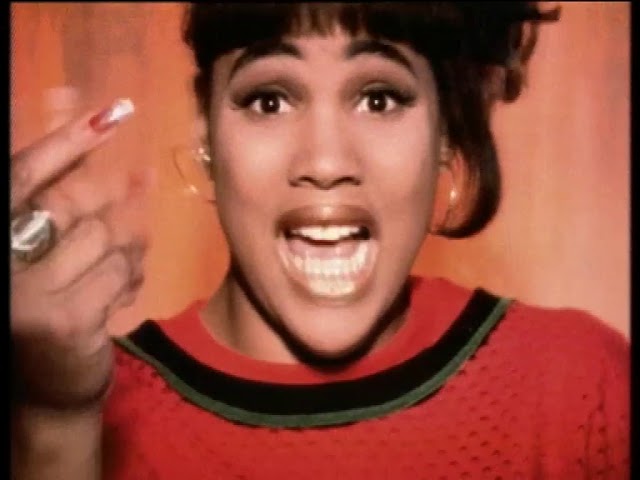
 Monie Love, born Simone Gooden on July 2, 1970, in London, England, is a pioneering figure in hip-hop whose impact resonates across continents and decades. As one of the first British rappers to achieve international acclaim in the late 1980s and early 1990s, Monie Love helped bridge the gap between the burgeoning UK hip-hop scene and the American epicenter of the genre. Known for her sharp lyricism, commanding delivery, and socially conscious themes, she quickly became one of the most influential women in hip-hop, proving that talent knows no borders and that hip-hop was a truly global movement.
Growing up in London, Monie Love was immersed in a vibrant cultural landscape that combined music, fashion, and social consciousness. From an early age, she was drawn to the power of words and performance, inspired by the sounds of reggae, soul, and emerging hip-hop that were circulating in the UK at the time. Unlike many of her peers, Monie quickly gravitated toward rapping, developing a flow and confidence that belied her youth. Her early experiences in London’s underground music scene exposed her to DJs, breakdancers, and MCs who were experimenting with rhythm and rhyme, laying the groundwork for the career she would soon launch.
Monie Love’s breakthrough came when she relocated to the United States and connected with the Native Tongues collective, an influential group of East Coast hip-hop artists known for their positive, Afrocentric, and jazz-infused approach to rap. Aligning herself with luminaries like Queen Latifah, De La Soul, and Jungle Brothers, Monie found a supportive environment where her talents could flourish. The Native Tongues connection not only helped her develop her craft but also provided her with a platform to introduce a distinctly British voice to American audiences — a novelty that immediately set her apart.
In 1989, Monie Love released her debut single, Monie in the Middle, which showcased her lyrical dexterity, rhythmic precision, and confident persona. The track, a playful yet assertive statement of individuality, quickly garnered attention in both the UK and the U.S., signaling the arrival of a formidable new talent in hip-hop. Her flow was precise and commanding, blending rapid-fire delivery with clever wordplay, while her lyrics reflected both humor and empowerment. Monie in the Middle set the tone for her career: bold, witty, and unapologetically herself.
Monie Love’s first full-length album, Down to Earth (1990), cemented her reputation as one of hip-hop’s leading female voices. The record combined infectious beats, socially aware lyrics, and collaborations with prominent artists, including members of the Native Tongues. Tracks like It’s a Shame (My Sister) addressed issues of gender, empowerment, and social awareness, demonstrating her commitment to using hip-hop as a platform for meaningful expression. Monie’s ability to balance entertainment and social commentary was a hallmark of her style, allowing her to connect with fans on multiple levels while maintaining credibility in a male-dominated industry.
Her biggest commercial success came with the single It’s a Shame (My Sister), which became an international hit and remains one of her signature tracks. The song’s combination of catchy hooks, funky instrumentation, and thoughtful lyrics exemplifies Monie’s skill at crafting music that is both accessible and substantive. It tackled themes of female empowerment, self-respect, and the challenges faced by women in society — topics that were rarely explored in mainstream hip-hop at the time. This bold approach helped establish Monie Love as a trailblazer, paving the way for future generations of female MCs.
Monie’s style was characterized by a distinctive voice and rhythmic agility. Her delivery was confident and commanding, with a playful energy that could switch seamlessly between humor and seriousness. She had a knack for internal rhymes, clever wordplay, and punchy phrasing that made her verses both memorable and technically impressive. Unlike many of her contemporaries who emphasized aggression or street credibility, Monie carved out a niche that emphasized intelligence, creativity, and personality, proving that a female MC could dominate the mic without conforming to traditional masculine tropes.
Beyond her solo work, Monie Love collaborated extensively with other artists, further solidifying her influence in the hip-hop community. She contributed to tracks with legends like Queen Latifah, De La Soul, and Salt-N-Pepa, showcasing her versatility and ability to complement diverse styles. Her collaborations were notable not only for their musical quality but also for their celebration of female empowerment and mutual support among women in hip-hop. Monie’s presence on these tracks helped normalize female voices in a genre often dominated by men, demonstrating that women could command attention and respect in both lyrical skill and stage presence.
Monie Love’s impact extended beyond music to media and public advocacy. She became a visible ambassador for hip-hop culture in the UK, participating in television, radio, and public appearances that highlighted both her artistry and her message. Her advocacy for women’s rights and social justice, coupled with her pioneering status as a British female MC in America, made her a role model for aspiring artists on both sides of the Atlantic. She exemplified how hip-hop could be a vehicle for empowerment, cultural exchange, and positive representation.
Her second album, In a Word or 2 (1993), further showcased Monie’s growth as an artist, featuring a mix of upbeat tracks, introspective songs, and innovative production. Tracks like Born 2 B.R.E.E.D. highlighted her skill at blending storytelling, social awareness, and catchy hooks, while collaborations with prominent producers and artists demonstrated her continued relevance in the evolving hip-hop landscape. The album reinforced her reputation as a versatile and intelligent MC capable of delivering both club-ready bangers and thought-provoking material.
Monie Love’s career also highlights the importance of identity and authenticity in hip-hop. As a British woman in a genre dominated by American voices, she faced unique challenges but navigated them with confidence and style. She remained true to her roots, incorporating her British identity into her persona while embracing the influences of the American hip-hop scene. This ability to bridge cultures helped her stand out and contributed to the globalization of hip-hop, demonstrating that talent and creativity transcend geographic and cultural boundaries.
Throughout her career, Monie Love has been celebrated not just for her musical accomplishments but also for her role in expanding the visibility of women in hip-hop. She helped create a space where female voices could be heard, respected, and influential, influencing artists who came after her, including Missy Elliott, Lauryn Hill, and MC Lyte. Her combination of lyrical skill, charisma, and social consciousness remains a blueprint for aspiring female MCs, showing that success in hip-hop can be achieved without compromising artistry or personal integrity.
Culturally, Monie Love represents the intersection of talent, innovation, and representation. She entered the hip-hop scene at a moment of rapid evolution, where boundaries were being tested and new voices were emerging. By asserting herself as a confident, intelligent, and entertaining MC, she contributed to shaping the sound and image of hip-hop in the early 1990s. Her work demonstrates that artistry in hip-hop is about more than just beats and rhymes — it’s about personality, authenticity, and the ability to connect with audiences across time and space.
Even decades after her debut, Monie Love’s influence is felt in both the UK and U.S. hip-hop communities. Her early albums continue to be celebrated for their innovation, energy, and relevance, while her collaborations and media presence have ensured that her legacy endures. Monie Love’s career is a testament to the power of talent, determination, and creativity, and she remains a key figure in discussions of golden-era hip-hop, women in rap, and the globalization of the genre.
In conclusion, Monie Love’s contribution to hip-hop cannot be overstated. From her early days in London to her rise within the Native Tongues collective and her solo successes, she exemplifies the combination of talent, charisma, and social consciousness that defines the greatest MCs. Her work challenged assumptions about gender, geography, and style in hip-hop, paving the way for future generations of artists. With a voice that is at once playful, commanding, and socially aware, Monie Love remains an icon whose impact continues to resonate. She is a reminder that hip-hop is not just about music — it’s about identity, empowerment, and the ability to shape culture.
Monie Love’s legacy is secure not only in her recordings but in the broader influence she has had on hip-hop culture. She stands as a trailblazer who showed that female MCs could thrive on both sides of the Atlantic, creating music that is entertaining, meaningful, and enduring. As a lyricist, performer, and cultural ambassador, Monie Love remains an essential figure in hip-hop history, a voice that continues to inspire and captivate new generations of fans and artists alike.
This post has already been read 359 times!