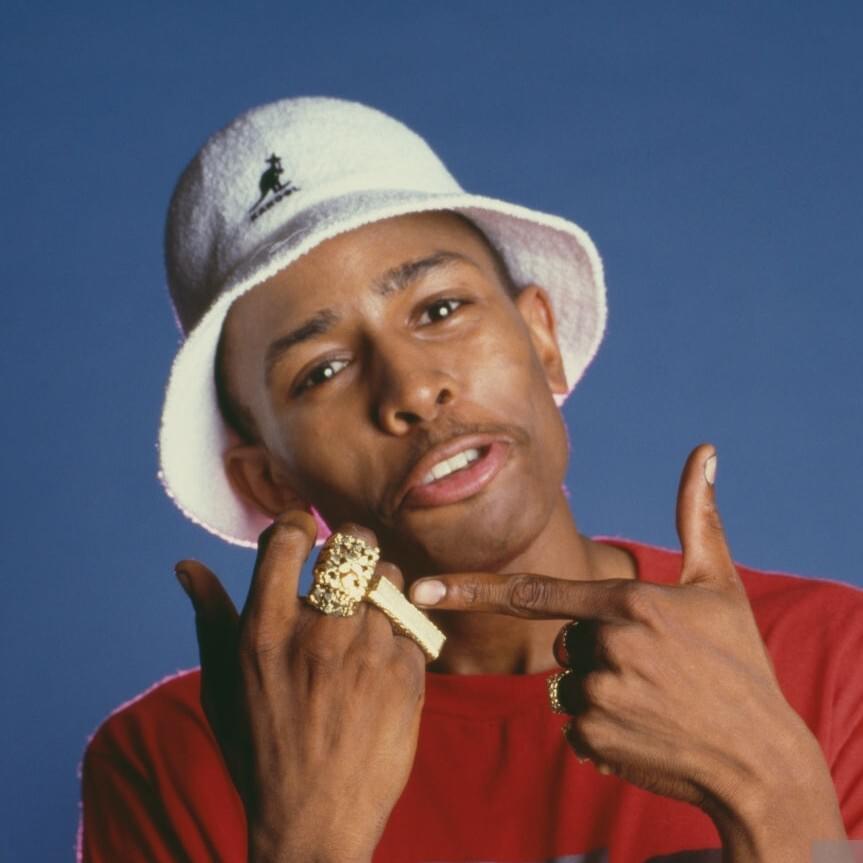
MC Shan, born Shawn Moltke on March 11, 1965, in Queens, New York, is one of hip-hop’s pioneering figures, known for his smooth flow, sharp storytelling, and pivotal role in the East Coast rap scene of the 1980s. A key architect of the Queensbridge sound, MC Shan brought a regional perspective to hip-hop that helped define the New York City rap landscape and establish the borough as a powerhouse of lyrical talent. While he may not have achieved the commercial prominence of some of his contemporaries, his influence on the genre, particularly through his involvement in one of hip-hop’s earliest and most famous feuds, solidified his place in rap history.
Shawn Moltke grew up in Queensbridge, the largest public housing development in North America. It was a community alive with creativity, resilience, and culture—a perfect incubator for hip-hop during its formative years. From a young age, he was drawn to the music and energy of block parties, where DJs would spin funk, disco, and early rap records while MCs rhymed over the beats. This environment inspired his love of rhythm, storytelling, and performance, ultimately shaping his distinctive lyrical style.
MC Shan’s early foray into hip-hop coincided with the rise of the Juice Crew, a collective of talented rappers and producers based in Queens. Under the mentorship of Marlon “Marvelous” Williams and guided by producer Mister Cee, MC Shan became one of the first artists to represent Queensbridge on a national stage. The Juice Crew was instrumental in shaping the East Coast sound, and MC Shan’s contributions were central to their identity, blending street-level narratives with sophisticated wordplay and dynamic production.
MC Shan’s debut single, “Marley Marl Scratch” (1984), showcased his lyrical talent and established him as a rising voice in New York hip-hop. Produced by Marley Marl, one of the most innovative producers of the era, the track featured inventive sampling, crisp beats, and MC Shan’s confident delivery. This collaboration would be the start of a longstanding creative relationship, and it positioned MC Shan as a key player in the burgeoning Queensbridge hip-hop scene.
His first major album, “Down by Law” (1987), remains one of his most celebrated works. The album included tracks like “The Bridge”, which not only highlighted MC Shan’s storytelling prowess but also cemented his legacy in hip-hop history. “The Bridge” was a tribute to his home borough, chronicling life in Queensbridge and asserting the area’s rightful place in hip-hop culture. With its infectious hook, clever wordplay, and vivid imagery, the song became a defining anthem for Queensbridge, establishing MC Shan as one of the first rappers to bring regional pride into mainstream hip-hop.
However, “The Bridge” also inadvertently sparked one of hip-hop’s most legendary feuds: the “Bridge Wars” between MC Shan and Boogie Down Productions (BDP), led by KRS-One. BDP responded with “South Bronx”, challenging MC Shan’s claim that Queensbridge was central to hip-hop’s origins. The ensuing back-and-forth—marked by songs like MC Shan’s “Kill That Noise”—is now considered one of the first and most iconic rivalries in rap history. Beyond the controversy, the feud showcased MC Shan’s ability to craft sharp, memorable lyrics and positioned him as a formidable MC capable of holding his own in the competitive East Coast rap scene.
MC Shan’s style is characterized by a smooth, controlled flow, precise enunciation, and a knack for storytelling. Unlike the aggressive delivery of some of his peers, MC Shan’s approach is more measured, drawing listeners into his narratives with wit and personality. He often combined street-level observations with playful metaphors and clever rhymes, creating tracks that were both entertaining and culturally resonant. This approach helped him stand out during hip-hop’s golden age, a period dominated by competition, innovation, and rapid expansion of lyrical techniques.
In addition to “The Bridge,” MC Shan released other tracks that further solidified his reputation. Songs like “Project Ho”, “Juice Crew Law”, and “I Pioneered This” highlighted his lyrical versatility, addressing themes ranging from street life and neighborhood pride to playful boasts and humorous observations. His work with Marley Marl also emphasized the importance of production in hip-hop, as Shan’s storytelling was often paired with innovative beats, drum machine programming, and sampling techniques that pushed the genre forward.
MC Shan’s influence extended beyond music. As a representative of Queensbridge, he helped put the borough on the hip-hop map, paving the way for future stars like Nas, Mobb Deep, and LL Cool J. His work demonstrated that lyrical talent could emerge from any neighborhood, not just the Bronx, which was widely regarded as hip-hop’s birthplace. In doing so, MC Shan expanded the geographic and cultural scope of the genre, highlighting the diversity and creativity of New York’s hip-hop community.
Despite the rise of gangsta rap and the shift in hip-hop’s commercial landscape in the 1990s, MC Shan continued to record and perform, maintaining a loyal fanbase and a respected position within the rap community. He released “Play It Again, Shan” (1990), an album that showcased his adaptability, experimenting with new production styles while maintaining his signature storytelling approach. Tracks from this era demonstrated his ability to evolve with the times without losing the lyrical precision and personality that defined his early work.
MC Shan’s impact is also evident in the generations of artists who followed him. His narrative style influenced storytellers like Slick Rick, Big Daddy Kane, and later East Coast MCs who valued clever rhyme schemes and vivid imagery. Producers and DJs were also inspired by his collaborations with Marley Marl, which highlighted the potential of sampling, drum machines, and studio experimentation in hip-hop. The techniques developed by MC Shan and his contemporaries in the Juice Crew era became foundational elements of East Coast hip-hop production.
In addition to music, MC Shan has remained an active figure in hip-hop culture through appearances at events, panels, and interviews, sharing insights into the genre’s evolution and the early days of the Queensbridge scene. His perspective as a pioneer offers invaluable context for understanding the growth of hip-hop from local block parties to a global cultural phenomenon. By documenting the stories of his community and the early hip-hop scene, MC Shan has contributed to the preservation and celebration of the genre’s history.
Today, MC Shan’s legacy is celebrated by hip-hop historians, DJs, and enthusiasts as an essential chapter in the story of East Coast rap. Tracks like “The Bridge” continue to be referenced, sampled, and celebrated, not only for their historical significance but also for their enduring musical quality. His combination of lyrical skill, narrative depth, and cultural representation ensures that his work remains relevant and influential, even decades after its initial release.
In conclusion, MC Shan stands as one of hip-hop’s foundational figures. From his early days in Queensbridge to his pivotal role in the Juice Crew and his legendary participation in the “Bridge Wars,” he helped shape the sound, style, and geography of East Coast rap. His smooth flow, clever wordplay, and storytelling mastery set a standard for MCs to follow, while his representation of Queensbridge highlighted the potential for hip-hop to celebrate community identity. Although he may not have reached the same commercial heights as some of his contemporaries, MC Shan’s contributions to hip-hop culture are undeniable, cementing his place as a true pioneer of the genre. His career reminds us that the roots of hip-hop are rich, diverse, and deeply tied to the stories and voices of the neighborhoods that nurtured it.
This post has already been read 492 times!