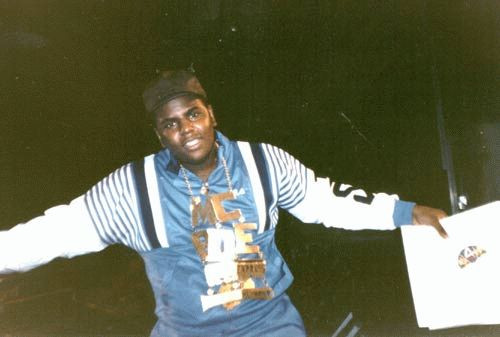
 MC ADE stands as one of the foundational figures in Miami bass, a regional hip-hop movement that helped redefine how rap could sound, feel, and function on the dance floor. Long before bass music became a national phenomenon, MC ADE was crafting records that emphasized booming low-end, rapid-fire rhythms, and call-and-response lyrics designed to move crowds. His career captures the moment when Southern hip-hop began asserting its own identity, separate from the dominant narratives of New York and Los Angeles, and in doing so, helped open the door for an entirely new regional sound.
Born Ade Givens in Miami, Florida, MC ADE grew up surrounded by the musical diversity that defines the city. Miami’s cultural landscape was shaped by Caribbean rhythms, funk, disco, and early electronic dance music, all of which filtered into the emerging local hip-hop scene. Unlike New York’s park jams or Los Angeles’s electro clubs, Miami’s rap culture evolved around car systems, block parties, and clubs where volume and bass response mattered as much as lyrical skill. This environment deeply influenced MC ADE’s artistic direction.
MC ADE first gained attention in the mid-1980s with records released through local labels, most notably 4-Sight Records. His early singles immediately stood out for their emphasis on heavy bass and uptempo beats, designed specifically for booming sound systems. Songs like “Bass Rock Express” became underground hits, circulating through DJs, cassette tapes, and word of mouth. These tracks weren’t built for radio play or lyrical analysis; they were built to make people move, and they succeeded spectacularly in that role.
What made MC ADE distinctive was his commanding vocal presence. His delivery was assertive, rhythmic, and perfectly matched to the pounding beats behind him. Rather than focusing on complex rhyme schemes or storytelling, MC ADE specialized in hype-driven lyrics that energized crowds. This approach aligned with the function-first philosophy of Miami bass, where the primary goal was physical response—dancing, partying, and communal energy.
In 1986, MC ADE released his debut album MC ADE’s Bass Rock Express, a record that helped define the sonic blueprint of Miami bass. The album was raw, loud, and unapologetically dance-oriented. Tracks were built around drum machine patterns, minimal melodies, and, most importantly, deep bass frequencies that pushed the limits of car audio systems. At a time when hip-hop production was still largely centered on sampled funk breaks, MC ADE’s work leaned heavily into electronic programming, foreshadowing the genre’s future embrace of synthesized sound.
The album’s impact extended far beyond Miami. DJs across the South began incorporating MC ADE’s tracks into their sets, introducing audiences in cities like Atlanta, Tampa, and New Orleans to the Miami bass sound. While the music often remained underground, its influence spread rapidly through clubs, car shows, and house parties. MC ADE became a name associated with sonic power, his records serving as benchmarks for how loud and heavy bass music could be.
MC ADE followed up with additional releases throughout the late 1980s, including Bass Mechanic in 1989. This album further refined his sound, balancing raw energy with slightly more polished production. While still rooted in bass-driven club tracks, Bass Mechanic showed growth in arrangement and pacing, suggesting an artist becoming more confident in his role as a scene leader. Songs continued to prioritize rhythm and repetition, reinforcing the hypnotic quality that made Miami bass so effective on the dance floor.
Lyrically, MC ADE’s work reflected the party-centric ethos of the genre. His songs celebrated movement, sound systems, and crowd interaction rather than personal narrative or social commentary. This focus sometimes led critics to dismiss Miami bass as simplistic, but such critiques often missed the point. The genre was designed as functional music, optimized for specific environments and experiences. MC ADE excelled within this framework, understanding exactly what his audience wanted and delivering it consistently.
As Miami bass gained visibility in the late 1980s and early 1990s, other artists and producers began to achieve greater commercial success. Acts like 2 Live Crew brought national attention—and controversy—to the scene, while labels with stronger marketing muscle pushed bass music into broader markets. In this shifting landscape, MC ADE remained a respected figure but did not achieve the same level of mainstream recognition. His influence, however, was deeply felt by those working within the genre.
MC ADE’s legacy is particularly evident in the way Southern hip-hop evolved. The emphasis on rhythm, bass, and crowd engagement that defined his work can be traced through later movements, from Atlanta crunk to modern trap music. While the sounds changed and tempos shifted, the underlying philosophy—music designed to move bodies and dominate sound systems—remains consistent. In this sense, MC ADE’s contributions helped lay the groundwork for some of the most commercially successful forms of hip-hop that followed.
Beyond his recordings, MC ADE also played a role in shaping the infrastructure of Miami bass culture. His collaborations with local producers, DJs, and labels contributed to a self-sustaining regional scene. This grassroots network allowed Miami bass to thrive independently of major industry centers, proving that hip-hop innovation could emerge from outside traditional power hubs.
In later years, MC ADE’s work has been rediscovered by collectors, DJs, and historians of hip-hop. Original pressings of his records are prized for their sound quality and historical significance. His tracks continue to appear in DJ sets dedicated to old-school and bass music, where they are often met with enthusiastic responses from audiences familiar with the genre’s roots.
MC ADE may not be a household name in mainstream hip-hop history, but his role in shaping Miami bass is undeniable. He represents a generation of artists who prioritized function, energy, and community over fame and chart success. His music captures a specific moment when hip-hop was still forming its regional identities, and in doing so, helped ensure that Southern voices would become an essential part of the genre’s story.
Today, MC ADE stands as a reminder that hip-hop’s evolution has always been driven by local scenes and innovators willing to push sound systems to their limits. His booming basslines and commanding delivery remain a testament to the power of music made for movement, cementing his place as one of Miami bass’s true pioneers.
This post has already been read 370 times!