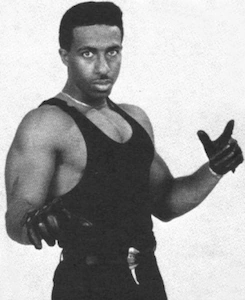
 Kyper is one of those artists whose influence is often felt more than it is loudly celebrated. Emerging during a transitional moment in hip-hop’s evolution, he occupied a unique space between old-school rap, electro-funk, and late-1980s pop crossover. While he never fit neatly into the dominant narratives of East Coast lyricism or West Coast gangsta rap, Kyper carved out a lane that blended melodic hooks, futuristic production, and accessible songwriting. His career captures a moment when hip-hop was experimenting with form, sound, and audience, pushing beyond park jams and street battles toward radio-friendly, club-ready innovation.
Born Glen Earl Bolton in Los Angeles, Kyper grew up immersed in the sounds of funk, R&B, and early hip-hop that defined Southern California in the late 1970s and early 1980s. Before rap had fully crystallized as a mainstream genre, L.A. was already a hotbed of electro, breakdancing culture, and DJ-driven innovation. This environment shaped Kyper’s musical instincts early on. Rather than approaching rap strictly as rhythmic speech over beats, he gravitated toward melody, harmony, and electronic textures that reflected the city’s futuristic club sound.
Kyper’s early exposure to synthesizers and drum machines set him apart from many of his contemporaries. While East Coast artists were rooted in breakbeats and vinyl culture, Kyper embraced electronic instrumentation, drawing inspiration from artists like Zapp, Prince, and early electro pioneers. This foundation would later become a defining feature of his music, positioning him closer to the electro-rap lineage than traditional boom-bap.
His breakthrough came in 1986 with the release of the single “You Got Me Up.” The song was an immediate standout, built on a shimmering synth line, a crisp electro beat, and a hook that leaned heavily into pop sensibility. “You Got Me Up” wasn’t just a rap song—it was a crossover record that found space on R&B playlists, dance floors, and Top 40 radio. At a time when hip-hop was still fighting for widespread acceptance, Kyper’s success demonstrated that rap could be melodic, romantic, and commercially viable without losing its identity.
The success of “You Got Me Up” led to Kyper’s debut album Telepathy in 1987. The album showcased his versatility, blending uptempo dance tracks with smoother, introspective cuts. Songs like “Don’t Get Another Boyfriend” and “Tic Tac Toe” reinforced his ability to craft catchy hooks while maintaining a distinctly hip-hop foundation. Telepathy felt futuristic without being cold, balancing electronic polish with human emotion.
Lyrically, Kyper differed from many of his peers. He wasn’t focused on aggressive bravado, street narratives, or battle rhymes. Instead, his lyrics often explored relationships, communication, and personal reflection. This approach aligned him more closely with R&B traditions while still operating within a rap framework. In doing so, Kyper helped broaden the emotional scope of hip-hop at a time when the genre was still defining its expressive boundaries.
Visually and stylistically, Kyper also reflected the late-1980s aesthetic of sleek futurism. Music videos and promotional materials emphasized clean lines, neon tones, and high-tech imagery, reinforcing the sense that his music belonged to a forward-looking era. This visual identity complemented his sound and helped him stand out in an increasingly crowded marketplace.
In 1989, Kyper released his second album, Tic Tac Toe, further refining his blend of pop, electro, and rap. While it didn’t match the commercial impact of Telepathy, the album demonstrated artistic consistency and growth. Kyper continued to experiment with production techniques, layering synths and drum programming in ways that anticipated the rise of new jack swing and early 1990s dance-pop.
Despite his talent and early success, Kyper’s career unfolded during a period of rapid change in hip-hop. By the late 1980s and early 1990s, the genre was shifting toward harder-edged sounds. Public Enemy, N.W.A., and later gangsta rap narratives began to dominate the cultural conversation. In this new landscape, Kyper’s melodic, polished style felt out of step with prevailing trends, even as it influenced artists working in adjacent spaces.
As radio formats tightened and record labels chased more extreme or provocative sounds, artists like Kyper found themselves marginalized—not because their music lacked quality, but because it didn’t fit the industry’s evolving definition of hip-hop credibility. This shift illustrates how market forces, rather than artistic merit, often shape musical legacies.
Even as his mainstream visibility declined, Kyper’s work continued to resonate. DJs, collectors, and fans of electro-funk and old-school hip-hop kept his records in circulation. “You Got Me Up” in particular became a beloved throwback, frequently appearing on old-school playlists and compilations. Its enduring appeal lies in its timeless structure: a simple, infectious melody paired with confident, understated delivery.
Kyper’s influence can also be heard in later artists who blurred the lines between rap, R&B, and pop. His willingness to prioritize melody and accessibility anticipated the rise of artists who would dominate charts in the 1990s and beyond. In many ways, Kyper helped normalize the idea that rappers could sing hooks, explore romantic themes, and embrace electronic production without sacrificing authenticity.
Beyond his own recordings, Kyper’s career serves as a case study in the fluidity of hip-hop’s early years. He emerged during a time when the genre had not yet solidified into rigid subcategories. This openness allowed artists like Kyper to experiment freely, creating music that might feel genre-defying even by today’s standards.
While he never became a household name on the level of hip-hop’s biggest icons, Kyper’s contribution remains significant. He represents a generation of artists who expanded the genre’s vocabulary, proving that hip-hop could coexist with pop and electronic music without dilution. His work challenges narrow definitions of what rap “should” sound like, reminding listeners that innovation often happens at the margins.
Today, Kyper is best remembered as a pioneer of electro-rap crossover, an artist who captured the optimism and experimentation of hip-hop’s late-1980s moment. His music stands as a reminder that the genre’s history isn’t just built by its loudest voices or most controversial figures, but also by those who quietly pushed boundaries and opened doors for future sounds. In revisiting Kyper’s catalog, listeners can hear not just nostalgia, but the blueprint for a more expansive, inclusive vision of hip-hop.
This post has already been read 320 times!