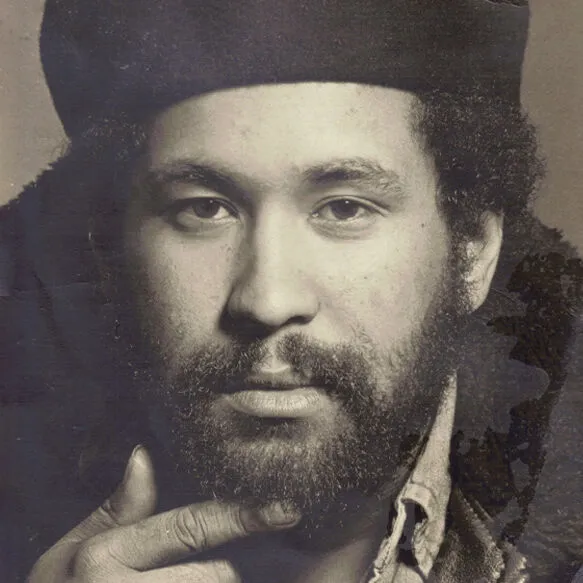
 Duke Bootee, born Edward Fletcher, is a legendary figure in hip-hop whose influence stretches far beyond the recognition his name receives. Hailing from the streets of New York City, Duke Bootee played a critical role in shaping the sound and ethos of early hip-hop, particularly through his groundbreaking work with the group Grandmaster Flash and the Furious Five. While many casual listeners may not immediately recognize his name, his contributions—especially as the voice and co-writer behind the genre-defining track “The Message”—cemented him as a pioneer who helped establish hip-hop as a force capable of social commentary, storytelling, and cultural impact.
Duke Bootee grew up during a formative time for hip-hop. Born in the late 1950s and coming of age in the 1970s, he witnessed firsthand the birth of block parties, DJ culture, and the initial wave of MCs and breakdancers in New York City. This environment instilled in him a deep understanding of rhythm, narrative, and street culture. Unlike some early rappers who focused almost exclusively on party-oriented themes, Bootee approached the music with a desire to tell authentic stories about urban life. This perspective would define his career and set him apart as an artist capable of bridging entertainment and social commentary.
Bootee’s most notable contribution came in collaboration with producer and group leader Grandmaster Flash and the Furious Five. At a time when the group was experimenting with innovative beats and socially conscious lyrics, Duke Bootee was tasked with writing and performing verses for what would become one of hip-hop’s most iconic tracks: “The Message.” Released in 1982, the song was revolutionary. While early hip-hop tracks primarily celebrated party culture and rhythmic bravado, “The Message” provided a stark and unflinching look at the struggles of life in urban America. Bootee’s delivery—gritty, precise, and emotionally resonant—brought the lyrics to life, painting vivid images of poverty, crime, and systemic inequality.
“The Message” remains one of the most influential tracks in hip-hop history. Bootee’s verses captured the realities of inner-city life with a poetic clarity that had rarely been heard on record. Lines like “Don’t push me ‘cause I’m close to the edge” resonated deeply with listeners and became anthems for a generation grappling with economic hardship and social marginalization. Beyond its lyrical content, the track’s innovative production, featuring a steady, hypnotic beat layered with melodic elements, created a new template for how hip-hop could balance rhythm and narrative. Duke Bootee’s performance demonstrated that the MC could be both a storyteller and a musical instrument, shaping the emotional arc of a track through cadence, tone, and phrasing.
Following the success of “The Message,” Bootee continued to work both as a performer and a writer, contributing to other projects that expanded hip-hop’s narrative and sonic boundaries. He collaborated with Melle Mel and other members of the Furious Five, helping craft tracks that combined streetwise storytelling with catchy hooks and inventive production. His versatility as a rapper and writer allowed him to adapt to different beats and themes, demonstrating a depth of skill that few early hip-hop artists could match.
In addition to his work with the Furious Five, Duke Bootee pursued solo projects that further showcased his talent. Albums like Bust Me Out and singles such as “Motorcade” highlighted his ability to craft intricate rhymes over compelling beats while maintaining the socially conscious perspective that had defined “The Message.” Bootee’s solo work reinforced his reputation as a thoughtful, articulate MC who could navigate complex themes without sacrificing the musicality and accessibility of his tracks.
Bootee’s influence extends beyond individual tracks or albums. He helped establish a framework for socially aware hip-hop that would inspire generations of artists. The blueprint of using music as both entertainment and social commentary can be traced directly back to his work. Later acts, from Public Enemy to KRS-One and beyond, drew upon the precedent set by Duke Bootee, combining rhythmic mastery with lyrics that spoke to broader societal issues. In this sense, his contributions are not only artistic but also cultural, helping to define hip-hop as a medium capable of influencing thought, raising awareness, and inspiring action.
Technically, Duke Bootee’s style is characterized by precision, clarity, and rhythmic intelligence. His voice carried authority and urgency, making even the simplest lines resonate with emotional weight. Unlike some of his peers who relied on showmanship or flashy delivery, Bootee’s strength lay in his ability to marry content and cadence. He understood how to shape a verse so that every syllable, every pause, and every inflection contributed to the narrative’s impact. This combination of lyrical craftsmanship and performative skill ensured that his work remained compelling both on record and in live performance.
Despite his undeniable influence, Duke Bootee often remained behind the scenes, allowing collaborators and producers to take center stage. Yet his fingerprints are evident across the hip-hop canon. The sonic and thematic innovations he helped introduce paved the way for socially conscious tracks, narrative-driven albums, and the elevation of the MC as a storyteller rather than just a party performer. In many ways, Duke Bootee’s career exemplifies the tension between visibility and influence in the music industry: while he may not have always received mainstream recognition, his impact is deeply embedded in the art form itself.
Culturally, Duke Bootee’s work reflected the realities of his environment while pushing the boundaries of what hip-hop could achieve. By addressing systemic issues, personal struggle, and community life, he demonstrated that the genre could function as both entertainment and education. His approach encouraged listeners to engage critically with the music and the society it represented, fostering a more thoughtful and socially aware audience. Tracks like “The Message” proved that hip-hop could be both commercially viable and intellectually rigorous, establishing a new paradigm for future artists.
Throughout his career, Bootee remained committed to the principles that defined his early work: authenticity, technical skill, and a focus on narrative. Whether performing with Grandmaster Flash, contributing to collaborative projects, or recording solo material, he consistently emphasized the power of the MC’s voice to convey meaning and emotion. His ability to adapt to changing production styles, collaborate effectively, and maintain a strong personal identity as an artist contributed to the longevity of his career and the enduring relevance of his contributions.
Duke Bootee’s legacy is also a reminder of hip-hop’s origins as a communal, collaborative art form. His work with producers, DJs, and other MCs highlighted the importance of synergy between different elements of a track. The combination of innovative production and masterful vocal delivery created music that was not only memorable but transformative. By demonstrating the potential of hip-hop as a vehicle for storytelling, social commentary, and rhythmic innovation, Bootee helped shape the expectations and aspirations of future artists.
In conclusion, Duke Bootee is a seminal figure in hip-hop whose work helped define the genre’s potential for social impact, storytelling, and musical innovation. From his iconic contributions to “The Message” to his solo projects and collaborations, he exemplified the power of lyrical precision, rhythmic mastery, and cultural insight. Though he may not always be a household name, his influence is deeply embedded in the history of hip-hop, shaping both the music and the culture that continues to evolve today. Duke Bootee’s career reminds us that true impact is not always measured by fame alone, but by the lasting resonance of artistry, message, and innovation.
This post has already been read 291 times!