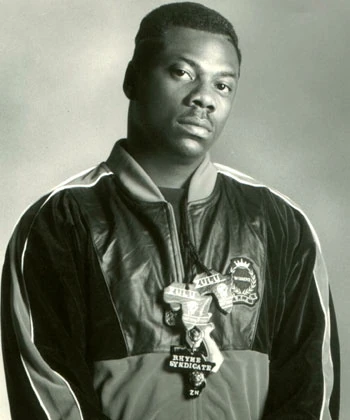
 Donald Lamont, better known by his stage name Donald D, is a pioneering rapper from the Bronx, New York, whose work has been influential in both the early days of hip-hop and its development into a more sophisticated, socially conscious art form. Known for his smooth yet commanding delivery, lyrical dexterity, and ability to blend raw street energy with polished technique, Donald D has carved out a career that bridges the formative era of hip-hop with its broader expansion into the mainstream. Though he is often discussed alongside his collaborators in the Flavor Unit and Ice-T’s Rhyme Syndicate, Donald D’s contributions as a solo artist, collaborator, and cultural influencer stand on their own.
Born in the Bronx in the late 1960s, Donald D grew up at the very heart of hip-hop culture. The Bronx at the time was alive with music, dance, and street innovation—graffiti, breakdancing, and DJ battles defined the cultural landscape. From an early age, Lamont was drawn to the MCs and DJs who dominated local block parties, quickly absorbing the rhythms, cadences, and storytelling techniques that would later become central to his own style. The combination of a vibrant local scene, personal ambition, and an innate lyrical talent helped him stand out early in his career.
Donald D’s first major breakthrough came through his association with Ice-T and the Rhyme Syndicate in the mid-to-late 1980s. The Rhyme Syndicate was more than a collective; it was a platform for experimentation and collaboration among some of hip-hop’s most forward-thinking artists. Donald D fit seamlessly into this environment, bringing a Bronx sensibility to the West Coast collective. His style contrasted yet complemented the harder, more aggressive flows of Ice-T, adding variety and musicality to the Syndicate’s output. On tracks like “The Syndicate” and “You Played Yourself,” Donald D demonstrated a lyrical precision and rhythmic timing that earned him respect among peers and fans alike.
Donald D’s work is characterized by its versatility. He could shift effortlessly from hard-hitting street narratives to more socially aware content, all while maintaining a commanding flow. This ability to navigate diverse themes was evident in both his solo work and collaborations. While his lyrics often reflected the gritty realities of urban life, he balanced these narratives with a sense of humor, wit, and cultural commentary that set him apart from many contemporaries. This combination of street realism and lyrical intelligence became a hallmark of his career.
One of Donald D’s earliest solo works, Notorious (1989), showcased his ability to carry an album with his own voice while collaborating effectively with other artists. The album featured a mix of funk-inspired beats, layered sampling, and Donald D’s precise delivery, providing a blueprint for what East Coast-influenced hip-hop could sound like when paired with West Coast production aesthetics. Songs like “Dope Beat” and “Funky Beat” highlighted his talent for creating tracks that were both danceable and lyrically intricate, a balancing act few MCs managed at the time.
A significant part of Donald D’s artistry lies in his command of rhythm and flow. He approaches each verse like a skilled musician, carefully placing accents, pauses, and emphases to create a dynamic listening experience. His cadence is smooth yet forceful, giving his lyrics weight and authority without ever sounding forced. This technical mastery, combined with his ability to write memorable hooks and verses, made him a sought-after collaborator throughout the late 1980s and early 1990s.
Donald D was also deeply involved in the collaborative culture of hip-hop, a trait that helped him maintain relevance over decades. He worked with a wide range of artists, including Ice-T, the Rhyme Syndicate, and other notable MCs of the era. These collaborations allowed him to explore new themes, experiment with production styles, and reach diverse audiences. At the same time, he remained true to his Bronx roots, bringing East Coast lyrical sensibilities to West Coast production and contributing to a cross-pollination of styles that enriched the genre.
His lyrical style is marked by precision, wit, and a sense of timing that elevates his storytelling. Donald D’s verses often read like cinematic snapshots, capturing the energy, tension, and vibrancy of urban life with vivid detail. He has a talent for turning everyday experiences into compelling narratives, blending humor, street smarts, and social commentary in a way that feels both natural and sophisticated. Tracks like “Funky Beat” demonstrate his ability to combine musicality with narrative, making even a straightforward party track feel complex and engaging.
Donald D’s impact on hip-hop extends beyond his recordings. He has been a mentor to younger artists and a bridge between different eras of the genre. By navigating both the underground and more commercial aspects of hip-hop, he demonstrated that longevity in the culture depends on adaptability, collaboration, and a commitment to craft. His work helped pave the way for other East Coast artists to engage with West Coast audiences, and vice versa, showing that hip-hop’s regional distinctions could be a source of creativity rather than division.
Culturally, Donald D embodies the transitional period in hip-hop when the genre was moving from party-centric tracks to more complex, socially aware music. He brought a Bronx perspective to the broader hip-hop world, emphasizing lyrical sophistication, storytelling, and a deep understanding of rhythm and production. His influence can be heard in the work of later MCs who prioritize flow, precision, and narrative complexity, demonstrating that technical skill and audience engagement are not mutually exclusive.
Despite operating largely outside the mainstream spotlight, Donald D has maintained a devoted following and continues to be respected within hip-hop circles. His contributions, particularly his early work with Ice-T and the Rhyme Syndicate, are recognized for their role in expanding the scope of what hip-hop could achieve. Whether through solo albums, collaborations, or live performances, Donald D consistently demonstrated that artistry and technical skill could coexist with accessibility and entertainment.
In addition to his musical talents, Donald D is known for his stage presence and live performance skills. On stage, he is both charismatic and precise, engaging audiences with a combination of energy, timing, and vocal dexterity. He understands how to command attention, building momentum through carefully constructed verses and dynamic interaction with DJs and fellow performers. These qualities made him a standout in live settings, reinforcing his reputation as both a skilled lyricist and an engaging performer.
Throughout his career, Donald D has shown an enduring commitment to the craft of hip-hop. From the Bronx block parties of his youth to recording studios and concert stages around the world, he has consistently emphasized precision, creativity, and authenticity. His work exemplifies the importance of versatility in hip-hop, balancing lyrical skill with musical innovation and audience engagement. For students of the genre, Donald D offers a model of how to navigate the industry without sacrificing artistic integrity.
In conclusion, Donald D is a seminal figure in hip-hop whose contributions extend beyond any single hit or collaboration. From his early days in the Bronx to his work with Ice-T, the Rhyme Syndicate, and his own solo projects, he has consistently demonstrated skill, creativity, and vision. His mastery of flow, rhythm, and storytelling has influenced countless MCs and producers, establishing him as a vital bridge between different regions and eras of hip-hop. While he may not always receive the mainstream recognition his talent deserves, Donald D’s impact on the culture is profound, cementing his legacy as one of the most skilled and versatile artists of his generation.
This post has already been read 687 times!